Buffalo Shrimp Mac and Cheese brings together creamy pasta, tender shrimp, sharp cheddar, and spicy buffalo sauce in one bubbling skillet. Every forkful carries rich cheese flavor balanced with buttery shrimp and a gentle kick from hot sauce. The pasta stays creamy while the crisp breadcrumb topping adds contrast that keeps each bite satisfying.
This dish works well for casual family dinners, game-day spreads, or relaxed weekend gatherings with friends. Shrimp cooks quickly, which keeps the recipe practical for busy evenings while still feeling hearty and special. The bold buffalo flavor pairs beautifully with mellow cheese sauce, creating a balance between spicy and creamy without becoming overwhelming.
A combination of cheddar and mozzarella gives the sauce smooth texture and deep flavor. A touch of garlic and paprika rounds out the seasoning while pasta absorbs the rich sauce beautifully. Since shrimp cooks in only minutes, timing matters, but the process stays straightforward from start to finish.
Ingredients Overview
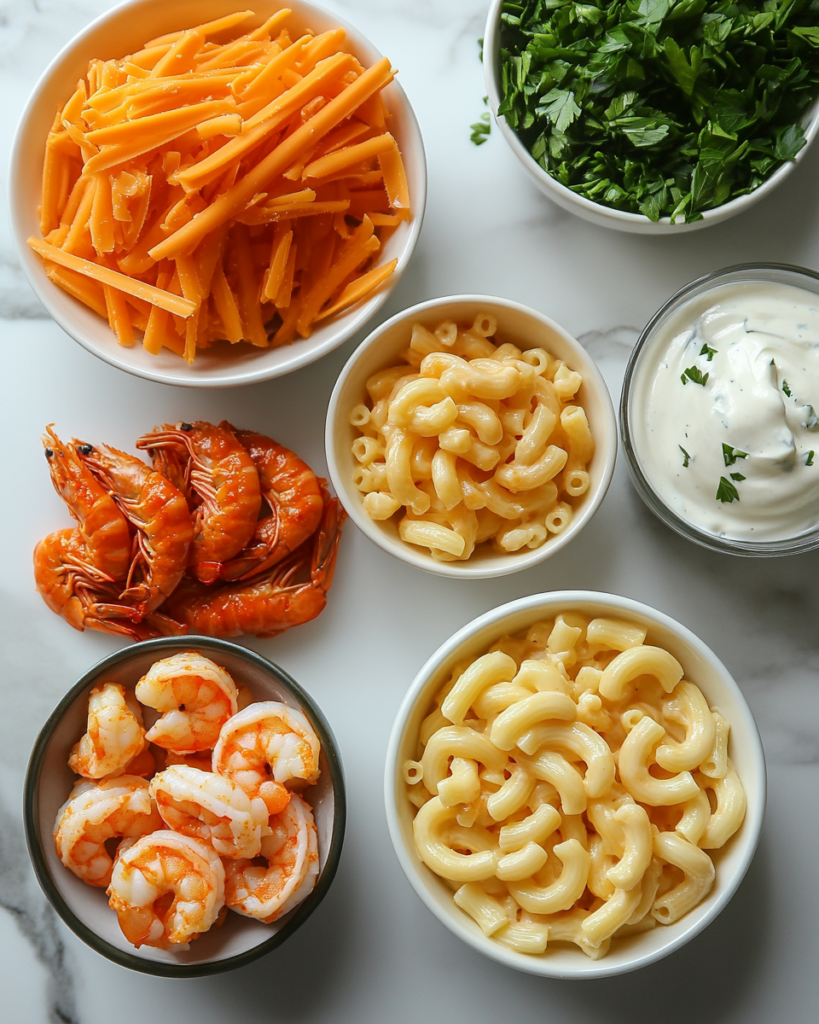
Buffalo Shrimp Mac and Cheese starts with medium pasta shapes that hold creamy sauce well. Elbow macaroni remains the classic option because the curved shape traps cheese sauce inside each piece. Shells or cavatappi also work nicely since the ridges catch bits of shrimp and buffalo sauce throughout the dish.
Shrimp brings light sweetness that balances the spicy buffalo flavor. Medium or large shrimp work well because they stay juicy without disappearing into the pasta. Fresh shrimp gives excellent texture, though frozen shrimp can also produce great results once thawed and dried thoroughly. Patting shrimp dry before cooking helps achieve gentle browning instead of steaming.
Cheese plays a major role in texture and richness. Sharp cheddar gives depth and tangy flavor while mozzarella adds stretch and smoothness. Cream cheese melts into the sauce and helps create a velvety finish that clings beautifully to pasta. Whole milk keeps the sauce creamy without becoming overly heavy.
Buffalo sauce adds heat, tang, and buttery flavor. Mild buffalo sauce creates balanced warmth while hotter varieties bring stronger spice. Paprika, garlic powder, onion powder, salt, and black pepper build savory flavor around the sauce without overpowering the shrimp.
Butter and flour create the base for the cheese sauce. Flour thickens the milk gradually, creating a smooth consistency that coats every piece of pasta evenly. Breadcrumbs mixed with melted butter form a crisp golden topping that contrasts with the creamy interior.
Greek yogurt can replace cream cheese for a lighter option. Monterey Jack can replace mozzarella, while gluten-free pasta and gluten-free breadcrumbs work successfully for dietary adjustments.
Ingredients
1 pound medium shrimp, peeled and deveined
12 ounces elbow macaroni
2 tablespoons olive oil
2 tablespoons unsalted butter
3 tablespoons all-purpose flour
3 cups whole milk
4 ounces cream cheese, softened
2 cups shredded sharp cheddar cheese
1 cup shredded mozzarella cheese
1/2 cup buffalo sauce
1 teaspoon garlic powder
1 teaspoon onion powder
1/2 teaspoon smoked paprika
1/2 teaspoon salt
1/4 teaspoon black pepper
1/2 cup panko breadcrumbs
2 tablespoons melted butter
2 green onions, sliced
Step-by-Step Instructions

Bring a large pot of salted water to a boil. Cook the macaroni until slightly firmer than fully tender since the pasta continues cooking later in the oven. Drain the pasta and set it aside while preparing the shrimp and sauce.
Pat the shrimp dry using paper towels. Dry shrimp browns more evenly and develops richer flavor during cooking. Toss the shrimp with olive oil, garlic powder, paprika, salt, and black pepper.
Heat a large skillet over medium-high heat. Add the shrimp in a single layer and cook for about 1 to 2 minutes per side until pink and lightly golden. Avoid overcrowding the skillet because crowded shrimp releases moisture and prevents browning. Remove the shrimp once cooked through. Overcooked shrimp becomes rubbery quickly, so keep a close watch during this step.
Reduce the heat to medium. Melt the butter in the same skillet, scraping up flavorful bits left behind from the shrimp. Sprinkle in the flour and stir constantly for about 1 minute. The mixture should appear smooth and slightly bubbly without turning dark brown.
Slowly pour in the milk while whisking steadily. Adding the milk gradually helps prevent lumps from forming in the sauce. Continue stirring until the sauce thickens enough to coat the back of a spoon, usually about 4 to 5 minutes.
Add the cream cheese and stir until fully melted. Mix in the cheddar and mozzarella a handful at a time, stirring between additions. Once the cheese melts completely, stir in the buffalo sauce and onion powder. Taste the sauce and adjust seasoning if needed.
Fold the cooked macaroni into the cheese sauce until fully coated. Return the shrimp to the skillet and stir gently so the shrimp stays intact. The sauce should appear creamy and glossy rather than stiff. If it thickens too much, add a splash of milk.
Transfer the mixture into a greased baking dish. Stir together the breadcrumbs and melted butter in a small bowl, then sprinkle evenly over the top.
Bake at 375 degrees Fahrenheit for about 15 to 20 minutes until bubbling around the edges and lightly golden on top. For deeper browning, place the dish under the broiler for 1 to 2 minutes while watching closely.
Let the Buffalo Shrimp Mac and Cheese rest for about 5 minutes before serving. Resting allows the sauce to settle slightly, giving the pasta a creamier texture. Scatter sliced green onions across the top before serving for freshness and color.
Tips, Variations & Substitutions
Freshly shredded cheese melts far more smoothly than pre-shredded packaged cheese. Packaged shredded cheese often contains anti-caking ingredients that can create grainy sauce. Taking a few extra minutes to grate cheese produces noticeably creamier results.
For stronger heat, stir extra buffalo sauce into the finished cheese mixture or add a pinch of cayenne pepper. A drizzle of ranch dressing over each serving softens the spice while adding cool contrast. Blue cheese crumbles also pair beautifully with the buffalo flavor for those who enjoy stronger savory notes.
Chicken can replace shrimp for a heartier version. Rotisserie chicken works especially well because it saves preparation time while still adding rich flavor. Lobster or crab also pairs beautifully with the creamy cheese sauce for special occasions.
Whole wheat pasta adds a slightly nutty flavor and extra fiber. Gluten-free pasta works nicely, though slightly undercooking it helps prevent softness after baking. Dairy-free cheese alternatives can work, though the sauce texture may appear thinner than traditional cheese sauce.
For added texture, mix cooked bacon into the pasta before baking. Diced celery and chopped parsley can brighten the finished dish while balancing the richness from the cheese.
If preparing ahead, assemble the casserole several hours before baking and refrigerate covered. Add a splash of milk before reheating leftovers since pasta absorbs sauce during storage.
Serving Ideas & Occasions
Buffalo Shrimp Mac and Cheese fits naturally into casual gatherings and comfort-food dinners. It pairs wonderfully with crisp salads featuring cucumber, lettuce, and light vinaigrette since fresh vegetables balance the creamy richness of the pasta.
Garlic bread or toasted baguette slices work beautifully alongside the dish because they soak up extra cheese sauce. Roasted broccoli, green beans, or asparagus also add freshness and texture without competing with the bold buffalo flavor.
Cold sparkling water with lemon balances the spice nicely, while iced tea or citrus-forward drinks also complement the rich sauce. For relaxed gatherings, serving the pasta directly from a bubbling baking dish creates a warm and inviting presentation.
This recipe works especially well during football parties, movie nights, holiday weekends, and cozy winter dinners. Since the dish stays satisfying and filling, it can easily stand alone as a complete main course.
Nutritional & Health Notes
Shrimp provides lean protein while remaining relatively low in calories and saturated fat. It also contains minerals such as selenium and iodine, which support balanced nutrition. Pairing shrimp with pasta and cheese creates a hearty meal that delivers protein, carbohydrates, and fat together for lasting satisfaction.
Using whole milk and cheese creates rich texture and flavor, though lighter milk can reduce overall richness slightly. Greek yogurt can replace part of the cream cheese for extra protein while lowering fat content.
Buffalo sauce contributes bold flavor without requiring large amounts of additional seasoning. Since buffalo sauce may contain sodium, balancing the meal with fresh vegetables and lighter side dishes works nicely.
Portion size plays an important role because creamy pasta dishes can become heavy quickly. Serving Buffalo Shrimp Mac and Cheese alongside vegetables or salad creates a balanced plate while still allowing the rich flavors to shine.
FAQs
Can I use frozen shrimp for Buffalo Shrimp Mac and Cheese?
Frozen shrimp works very well for this recipe as long as it gets thawed properly before cooking. Place the shrimp in the refrigerator overnight or run cold water over the shrimp until fully thawed. After thawing, dry the shrimp carefully using paper towels because excess moisture can dilute flavor and prevent browning in the skillet.
Cooking wet shrimp often leads to steaming rather than gentle caramelization. Dry shrimp develops richer flavor and better texture in the finished pasta. Frozen shrimp can sometimes release extra liquid while cooking, so avoid overcrowding the pan. Medium or large shrimp usually works better than tiny shrimp because larger pieces remain juicy and noticeable throughout the creamy pasta.
Which cheeses melt smoothly in this recipe?
Sharp cheddar and mozzarella create an excellent balance between flavor and creamy texture. Cheddar adds bold savory flavor while mozzarella contributes smooth stretchiness that blends beautifully into the sauce. Cream cheese also helps stabilize the sauce and creates silky consistency.
Freshly grated cheese usually melts far better than pre-packaged shredded cheese. Packaged cheese often contains starches that may produce slightly grainy sauce. Monterey Jack, fontina, gouda, or mild provolone can also blend nicely into Buffalo Shrimp Mac and Cheese. Lower heat helps protect the cheese sauce from separating. Adding cheese gradually while stirring constantly creates the smoothest texture possible.
How spicy does Buffalo Shrimp Mac and Cheese become?
The spice level depends mostly on the buffalo sauce used during preparation. Mild buffalo sauce creates gentle warmth without overpowering the creamy cheese flavor. Medium buffalo sauce delivers more noticeable heat while still remaining balanced by the dairy ingredients.
Cheese, milk, and cream cheese naturally soften the sharpness from buffalo sauce, creating a smoother flavor profile than buffalo wings alone. For stronger heat, extra buffalo sauce or cayenne pepper can increase the spice level easily. Ranch dressing, sour cream, or blue cheese crumbles can soften the heat further for those who prefer milder flavor. Adjusting the buffalo sauce gradually while tasting helps create the perfect balance.
Can this dish be prepared ahead of time?
Buffalo Shrimp Mac and Cheese works nicely as a make-ahead meal for busy schedules or gatherings. Assemble the pasta, sauce, shrimp, and topping in the baking dish, then cover tightly and refrigerate for several hours before baking.
Since pasta absorbs liquid during storage, stirring a small splash of milk into the casserole before baking helps maintain creamy texture. The breadcrumb topping stays crispest when added shortly before baking rather than during refrigeration. If baking directly from the refrigerator, extra baking time may become necessary to heat the center thoroughly. Preparing the dish ahead often allows the flavors to blend even more deeply.
What pasta shapes work best besides elbow macaroni?
Elbow macaroni remains traditional, though many pasta shapes hold cheese sauce beautifully. Cavatappi works especially well because the spiral shape catches sauce inside the ridges. Shell pasta also performs nicely since the curved shape traps shrimp and cheese in each bite.
Penne, rotini, and fusilli provide sturdy texture that holds up during baking without becoming mushy. Smaller pasta shapes usually blend more evenly with shrimp and sauce compared with very large pasta varieties. Slightly undercooking the pasta before baking helps maintain better texture later. Choosing pasta with ridges or curves creates richer bites because the sauce clings more effectively throughout the casserole.
How should leftovers be stored and reheated?
Store leftovers in an airtight container in the refrigerator for up to three days. Pasta naturally absorbs sauce during storage, so the texture may appear thicker the following day. Adding a small amount of milk while reheating helps restore creaminess.
Reheat gently in the microwave using short intervals while stirring occasionally. Oven reheating also works nicely for larger portions. Covering the dish loosely with foil helps prevent dryness during reheating. Shrimp cooks quickly, so avoid overheating the leftovers because prolonged heat can create firm or rubbery texture. Fresh green onions or an extra drizzle of buffalo sauce can brighten reheated servings beautifully.
Can I prepare Buffalo Shrimp Mac and Cheese without baking it?
Yes, the recipe works well entirely on the stovetop if preferred. Once the pasta, shrimp, and cheese sauce combine, the dish can be served immediately without transferring it into the oven. Skipping the baking step saves time and keeps the sauce extra creamy.
The baked version develops a crisp topping and slightly firmer texture while the stovetop version stays softer and silkier. If preparing it only on the stovetop, stirring in toasted breadcrumbs before serving still adds pleasant crunch. Keeping the heat low after combining the ingredients helps protect the cheese sauce from becoming overly thick or separating before serving.