Beef Stroganoff Pasta is a creamy, savory dish that brings together tender beef strips, earthy mushrooms, and a rich sour cream sauce tossed with pasta. It blends classic Eastern European flavors with a comforting pasta twist that fits perfectly into weeknight dinners or relaxed weekend meals.
This version keeps the cooking process straightforward while preserving the deep, savory character of traditional stroganoff. The sauce clings beautifully to the pasta, creating a balanced bite of creaminess, meatiness, and subtle tang in every forkful.
It is a practical dish that works well for family meals, casual gatherings, or meal prep, delivering satisfying flavor without complicated techniques.
Ingredients Overview
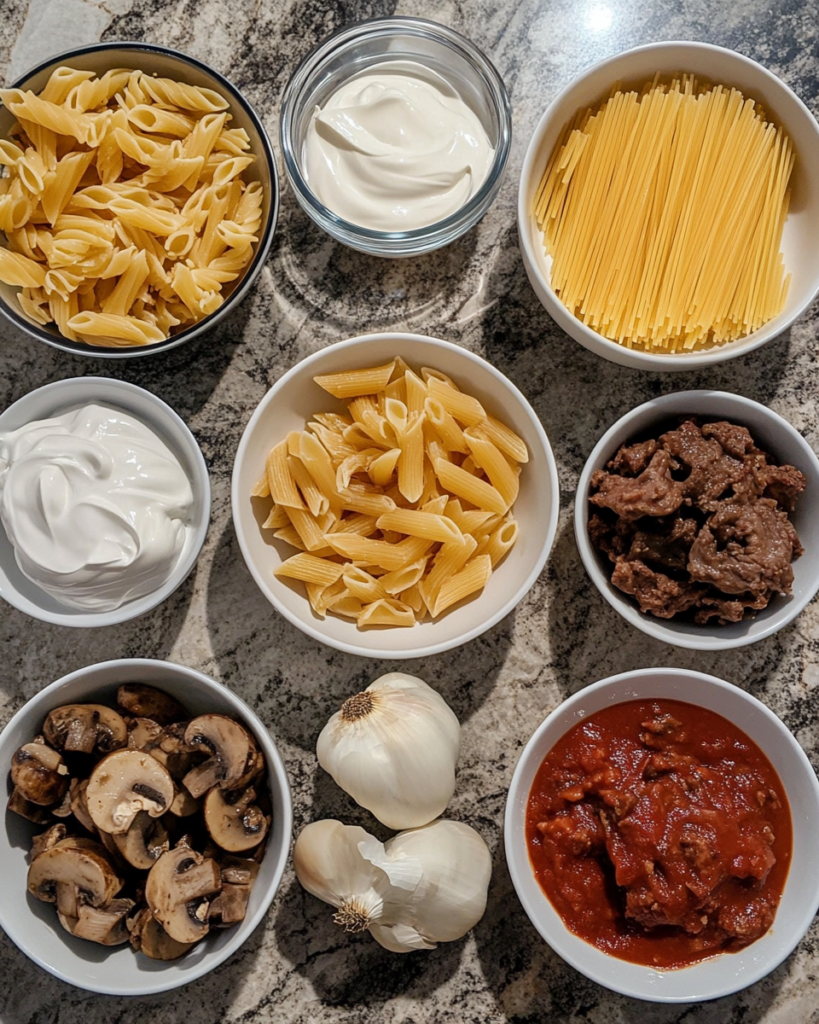
Beef Stroganoff Pasta relies on a few key ingredients that work together to create its signature creamy and savory profile. The beef is typically a tender cut like sirloin or ribeye, sliced thin so it cooks quickly while staying juicy. Mushrooms add an earthy depth that balances the richness of the sauce.
Onions and garlic form the aromatic base, bringing warmth and slight sweetness once sautéed. Sour cream is the defining element of the sauce, giving it a tangy creaminess that softens the savory notes of the beef broth. Some versions include a touch of Dijon mustard or Worcestershire sauce for added depth.
Pasta plays an important role by absorbing the sauce. Egg noodles are traditional, but penne, fettuccine, or rotini also work well. Butter and flour help form a light roux that thickens the sauce to a silky consistency.
Beef broth ties everything together, enhancing the meaty flavor while keeping the sauce smooth. Salt, black pepper, and paprika round out the seasoning, adding subtle heat and color. Each ingredient plays a specific role, and together they create a balanced, comforting dish.
Ingredients
12 oz egg noodles or pasta of choice
1 lb beef sirloin, thinly sliced
2 tablespoons olive oil
2 tablespoons butter
1 medium onion, finely chopped
3 cloves garlic, minced
8 oz mushrooms, sliced
2 tablespoons all-purpose flour
2 cups beef broth
1 cup sour cream
1 teaspoon Dijon mustard
1 teaspoon paprika
1 teaspoon salt
1/2 teaspoon black pepper
1 tablespoon Worcestershire sauce
2 tablespoons fresh parsley, chopped
Step-by-Step Instructions

Start by cooking the pasta in a large pot of salted boiling water until just tender. Drain and set aside, reserving a small amount of pasta water in case it is needed later to loosen the sauce.
Heat olive oil in a large skillet over medium-high heat. Add the sliced beef in a single layer and cook until browned on the outside but still tender inside. Work in batches if needed to avoid overcrowding the pan. Remove the beef and set aside.
In the same skillet, melt butter and add chopped onions. Cook until softened and lightly golden. Add garlic and mushrooms, stirring until the mushrooms release their moisture and begin to brown slightly.
Sprinkle flour over the mixture and stir well to coat everything evenly. This step helps thicken the sauce later and should be cooked for a minute to remove any raw flour taste.
Slowly pour in the beef broth while stirring continuously. The mixture will begin to thicken as it simmers. Add paprika, Worcestershire sauce, salt, black pepper, and Dijon mustard, mixing well to distribute flavors.
Return the cooked beef to the skillet and lower the heat. Let it simmer gently so the flavors blend and the beef stays tender. Avoid boiling at this stage, as high heat can make the beef tough.
Stir in sour cream gradually, keeping the heat low to prevent curdling. The sauce should turn smooth, creamy, and lightly thickened. Taste and adjust seasoning if needed.
Add the cooked pasta directly into the skillet and toss until evenly coated. If the sauce feels too thick, add a small splash of reserved pasta water to loosen it.
Finish with chopped parsley for freshness and serve immediately while warm and creamy.
Tips, Variations & Substitutions
For the most tender beef, slice it thinly against the grain before cooking. This helps maintain a soft texture even after simmering in the sauce. If sirloin is not available, flank steak or tenderloin can also work well.
Mushrooms can be swapped depending on preference. Cremini mushrooms add a deeper flavor, while white button mushrooms offer a milder taste. For a richer sauce, a small splash of cream can be added alongside the sour cream.
If you prefer a lighter version, Greek yogurt can replace sour cream, though it will add a slightly different tang. Whole wheat or gluten-free pasta can also be used without changing the structure of the dish.
To add extra depth, a small amount of smoked paprika or a dash of soy sauce can be included. For a slightly richer finish, a bit of grated Parmesan on top works well.
Serving Ideas & Occasions
Beef Stroganoff Pasta pairs well with simple side dishes like steamed green beans, roasted carrots, or a crisp garden salad. The freshness of vegetables balances the richness of the creamy sauce.
It also works well with crusty bread or garlic toast to soak up any remaining sauce on the plate. A light sparkling water or iced tea complements the dish without overpowering its flavors.
This dish is commonly served as a family dinner, especially on busy weekdays when a filling and comforting meal is needed. It also fits nicely into casual gatherings or potluck-style meals because it can be made in larger batches.
Nutritional & Health Notes
Beef Stroganoff Pasta offers a balanced mix of protein, carbohydrates, and fats. The beef provides protein and iron, supporting energy and muscle maintenance. Mushrooms contribute fiber and natural nutrients while keeping the dish relatively light.
The creamy sauce adds richness, but portion control helps maintain balance within a daily diet. Using leaner beef cuts or lighter dairy options can reduce overall fat content without significantly changing flavor.
Pasta supplies energy through carbohydrates, making this dish satisfying and filling. Adding vegetables on the side increases fiber intake and overall nutritional variety.
FAQs
What type of beef works best for this recipe?
Tender cuts like sirloin, ribeye, or tenderloin are ideal because they cook quickly and remain soft. These cuts absorb the sauce well and do not become tough during simmering. Flank steak can also be used if sliced very thinly against the grain. Avoid slow-cooking cuts, as they require longer cooking times and are not suited for this quick stovetop method. The goal is to achieve tender beef that blends smoothly with the creamy sauce and pasta.
Can I use a different type of pasta?
Yes, many pasta types work well with this dish. Egg noodles are traditional because they hold the sauce nicely, but penne, fusilli, or fettuccine are also great options. The key is choosing a pasta shape that can catch and hold the creamy sauce. Avoid overly delicate pasta, as it may not hold up well when mixed with the beef and sauce. Cooking the pasta just until tender helps maintain the best texture.
How do I stop the sour cream from curdling?
The key is controlling heat. Sour cream should always be added on low heat or after removing the pan from direct heat. Stir it in slowly to blend it evenly into the sauce. High heat can cause it to separate, so keeping the temperature gentle is important. If the sauce is too hot, letting it cool slightly before adding sour cream helps maintain a smooth, creamy texture.
Can this dish be made ahead of time?
Yes, it can be prepared in advance and stored in the refrigerator for a couple of days. When reheating, add a small splash of broth or water to loosen the sauce, as it tends to thicken when chilled. Warm it slowly over low heat while stirring to restore its creamy consistency. It is best enjoyed fresh, but it still holds good flavor when reheated properly.
Can I replace mushrooms in this recipe?
Yes, mushrooms can be replaced or reduced depending on preference. If you do not enjoy mushrooms, diced zucchini or bell peppers can be used instead, though they will slightly change the flavor profile. Mushrooms mainly provide earthy depth and texture, so removing them will result in a lighter sauce. You can also simply leave them out and increase the onions for added base flavor.
What can I use instead of sour cream?
Greek yogurt is the most common substitute for sour cream in this recipe. It provides a similar tang and creamy texture, though slightly lighter in taste. Cream cheese mixed with a bit of milk can also work for a richer variation. Each substitute changes the final flavor slightly, but the sauce will still remain creamy and satisfying when combined properly with the broth.
How can I make the sauce thicker?
If the sauce feels too thin, let it simmer uncovered for a few extra minutes to reduce naturally. Another option is to add a small slurry made from flour and water, stirring it in gradually until the desired thickness is reached. Cooking the flour properly in the early steps also helps build a naturally thicker sauce. Avoid adding too much thickener at once to keep the texture smooth.