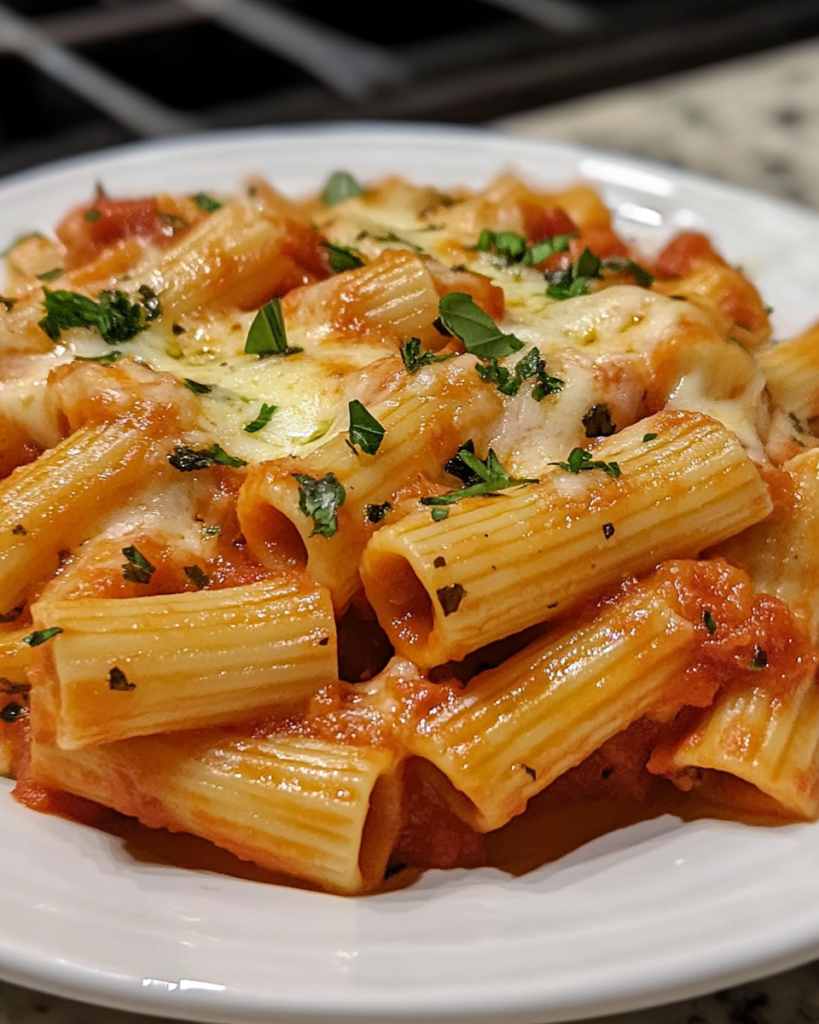
A baked mozzarella rigatoni brings a bubbling pasta tray filled with tender rigatoni coated in tomato sauce and melted cheese. This dish delivers rich texture, warm aroma, and a deeply satisfying baked pasta experience that suits family meals or casual gatherings.
The combination of pasta, tomato base, and mozzarella creates a layered casserole with a golden top and soft interior. Each serving offers a balanced contrast between creamy cheese and savory sauce.
Ingredients Overview

Rigatoni pasta serves as the structural base, holding sauce inside its ridges and hollow center. This shape supports thick tomato mixtures and melted cheese, giving each bite a hearty consistency. Its sturdy form stands up well during baking without collapsing.
Mozzarella cheese brings creaminess and stretch. When baked, it melts into smooth layers that bind the pasta and sauce together. Whole milk mozzarella delivers richer texture, while part-skim versions create a lighter finish.
Tomato sauce provides acidity and depth. A slow-simmered style works especially well because it carries herbs, garlic, and onion flavors throughout the dish. Crushed tomatoes or passata both function well depending on preference.
Garlic and onion form the aromatic foundation. They are gently cooked in olive oil to soften sharp edges and build savory complexity.
Olive oil adds smoothness and helps carry flavors throughout the sauce. It also prevents sticking during baking.
Dried oregano and basil introduce herbal notes that complement tomato richness. Salt and black pepper balance the overall flavor profile.
Optional Parmesan cheese can be added for extra savory depth on the top layer. It browns slightly in the oven, adding texture contrast.
Together, these components form a cohesive baked pasta dish where every layer contributes to flavor, structure, and aroma.
Ingredients
1 pound rigatoni pasta
3 cups tomato sauce
2 cups shredded mozzarella cheese
1/2 cup grated Parmesan cheese
2 tablespoons olive oil
4 cloves garlic, minced
1 small onion, finely chopped
1 teaspoon dried oregano
1 teaspoon dried basil
1 teaspoon salt
1/2 teaspoon black pepper
1/2 teaspoon red pepper flakes (optional)
Step-by-Step Instructions

Begin by preparing the pasta base. A large pot filled with salted water is brought to a steady boil. Rigatoni is added and cooked until firm yet tender. The pasta should hold structure since it will continue cooking in the oven. Once finished, it is drained and set aside.
A skillet is placed over medium heat. Olive oil is poured in and allowed to warm gently. Onion is added and stirred until softened and translucent. Garlic follows and cooks briefly until aromatic without browning. This stage builds the flavor foundation for the sauce.
Tomato sauce is poured into the skillet. Oregano, basil, salt, black pepper, and optional red pepper flakes are stirred through. The mixture simmers gently so the herbs can release their aroma into the sauce. A smooth, thick consistency develops as it warms.
The cooked rigatoni is combined with the sauce in a large mixing bowl. Each piece becomes coated evenly. Mozzarella is folded through so it begins to melt slightly from the warmth of the pasta mixture.
A baking dish is lightly coated with olive oil. The pasta mixture is transferred into the dish and spread evenly. Remaining mozzarella is sprinkled across the top along with Parmesan if desired.
The dish is placed into a preheated oven at moderate heat. Baking continues until the top layer becomes golden and the cheese forms a bubbling surface. The edges may develop slight crisping, adding texture contrast.
After baking, the dish rests briefly before serving. This resting period allows the cheese to settle so slices hold their structure when served. The interior remains creamy while the top retains a baked finish.
Common issues include overcooked pasta or watery sauce. Keeping pasta slightly firm before baking and simmering sauce until thick helps maintain ideal texture.
Tips, Variations & Substitutions
Whole wheat rigatoni can replace traditional pasta for a heartier texture. Gluten-free versions also work, though cooking duration may vary slightly depending on brand.
Additional vegetables such as spinach, zucchini, or mushrooms can be folded into the sauce. These additions introduce earthy notes and increase volume without altering the core structure of the dish.
For a richer profile, a small amount of cream can be blended into the tomato sauce. This creates a smoother, silkier consistency without overpowering the tomato base.
Spice levels can be adjusted by increasing or reducing red pepper flakes. For a milder profile, they can be omitted entirely.
Fresh mozzarella can be used instead of shredded varieties for larger pockets of melted cheese throughout the baked dish.
Serving Ideas & Occasions
Baked mozzarella rigatoni pairs well with crisp green salads dressed lightly in vinaigrette. The freshness of leafy greens balances the richness of the pasta.
Garlic bread or toasted baguette slices complement the dish by offering a crunchy contrast. These sides also help carry remaining sauce from the plate.
This dish suits casual dinners, shared gatherings, or weekend meals. It holds well after baking, making it suitable for serving multiple portions at once.
A light herbal drink or sparkling water pairs well alongside the meal, keeping the palate refreshed between bites.
Nutritional & Health Notes
This baked pasta dish provides carbohydrates from rigatoni, protein from cheese, and fats from olive oil and dairy components. It offers a balanced macronutrient profile suitable for a filling meal.
Tomato sauce contributes vitamin C and natural plant compounds. Cheese adds calcium and protein, supporting dietary variety.
Portion control helps maintain balance due to the richness of cheese and pasta combination. Adding vegetables can increase fiber content and improve overall nutritional diversity.
FAQs
Can gluten-free pasta be used in baked mozzarella rigatoni?
Gluten-free pasta works well in this baked dish. It is important to cook it until firm rather than soft, since baking continues the cooking process. Some gluten-free varieties absorb sauce differently, so a slightly thicker sauce helps maintain structure. Checking texture before baking helps avoid overly soft results.
What type of mozzarella works best?
Whole milk mozzarella offers a creamy melt and richer texture. Shredded versions distribute evenly throughout the dish, while fresh mozzarella creates larger soft pockets of cheese. Each version changes texture slightly, but all blend well with tomato sauce and pasta.
Can additional proteins be added?
Cooked ground beef, chicken, or turkey can be incorporated into the tomato sauce before mixing with pasta. These additions increase protein content and create a more substantial meal. Properly draining excess fat keeps the dish balanced and prevents heaviness.
How can the sauce thickness be adjusted?
A thicker sauce can be achieved by simmering longer before combining with pasta. Excess liquid should reduce naturally during heating. If sauce becomes too thick, a small amount of pasta cooking water can adjust consistency without diluting flavor.
Can this dish be prepared in advance?
The pasta mixture can be assembled ahead of baking and stored under refrigeration. Baking should occur shortly before serving so cheese maintains texture and surface browning remains intact. Extended storage before baking may slightly alter pasta firmness.
What baking dish size works best?
A medium to large casserole dish works well, allowing even layering without overcrowding. Adequate space helps cheese melt evenly and sauce distribute throughout the pasta. Overfilled dishes may bubble excessively during baking.
How should leftovers be stored?
Leftover portions should be placed in sealed containers and refrigerated. Reheating in an oven or covered pan helps preserve texture better than microwave heating. Adding a small splash of sauce before reheating can restore moisture balance.