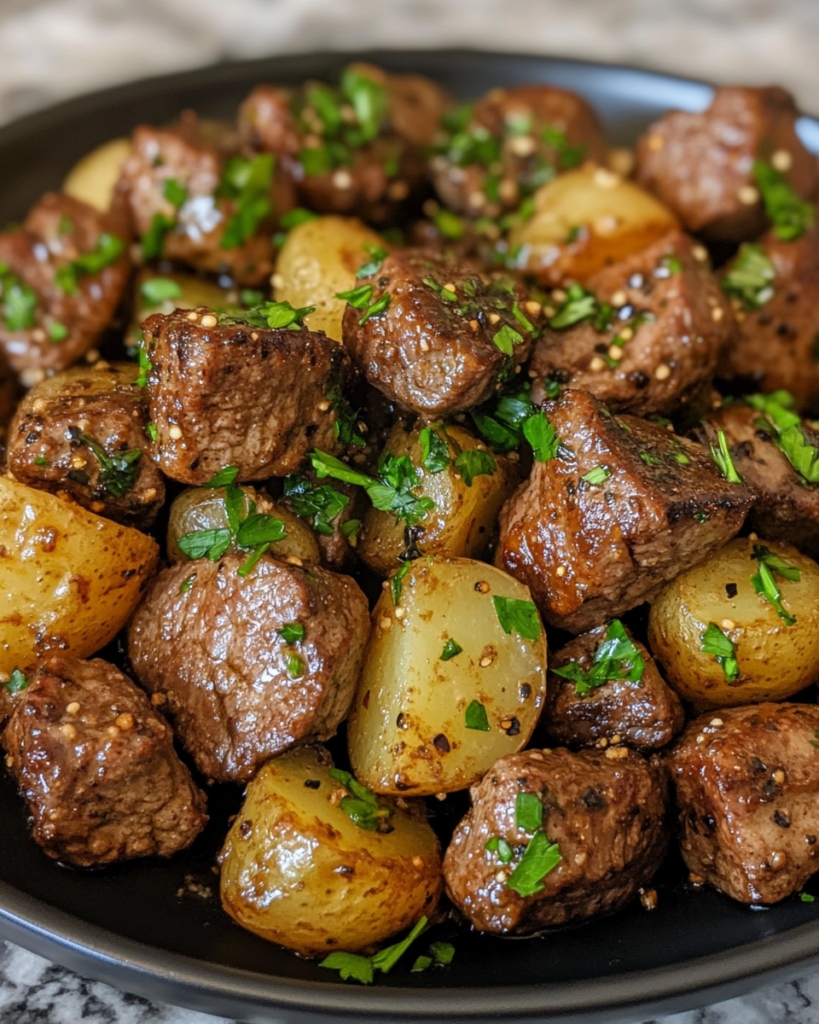
Steak Bites with Garlic Potatoes brings together tender beef pieces and crisp golden potatoes in one hearty skillet dinner. Rich garlic aroma fills the kitchen while buttery potatoes soak up savory pan juices from the steak. This dish suits busy evenings since it cooks quickly without sacrificing deep flavor or satisfying texture.
Small steak cubes cook fast over high heat, creating a browned crust while staying juicy inside. Garlic potatoes balance the richness with crisp edges and soft centers. A cast-iron skillet works especially well because it holds heat evenly and creates strong browning across the surface.
This dinner suits casual family meals, relaxed weekend suppers, or small gatherings with friends. Fresh parsley and garlic finish the dish with bright flavor and fragrant warmth. Since the recipe relies on pantry staples and simple preparation, it fits easily into regular meal planning while still feeling comforting and filling.
Ingredients Overview
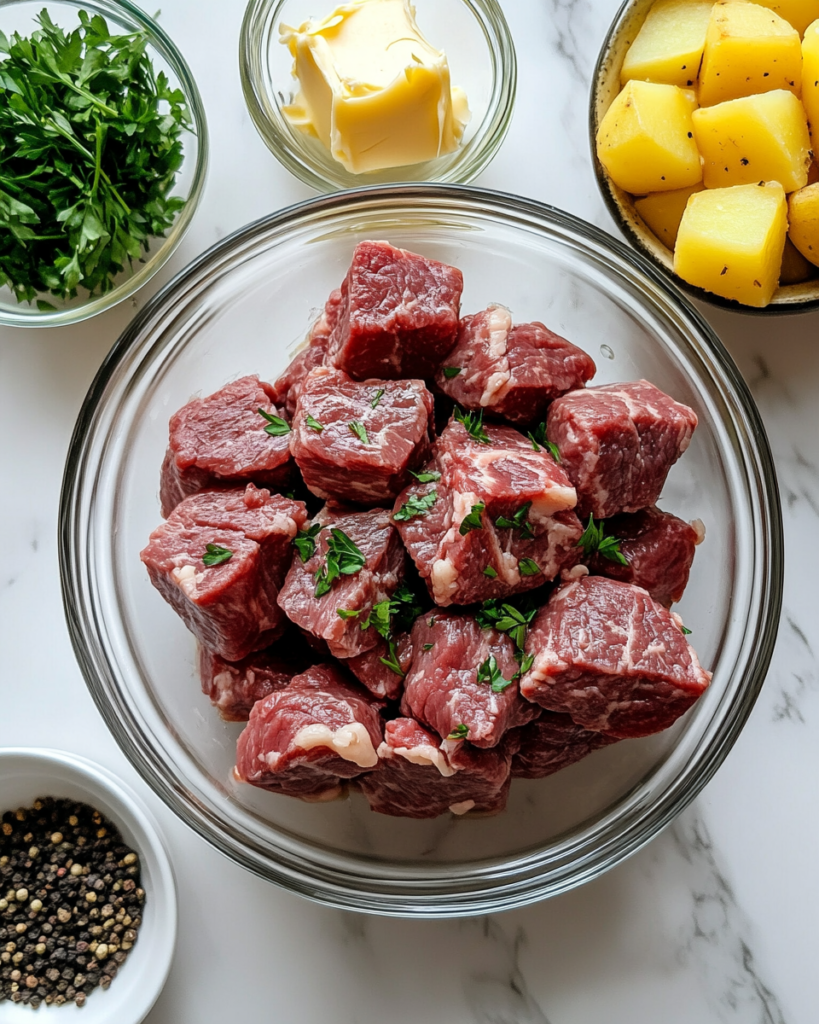
Steak Bites with Garlic Potatoes relies on a short ingredient list where each component plays a major role in flavor and texture. Sirloin steak works well because it stays tender during quick cooking and carries rich beef flavor without excessive fat. Ribeye also cooks beautifully for a richer finish, while strip steak gives balanced texture and flavor. Cutting the beef into evenly sized cubes helps every piece cook at the same rate.
Baby potatoes create crisp exteriors and fluffy centers. Yukon Gold potatoes also work nicely because their creamy texture pairs well with butter and garlic. Smaller potato pieces brown more evenly and cook faster inside the skillet.
Fresh garlic gives the dish its signature aroma. Minced garlic cooks briefly near the end to prevent bitterness. Butter combines with olive oil to create a rich coating for both steak and potatoes while helping browning occur across the skillet surface.
Salt, black pepper, smoked paprika, and dried thyme provide balanced seasoning without overpowering the beef. Fresh parsley adds freshness at the end and balances the heavier buttery flavors.
For lighter preparation, turkey steak pieces or chicken breast cubes may replace beef. Sweet potatoes can stand in for regular potatoes, though they brown slightly faster due to their natural sugars. Fresh rosemary may replace thyme for a woodsy flavor profile that pairs nicely with steak and garlic.
Ingredients
1 1/2 pounds sirloin steak, cut into bite-sized cubes
1 1/2 pounds baby potatoes, halved
4 cloves garlic, minced
2 tablespoons olive oil
3 tablespoons butter
1 teaspoon kosher salt
1/2 teaspoon black pepper
1 teaspoon smoked paprika
1 teaspoon dried thyme
2 tablespoons chopped fresh parsley
1 tablespoon grated Parmesan cheese
1/2 teaspoon red pepper flakes
Step-by-Step Instructions
Start by washing and drying the potatoes thoroughly. Slice larger potatoes into quarters while leaving smaller ones halved. Uniform pieces cook more evenly and brown at the same pace. Pat the steak cubes dry using paper towels since excess moisture prevents proper browning inside the skillet.
Place a large cast-iron skillet over medium-high heat. Add one tablespoon olive oil and allow it to heat fully before adding the potatoes. Spread the potatoes into a single layer rather than crowding the pan. Crowding traps steam and softens the potatoes instead of creating crisp edges.
Season the potatoes with half the salt, smoked paprika, and thyme. Stir every few minutes while cooking for about 15 minutes. The potatoes should develop golden edges and become fork tender in the center. Lower heat slightly if the exterior darkens too quickly before the inside softens.
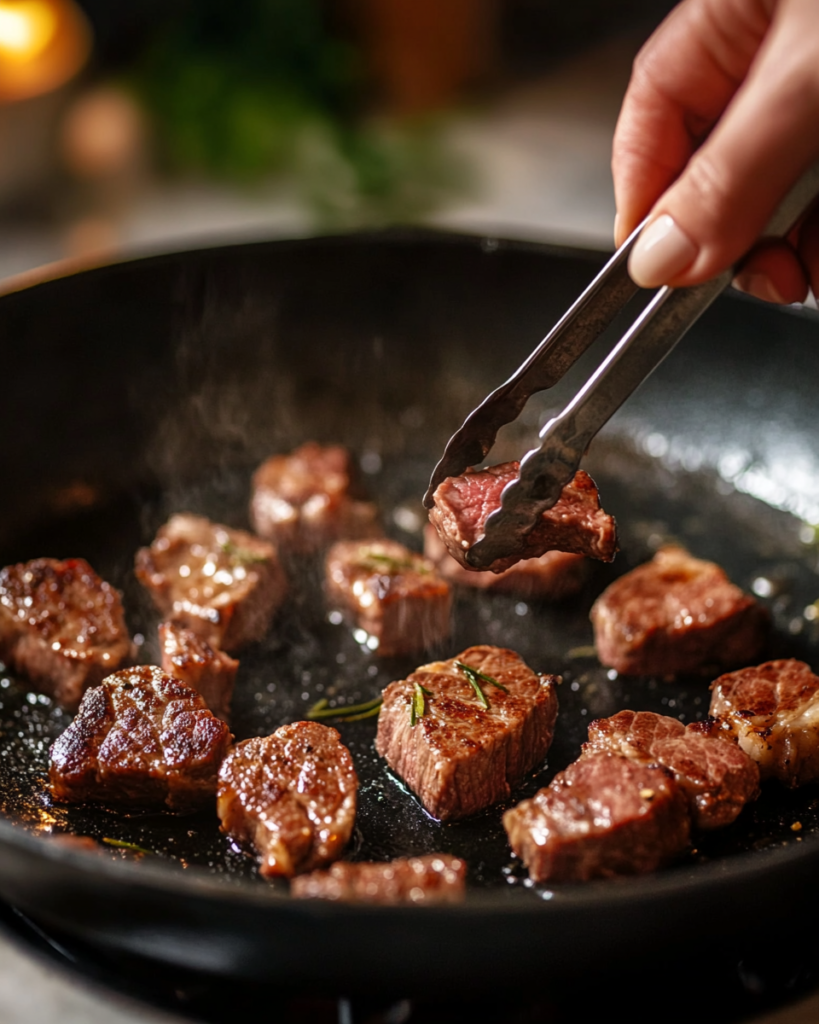
Transfer cooked potatoes onto a plate and keep warm. Return the skillet to medium-high heat and add the remaining olive oil. Add steak cubes in a single layer. Avoid stirring during the first two minutes since undisturbed contact with the skillet creates a flavorful crust.
Cook the steak for about four to six minutes total depending on cube size and desired doneness. Medium steak should still feel slightly springy when pressed lightly with tongs. Overcooking leads to dry steak bites, especially with leaner cuts like sirloin.
Reduce heat to medium. Add butter and minced garlic to the skillet once the steak finishes cooking. Stir continuously for about one minute until fragrant. Garlic burns quickly, so keeping the heat moderate during this stage matters greatly.
Return the potatoes to the skillet and toss gently with the steak and garlic butter mixture. Sprinkle remaining salt, black pepper, parsley, Parmesan cheese, and red pepper flakes across the pan. Stir carefully so the potatoes remain intact while absorbing the buttery pan coating.
Allow everything to cook together for another two minutes. The potatoes should appear glossy while the steak remains juicy and browned around the edges. Taste and adjust seasoning if needed before serving warm directly from the skillet.
Tips, Variations & Substitutions
Choosing the right skillet changes the final texture considerably. Cast iron creates strong browning and holds steady heat throughout cooking. Stainless steel also works well, though thinner pans may require lower heat adjustments during cooking.
For extra crisp potatoes, parboil them for five minutes before skillet cooking. Drain thoroughly and dry well before adding them into hot oil. This short step shortens skillet cooking and creates fluffy interiors with crisp surfaces.
Fresh herbs add strong flavor near the end of cooking. Chopped rosemary, oregano, or chives pair nicely with steak and garlic butter. A squeeze of lemon juice also brightens the dish without overpowering the savory profile.
For dairy-free preparation, replace butter with additional olive oil. Plant-based butter also works nicely while still giving rich texture. Sweet potatoes provide a slightly sweeter profile and pair nicely with smoked paprika.
Chicken breast cubes or shrimp can replace steak for different protein options. Shrimp cooks rapidly, so it should enter the skillet only during the final few minutes. Mushrooms also pair nicely with garlic potatoes and can stretch the meal further without extra meat.
Store leftovers inside an airtight container for up to three days. Reheat inside a skillet rather than a microwave for stronger texture and browning.
Serving Ideas & Occasions
Steak Bites with Garlic Potatoes fits many occasions because the dish feels hearty yet simple. It works beautifully for relaxed weeknight dinners when quick preparation matters. Since everything cooks inside one skillet, cleanup stays manageable after busy evenings.
A crisp green salad balances the buttery richness nicely. Roasted asparagus, green beans, or steamed broccoli also pair naturally alongside the steak and potatoes. Warm dinner rolls help soak up the garlic butter left inside the skillet.
Sparkling water with lemon pairs nicely for casual family dinners. Iced tea or fresh lemonade also balances the savory richness of the beef and potatoes.
This dish suits cold-weather suppers especially well because the garlic aroma and sizzling skillet create a cozy atmosphere. Small steak bites also work nicely during casual gatherings since guests can serve themselves easily from a large skillet placed at the center of the table.
Nutritional & Health Notes
Steak Bites with Garlic Potatoes provides balanced protein, carbohydrates, and fats within one filling meal. Sirloin steak contains substantial protein along with iron and vitamin B12, which support regular body function and steady energy levels.
Potatoes contribute fiber, potassium, and complex carbohydrates. Keeping the potato skins attached adds texture while preserving additional nutrients. Garlic contains natural plant compounds that contribute rich flavor without requiring heavy sauces.
Butter contributes richness and satisfying texture, though the quantity stays moderate across several servings. Olive oil adds heart-friendly unsaturated fats while supporting crisp browning inside the skillet.
Portion balance can shift depending on personal dietary preferences. Serving additional vegetables alongside the dish increases fiber and freshness while balancing the savory richness from steak and butter. Leaner steak cuts may slightly reduce saturated fat while still keeping strong beef flavor throughout the meal.
FAQs
Can I cook the potatoes inside the oven instead?
Yes. Roasting the potatoes inside the oven works very nicely if skillet space feels limited. Toss the potatoes with olive oil and seasoning, then spread them across a baking sheet in a single layer. Bake at 425 degrees Fahrenheit for about 30 minutes, turning halfway through cooking. The potatoes should become crisp outside and soft inside. During the final ten minutes of roasting, cook the steak bites inside a hot skillet. Combining the roasted potatoes with garlic butter and steak shortly before serving still creates rich flavor throughout the dish while freeing up stovetop space during preparation.
Which steak cut works well for this recipe?
Sirloin remains one of the strongest choices because it balances tenderness, flavor, and affordability. Ribeye creates richer flavor because of its marbling, while strip steak gives firmer texture and substantial beef flavor. Tenderloin also cooks beautifully though it costs more and cooks very quickly. Avoid overly tough cuts unless they receive long marinating beforehand. Regardless of the cut chosen, drying the steak thoroughly before cooking matters greatly because moisture prevents proper browning. Cutting evenly sized cubes also keeps cooking consistent so every piece finishes juicy rather than overcooked.
How do I keep steak bites tender?
Tender steak bites depend mainly on high heat and short cooking duration. Overcooking quickly dries smaller steak cubes because they cook rapidly inside a hot skillet. Patting the steak dry before cooking helps form a browned crust without steaming. Leaving space between the cubes also matters because crowded meat releases moisture into the pan. Allow the steak to rest briefly after cooking so juices redistribute properly. Choosing quality steak with moderate marbling also improves tenderness considerably during quick skillet cooking.
Can I prepare this dish ahead of dinner?
Several preparation steps can happen earlier in the day. Potatoes may be washed and sliced ahead, while steak cubes can remain refrigerated inside a sealed container until cooking begins. Garlic and parsley may also be chopped beforehand. For strongest texture, cook the steak shortly before serving rather than fully ahead of dinner. Reheated steak tends to lose some juiciness. If necessary, leftovers still reheat nicely inside a skillet over medium heat with a small amount of butter or oil added back into the pan.
What sauces pair nicely with steak bites?
Garlic butter already coats the steak nicely, though several sauces complement the dish beautifully. Creamy horseradish sauce adds mild sharpness that balances the rich beef flavor. Chimichurri contributes fresh herb flavor and slight acidity. Peppercorn sauce also pairs naturally alongside steak and potatoes during cooler months. Garlic aioli creates creamy richness for dipping. When serving additional sauces, keep portions moderate so the crisp potato texture and browned steak crust remain noticeable instead of becoming overly coated.
Can frozen potatoes work in this recipe?
Frozen potatoes can work during busy evenings, though texture differs slightly from fresh potatoes. Frozen diced potatoes or hash brown cubes brown fairly well when cooked inside a hot skillet with enough oil. Allow excess moisture to evaporate fully before stirring frequently. Fresh potatoes usually create fluffier interiors and richer flavor, though frozen options shorten preparation considerably. Season frozen potatoes generously because they often require slightly more seasoning than fresh potatoes during skillet cooking.
How should leftovers be stored and reheated?
Allow leftovers to cool slightly before placing them inside an airtight container. Refrigerate for up to three days. Reheat inside a skillet over medium heat rather than using a microwave whenever possible. Skillet reheating restores crisp potato edges and warms the steak more evenly. Adding a small amount of butter or olive oil helps refresh texture during reheating. Avoid excessive heat because reheated steak can toughen quickly. Fresh parsley sprinkled across reheated portions brightens flavor before serving again.