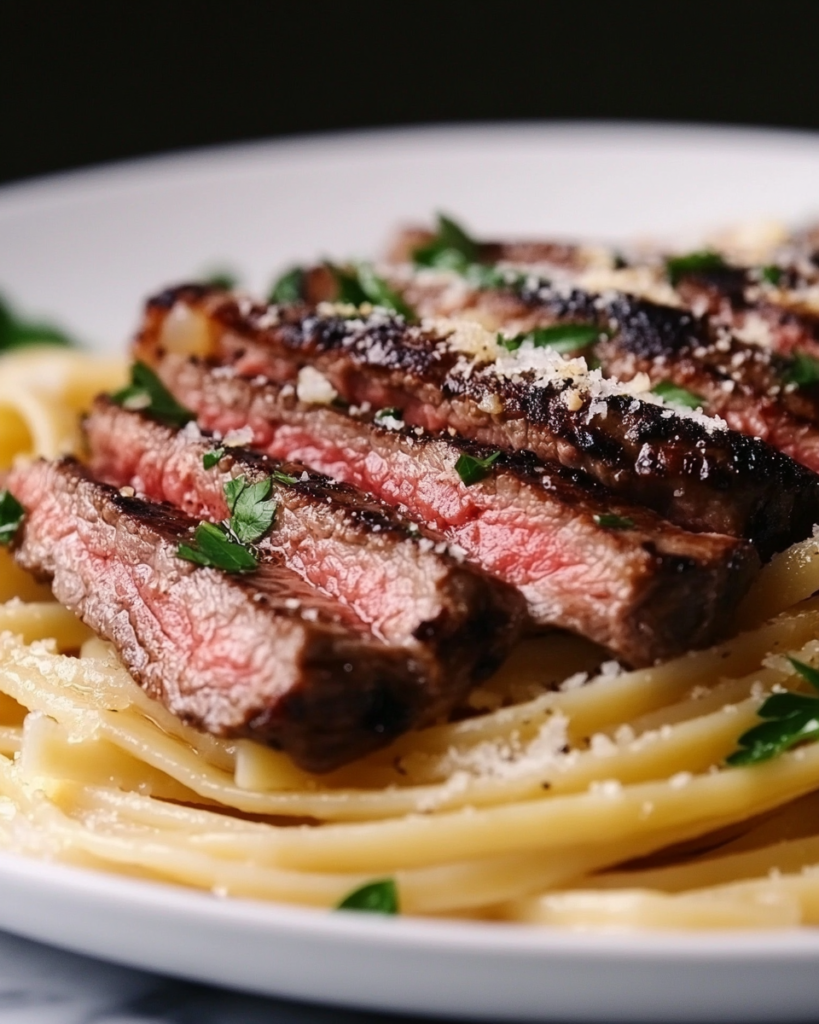
Garlic Butter Steak Pasta brings together tender strips of steak, rich butter, fresh garlic, and perfectly cooked pasta in one deeply satisfying dinner. The sauce lightly coats every bite without feeling heavy, while the steak adds rich flavor that pairs beautifully with the creamy butter base. This dish works well for weeknight meals, date nights at home, or relaxed family dinners when hearty comfort food sounds appealing.
The balance of garlic, butter, Parmesan cheese, and juicy steak creates a rich pasta dish with restaurant-style flavor using simple pantry staples. A touch of pasta water helps the sauce cling to the noodles, while fresh parsley adds brightness at the end. Garlic Butter Steak Pasta also comes together quickly, which makes it practical for busy evenings.
Ingredients Overview
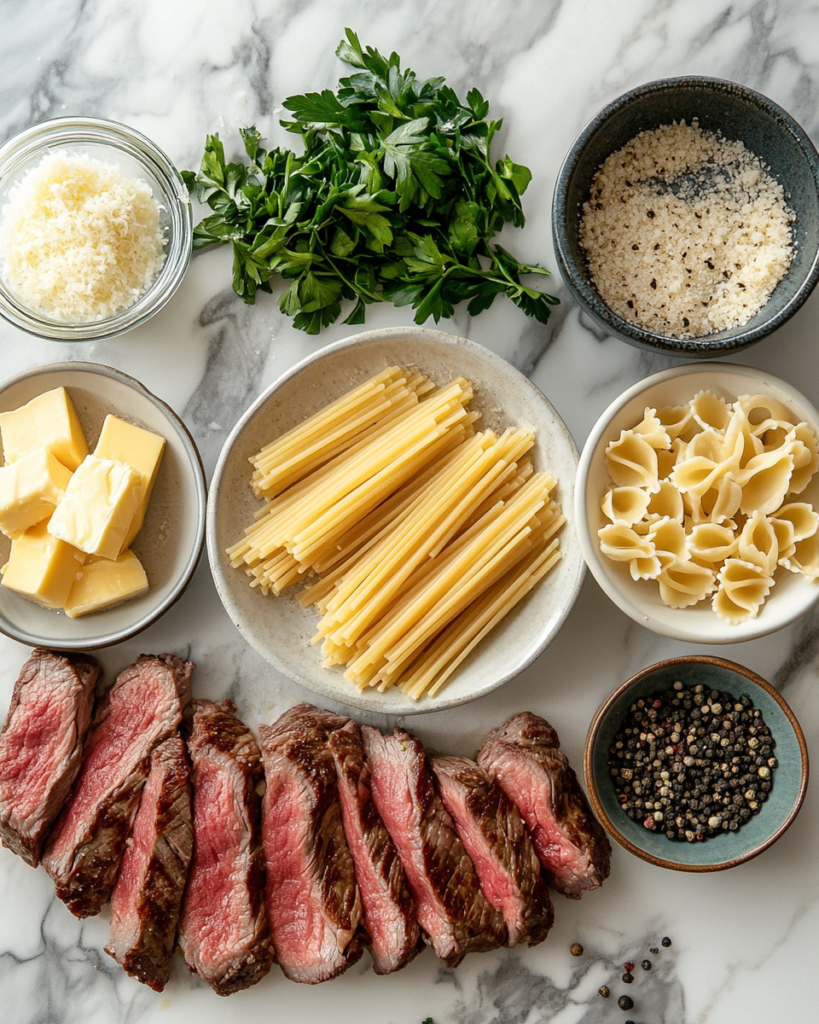
The steak is the centerpiece of Garlic Butter Steak Pasta, so choosing a tender cut matters. Sirloin works very well because it cooks quickly while staying juicy. Ribeye adds extra richness from its marbling, while strip steak gives a slightly firmer texture. Thin slices cook fast and stay tender when added back into the warm sauce near the end.
Butter forms the base of the sauce and carries the garlic flavor throughout the dish. Unsalted butter gives better control over seasoning, especially once Parmesan cheese joins the sauce. Fresh garlic adds depth and aroma that dried garlic powder cannot fully replace. Finely minced cloves melt into the butter and create the classic flavor this pasta is known for.
Pasta choice also affects the final texture. Fettuccine and linguine hold the buttery sauce beautifully, though penne and rigatoni also work well because the sauce settles into the ridges and centers. Cooking the pasta until just al dente keeps it from turning soft after mixing with the hot sauce.
Parmesan cheese thickens the sauce slightly while adding salty richness. Freshly grated cheese melts more smoothly than packaged shredded cheese. Heavy cream is optional but adds a silkier texture for those who enjoy a richer sauce.
Fresh parsley balances the richness with a clean finish. Red pepper flakes add gentle warmth without overpowering the garlic and steak flavors. A squeeze of lemon juice can brighten the dish if the sauce tastes too rich.
Ingredients
1 pound sirloin steak, thinly sliced
12 ounces fettuccine pasta
4 tablespoons unsalted butter
1 tablespoon olive oil
6 cloves garlic, minced
1 teaspoon salt
1/2 teaspoon black pepper
1/2 teaspoon smoked paprika
1/4 teaspoon red pepper flakes
1/2 cup grated Parmesan cheese
1/3 cup reserved pasta water
1/4 cup heavy cream
2 tablespoons chopped fresh parsley
1 teaspoon lemon juice
Extra Parmesan cheese for serving
Step-by-Step Instructions

Bring a large pot of salted water to a boil. Add the fettuccine and cook until al dente according to package directions. Before draining, reserve about 1/3 cup of pasta water. Drain the pasta and set it aside.
Pat the steak slices dry with paper towels. Dry steak browns more evenly and develops richer flavor in the pan. Season the steak with salt, black pepper, and smoked paprika.
Heat a large skillet over medium-high heat. Add the olive oil and 1 tablespoon of butter. Once the butter melts and begins to foam slightly, add the steak in a single layer. Cook in batches if necessary so the pan does not become crowded. Overcrowding traps steam and prevents proper browning.
Cook the steak for about 2 minutes per side until browned and just cooked through. Thin slices cook quickly, so avoid leaving them in the pan too long or the meat can become chewy. Transfer the steak to a plate and loosely cover it with foil.
Lower the heat to medium. Add the remaining butter to the skillet. Stir in the minced garlic and cook for about 30 seconds until fragrant. Garlic burns quickly, so stir constantly during this step.
Pour in the heavy cream and reserved pasta water. Stir gently while scraping up the browned bits from the bottom of the skillet. Those browned bits carry deep flavor and blend beautifully into the sauce.
Add the Parmesan cheese gradually while stirring. The sauce should become smooth and lightly creamy. If it looks too thick, add another splash of pasta water.
Return the cooked pasta to the skillet and toss until fully coated in the garlic butter sauce. Add the steak back into the pan along with any juices collected on the plate. Stir gently so the steak stays tender.
Sprinkle in the parsley and red pepper flakes. Taste the sauce and adjust seasoning if needed. Add the lemon juice for a brighter finish.
Serve immediately with extra Parmesan cheese on top. The pasta should look glossy, while the steak remains juicy and tender.
Tips, Variations & Substitutions
For extra tender steak, slice the meat against the grain into thin strips. This shortens the muscle fibers and creates a softer bite. Allowing the steak to rest for a few minutes after cooking also helps keep the juices inside the meat.
Different pasta shapes work well in this recipe. Linguine gives a classic texture, while penne catches pockets of sauce in every bite. Whole wheat pasta adds a slightly nutty flavor and extra fiber.
Chicken can replace steak for a lighter version, while shrimp cooks quickly and pairs beautifully with garlic butter. Mushrooms also add rich flavor for a meat-free variation. Cremini mushrooms work especially well because they brown nicely in butter.
Fresh spinach can be stirred into the sauce during the final minute of cooking for added color and texture. Sun-dried tomatoes add mild sweetness that balances the richness of the butter and cheese.
If heavy cream feels too rich, replace it with half-and-half or simply increase the reserved pasta water. Freshly grated Parmesan melts more smoothly than pre-shredded cheese and helps create a silkier sauce.
For a stronger garlic flavor, roast several garlic cloves beforehand and stir them into the sauce. Roasted garlic adds sweetness without sharpness.
Serving Ideas & Occasions
Garlic Butter Steak Pasta pairs beautifully with crisp green salads dressed in light vinaigrette. Garlic bread or warm dinner rolls also work nicely for soaking up the buttery sauce left on the plate.
Roasted broccoli, asparagus, or green beans bring freshness and balance to the richness of the pasta. A glass of iced tea, sparkling water with lemon, or red wine complements the savory steak flavors very well.
This pasta dish fits many occasions. It works for relaxed weekend dinners, family gatherings, birthday meals at home, or cozy evenings during cooler months. Since the recipe comes together fairly quickly, it is also practical for busy weekdays when a hearty homemade dinner sounds comforting.
For a dinner party, serve Garlic Butter Steak Pasta with extra Parmesan cheese, fresh parsley, and cracked black pepper on the side so guests can finish their plates to taste.
Nutritional & Health Notes
Garlic Butter Steak Pasta contains a balanced mix of protein, carbohydrates, and fats. The steak supplies protein and iron, while pasta provides energy from carbohydrates. Parmesan cheese adds calcium along with savory flavor.
Using sirloin steak keeps the dish slightly leaner compared to heavily marbled cuts. Fresh garlic contributes strong flavor without requiring large amounts of added ingredients. Parsley adds freshness along with small amounts of vitamins and minerals.
Portion size matters because butter, cream, and cheese can raise the calorie count quickly. Serving the pasta alongside vegetables or salad helps create a more balanced meal. Whole wheat pasta can add extra fiber and help the dish feel more filling.
Reducing the butter slightly or replacing part of the cream with pasta water creates a lighter sauce while still keeping the dish rich and flavorful. Fresh ingredients also help the final dish taste cleaner and brighter.
FAQs
What cut of steak works best for Garlic Butter Steak Pasta?
Sirloin is one of the best choices because it stays tender while cooking quickly in a skillet. Ribeye gives richer flavor due to its marbling, though it can produce slightly more grease in the pan. Strip steak also works nicely and creates hearty texture in the pasta. Thin slices are important because they cook evenly and remain juicy when mixed into the sauce. Tougher cuts like stew meat are not ideal for this recipe because they require longer cooking times. If using flank steak, slice it very thinly against the grain to keep the texture pleasant. No matter which cut you choose, avoid overcooking the steak since it will continue warming once added back into the pasta.
Can I prepare Garlic Butter Steak Pasta ahead of time?
This pasta tastes best freshly cooked because the sauce stays smooth and the steak remains tender. However, parts of the recipe can be prepared earlier in the day. The steak may be sliced and seasoned ahead of time, and the garlic can be minced in advance for faster cooking later. If storing leftovers, keep them in an airtight container in the refrigerator for up to three days. Reheat gently over low heat with a splash of water or cream to loosen the sauce. High heat during reheating can dry out the steak and cause the sauce to separate. Stir frequently while warming to help the pasta regain its creamy texture.
How do I keep the steak from becoming tough?
The biggest mistake is overcooking the meat. Thin steak slices only need a few minutes in a hot skillet. Cooking them too long removes moisture and creates chewy texture. Drying the steak before cooking also helps create better browning without steaming the meat. Another important step is slicing against the grain. This shortens the muscle fibers and creates a softer bite. Letting the steak rest briefly after cooking keeps the juices inside the meat rather than spilling into the pan immediately. When returning the steak to the sauce, simply warm it through instead of cooking it again. Gentle handling helps keep every bite tender.
Can I use another type of pasta?
Yes, many pasta shapes work beautifully in this recipe. Fettuccine and linguine create a classic restaurant-style texture because the buttery sauce coats the noodles evenly. Penne and rigatoni hold sauce inside their centers, which creates rich flavor in every bite. Spaghetti also works if that is already in the pantry. Whole wheat pasta adds slightly firmer texture and extra fiber. Gluten-free pasta can also be used, though it should be cooked carefully because some varieties soften quickly after mixing with sauce. No matter which shape you choose, cooking the pasta until just al dente helps it maintain good texture after combining with the warm sauce.
Is heavy cream necessary in the sauce?
Heavy cream adds richness and gives the sauce a smooth texture, but the recipe still tastes delicious without it. The combination of butter, Parmesan cheese, and reserved pasta water already creates a flavorful coating for the pasta. If you prefer a lighter dish, simply leave out the cream and add a little extra pasta water until the sauce reaches the desired consistency. Half-and-half can also replace heavy cream for a slightly lighter option. The key is stirring the Parmesan slowly into the warm liquid so it melts smoothly. Freshly grated cheese helps create the best texture without becoming grainy.
What vegetables pair well with this dish?
Many vegetables work nicely with Garlic Butter Steak Pasta because they balance the richness of the butter and cheese. Broccoli, asparagus, spinach, and green beans are especially popular choices. Mushrooms also pair beautifully with steak and absorb the garlic butter flavor very well. Cherry tomatoes add mild sweetness and freshness when stirred into the pasta near the end of cooking. Roasted vegetables served on the side create texture contrast while keeping the meal balanced. If adding vegetables directly into the skillet, avoid overcooking them. Slightly crisp vegetables provide better texture alongside the tender pasta and steak.
Can Garlic Butter Steak Pasta be frozen?
Freezing is possible, though the texture changes slightly after thawing. Cream-based sauces sometimes separate once frozen and reheated. If planning to freeze the dish, slightly undercook the pasta so it does not become too soft later. Store the cooled pasta in airtight containers for up to two months. Thaw overnight in the refrigerator before reheating gently on the stovetop. Adding a splash of cream, milk, or water during reheating helps bring the sauce back together. Steak texture may become a bit firmer after freezing, though the flavor still remains rich and satisfying. Fresh parsley should be added after reheating rather than before freezing.