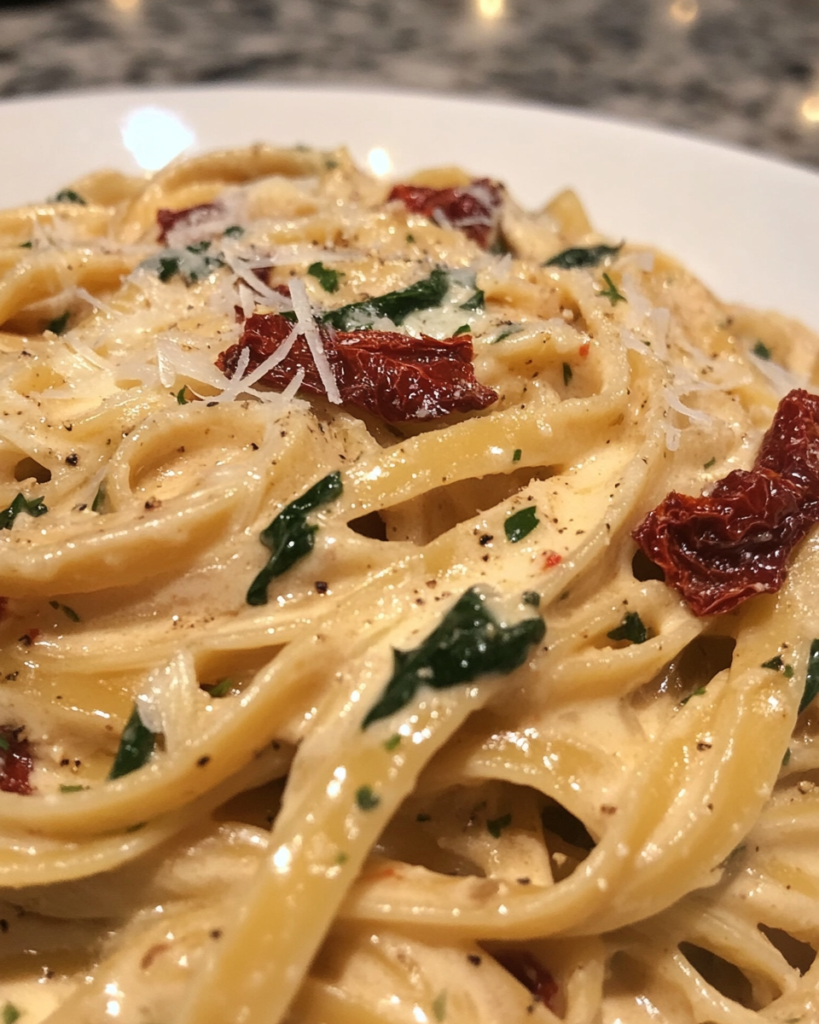
Creamy Sun-Dried Tomato Pasta: 5 Simple Cozy Bowls

Posted on

Uncategorized

Difficulty

Prep time

Cooking time

Total time

Servings

Creamy Sun-Dried Tomato Pasta brings rich tomato depth, silky sauce, tender pasta, and savory Parmesan into one comforting dinner bowl. The combination of garlic, cream, Italian herbs, and sun-dried tomatoes creates a deeply satisfying pasta dish that feels fit for both busy weeknights and relaxed family dinners.

This pasta recipe balances tangy tomato flavor with creamy texture in a way that feels hearty without becoming too heavy. The sun-dried tomatoes add concentrated sweetness and savory richness, while spinach brings freshness and color to the skillet. Every forkful carries a smooth coating of sauce that clings beautifully to the pasta.

Another reason home cooks appreciate Creamy Sun-Dried Tomato Pasta is its flexibility. Chicken, shrimp, mushrooms, or extra vegetables all pair naturally with the sauce. The recipe also comes together quickly, which suits evenings when dinner needs to reach the table without hours in the kitchen.

The sauce begins in one pan with garlic and sun-dried tomatoes gently warming in olive oil. Cream and Parmesan form the velvety base, while pasta water helps the sauce cling to every strand or tube. The final result tastes rich, balanced, and deeply comforting.

Ingredients Overview

The heart of Creamy Sun-Dried Tomato Pasta comes from a handful of pantry-friendly ingredients that work together beautifully. Sun-dried tomatoes provide concentrated tomato flavor with slight sweetness and tangy depth. Oil-packed tomatoes work especially well because the infused oil adds additional savory richness to the sauce.

Heavy cream forms the silky foundation of the dish. It softens the acidity of the tomatoes while creating a luxurious texture that coats the pasta evenly. Half-and-half can replace heavy cream for a lighter result, though the sauce may become slightly thinner.

Fresh garlic adds warmth and aroma. Garlic should cook gently rather than brown heavily, since burnt garlic can leave bitterness in the finished sauce. Parmesan cheese melts into the cream and contributes salty, nutty flavor. Freshly grated Parmesan works best because pre-shredded cheese sometimes leaves a grainy texture.

Pasta shape matters more than many cooks realize. Penne, rigatoni, and fettuccine all hold creamy sauces well. Tube-shaped pasta catches bits of tomato and spinach inside each piece, while long noodles create smooth, creamy strands.

Spinach brings freshness that balances the richness of the cream and cheese. Fresh basil also pairs beautifully with the tomatoes and garlic. Italian seasoning ties everything together with gentle herb flavor.

Chicken broth adds savory depth without overwhelming the sauce. Reserved pasta water also plays an important role because the starch helps the sauce cling naturally to the noodles.

For protein additions, grilled chicken, Italian sausage, or sautéed shrimp fit naturally into the recipe. Mushrooms and roasted zucchini also pair nicely for a vegetable-focused variation.

Ingredients

12 ounces penne pasta

1 tablespoon salt for pasta water

2 tablespoons olive oil

1/2 cup chopped oil-packed sun-dried tomatoes

4 cloves garlic, minced

1 teaspoon Italian seasoning

1/4 teaspoon crushed red pepper flakes

1 cup chicken broth

1 1/4 cups heavy cream

1 cup freshly grated Parmesan cheese

2 cups fresh spinach

1/2 teaspoon salt

1/4 teaspoon black pepper

1/4 cup reserved pasta water

2 tablespoons chopped fresh basil

Extra Parmesan for serving

Step-by-Step Instructions

Fill a large pot with water and bring it to a rolling boil. Add the tablespoon of salt, then cook the penne according to package directions until al dente. The pasta should still carry a slight bite in the center because it will finish cooking in the sauce later. Before draining, reserve about 1/4 cup of the pasta water.

While the pasta cooks, place a large skillet over medium heat. Add the olive oil along with the chopped sun-dried tomatoes. Stir for about 2 minutes so the tomatoes soften slightly and release their savory flavor into the oil.

Add the minced garlic, Italian seasoning, and crushed red pepper flakes. Stir constantly for about 30 seconds. Garlic cooks quickly, so avoid leaving it unattended. If garlic browns too much, the sauce can develop bitterness.

Pour in the chicken broth and scrape the bottom of the skillet gently with a wooden spoon. This step lifts flavorful browned bits from the pan. Allow the broth to simmer for 2 to 3 minutes so the flavors combine.

Lower the heat slightly before adding the heavy cream. Stir steadily while the cream warms. Gentle heat helps prevent curdling or separation. Once the cream reaches a soft simmer, gradually stir in the Parmesan cheese. Add the cheese slowly rather than all at once so it melts smoothly into the sauce.

Season the sauce with salt and black pepper. Taste carefully because Parmesan already contributes saltiness. If the sauce feels too thick, add a splash of reserved pasta water.

Add the spinach to the skillet and stir until wilted. Fresh spinach cooks quickly and usually softens within 1 to 2 minutes. The bright green color balances the creamy tomato sauce beautifully.

Transfer the drained pasta directly into the skillet. Toss thoroughly so every piece becomes coated with sauce. Continue cooking for another minute so the pasta absorbs some of the creamy flavor.

If the sauce tightens too much while standing, stir in another small splash of pasta water. Cream sauces naturally thicken as they cool, so this simple step keeps the texture silky.

Finish with fresh basil and extra Parmesan just before serving. The basil adds freshness that balances the richness of the cream and cheese.

One common issue with creamy pasta recipes comes from overheating the dairy. Keeping the heat moderate helps maintain a smooth sauce. Another mistake involves overcooking the pasta. Slightly firm pasta holds its shape better once mixed with the hot sauce.

Serve the pasta immediately while the sauce remains glossy and creamy.

Tips, Variations & Substitutions

Creamy Sun-Dried Tomato Pasta adapts beautifully to different ingredients and dietary preferences. For additional protein, sliced grilled chicken works especially well because the mild flavor pairs naturally with the creamy tomato sauce. Shrimp also cooks quickly and blends nicely into the skillet during the final few minutes.

For a vegetarian version, mushrooms bring savory depth and hearty texture. Roasted zucchini, broccoli, or asparagus also fit naturally into the dish without overpowering the sauce.

Those seeking a lighter texture can replace heavy cream with half-and-half. The sauce will become slightly thinner but still flavorful. Full-fat coconut milk creates a dairy-free variation with subtle richness that pairs surprisingly well with tomatoes and garlic.

Freshly grated Parmesan creates the smoothest sauce consistency. Pre-packaged shredded cheese sometimes contains anti-caking ingredients that prevent smooth melting.

If the sauce tastes overly rich, a small squeeze of lemon juice brightens the flavors beautifully. Extra basil or parsley also adds freshness.

Penne and rigatoni hold creamy sauce extremely well, though fettuccine or linguine create a softer, silkier presentation. Gluten-free pasta also works successfully, though cooking times may vary slightly.

For additional heat, increase the crushed red pepper flakes gradually. Small adjustments can quickly change the balance of the dish.

Leftovers should cool fully before refrigeration. Reheat gently with a splash of broth or cream to restore the smooth texture.

Serving Ideas & Occasions

Creamy Sun-Dried Tomato Pasta fits many occasions because it feels comforting yet polished enough for guests. It works beautifully for weeknight family dinners, relaxed weekend meals, or casual dinner gatherings.

A crisp green salad with balsamic dressing balances the creamy richness of the pasta nicely. Garlic bread or warm focaccia also pairs naturally with the savory tomato sauce. Roasted vegetables such as asparagus, Brussels sprouts, or green beans bring additional texture and freshness to the meal.

For beverages, sparkling water with lemon keeps the dinner light and refreshing. Iced tea or a light sparkling beverage also pairs comfortably with the creamy flavors.

This pasta recipe suits colder evenings especially well because the rich sauce feels warming and satisfying. It also works wonderfully for date nights at home since the presentation looks elegant without requiring complicated preparation.

Serving the pasta directly from the skillet creates a cozy, family-style presentation that encourages sharing around the table.

Nutritional & Health Notes

Creamy Sun-Dried Tomato Pasta provides a balanced combination of carbohydrates, fats, and protein. Pasta contributes satisfying energy, while Parmesan cheese and cream bring richness and savory flavor.

Sun-dried tomatoes contain concentrated tomato flavor along with small amounts of fiber and potassium. Spinach contributes vitamins, minerals, and freshness that balance the richness of the sauce.

Portion size plays an important role with creamy pasta dishes because the sauce contains dairy and cheese. Pairing the pasta with salad or vegetables creates a more balanced meal.

Protein additions such as chicken or shrimp can increase fullness and nutritional variety. Whole wheat pasta also raises fiber content while adding a slightly nuttier flavor.

Those seeking lower sodium levels may reduce added salt and select lower-sodium broth. Dairy-free substitutions can also work successfully for individuals avoiding cream or cheese.

Despite its rich texture, this pasta recipe can still fit comfortably into a varied meal routine when served alongside lighter side dishes and fresh vegetables.

FAQs

Can I prepare Creamy Sun-Dried Tomato Pasta ahead of time?

Creamy pasta dishes taste best shortly after cooking, though partial preparation works very well. The sauce can be prepared several hours ahead and refrigerated separately from the pasta. When dinner time arrives, warm the sauce gently over low heat while cooking fresh pasta.

Keeping the pasta separate prevents it from absorbing too much sauce during storage. If the sauce thickens in the refrigerator, stir in a small splash of broth, milk, or cream while reheating. Gentle heat remains important because boiling can separate dairy-based sauces.

Fresh basil should enter the dish shortly before serving so the flavor stays bright and fresh.

Which pasta shape works best for this recipe?

Penne and rigatoni remain popular choices because the sauce settles inside the tubes and coats the ridges beautifully. Every bite carries creamy sauce along with bits of sun-dried tomato and spinach.

Fettuccine and linguine also pair wonderfully with creamy sauces because the noodles become coated evenly from end to end. Smaller pasta shapes such as farfalle or rotini can also work nicely.

The most important factor involves cooking the pasta only until al dente. Slightly firm pasta holds texture better after mixing into the warm sauce. Overcooked noodles can become soft quickly once combined with cream and cheese.

Can I add chicken or shrimp to the pasta?

Chicken and shrimp both pair naturally with the creamy tomato sauce. Thinly sliced chicken breast can cook directly in the skillet before the sauce begins. Once fully cooked, transfer the chicken temporarily to a plate and return it during the final mixing stage.

Shrimp cooks quickly and usually requires only a few minutes in the skillet. Add shrimp near the end of cooking so it stays tender rather than rubbery.

Italian sausage also works beautifully for a heartier variation. The savory flavor blends especially well with garlic, Parmesan, and sun-dried tomatoes.

How do I keep the sauce smooth instead of grainy?

Smooth cream sauce depends largely on gentle heat and gradual cheese addition. Parmesan should enter the skillet slowly while stirring continuously. Freshly grated cheese melts far more smoothly than packaged shredded cheese.

Very high heat can separate dairy and create grainy texture. Once cream enters the skillet, moderate heat works best. The sauce only needs a soft simmer rather than a strong boil.

Reserved pasta water also helps create silky texture because the starch supports smooth blending between the cheese, cream, and broth. Even a few tablespoons can improve consistency noticeably.

Can I freeze Creamy Sun-Dried Tomato Pasta?

Cream-based sauces can change texture slightly after freezing because dairy sometimes separates during thawing. While freezing remains possible, the sauce usually tastes best fresh or refrigerated for short-term storage.

If freezing becomes necessary, cool the pasta fully before placing it into airtight containers. Thaw overnight in the refrigerator before reheating gently on the stovetop.

Adding a splash of cream, milk, or broth while reheating helps restore smoother texture. Stir frequently over low heat for the best result. Fresh basil and extra Parmesan should enter after reheating rather than before freezing.

What vegetables pair well with this pasta?

Spinach remains one of the easiest additions because it wilts quickly and balances the richness of the sauce beautifully. Mushrooms also pair especially well with the savory tomato flavor.

Roasted broccoli, asparagus, zucchini, and cherry tomatoes bring freshness and texture to the dish. Vegetables with mild sweetness often balance creamy sauces nicely.

For stronger vegetable flavor, sauté onions or shallots alongside the garlic during the beginning stages of cooking. Roasted red peppers also blend naturally into the creamy tomato base.

Vegetables should stay slightly firm rather than overly soft so the finished pasta carries balanced texture throughout the dish.

How long will leftovers stay fresh?

Leftover Creamy Sun-Dried Tomato Pasta generally stays fresh for about 3 days when refrigerated in a sealed container. Because the sauce thickens during storage, reheating gently with extra liquid helps restore the original creamy consistency.

Low stovetop heat usually produces better texture than high microwave heat. Stirring occasionally prevents sticking and helps the sauce warm evenly.

Fresh herbs should enter after reheating for the brightest flavor. If the pasta absorbs too much sauce overnight, adding a splash of broth or cream usually solves the issue quickly while bringing back smooth texture.

[rank_math_breadcrumb]

Creamy Sun-Dried Tomato Pasta: 5 Simple Cozy Bowls

Photo of author
Author: Olivia
Published:

Creamy Sun-Dried Tomato Pasta brings rich tomato depth, silky sauce, tender pasta, and savory Parmesan into one comforting dinner bowl. The combination of garlic, cream, Italian herbs, and sun-dried tomatoes creates a deeply satisfying pasta dish that feels fit for both busy weeknights and relaxed family dinners.

This pasta recipe balances tangy tomato flavor with creamy texture in a way that feels hearty without becoming too heavy. The sun-dried tomatoes add concentrated sweetness and savory richness, while spinach brings freshness and color to the skillet. Every forkful carries a smooth coating of sauce that clings beautifully to the pasta.

Another reason home cooks appreciate Creamy Sun-Dried Tomato Pasta is its flexibility. Chicken, shrimp, mushrooms, or extra vegetables all pair naturally with the sauce. The recipe also comes together quickly, which suits evenings when dinner needs to reach the table without hours in the kitchen.

The sauce begins in one pan with garlic and sun-dried tomatoes gently warming in olive oil. Cream and Parmesan form the velvety base, while pasta water helps the sauce cling to every strand or tube. The final result tastes rich, balanced, and deeply comforting.

Ingredients Overview

The heart of Creamy Sun-Dried Tomato Pasta comes from a handful of pantry-friendly ingredients that work together beautifully. Sun-dried tomatoes provide concentrated tomato flavor with slight sweetness and tangy depth. Oil-packed tomatoes work especially well because the infused oil adds additional savory richness to the sauce.

Heavy cream forms the silky foundation of the dish. It softens the acidity of the tomatoes while creating a luxurious texture that coats the pasta evenly. Half-and-half can replace heavy cream for a lighter result, though the sauce may become slightly thinner.

Fresh garlic adds warmth and aroma. Garlic should cook gently rather than brown heavily, since burnt garlic can leave bitterness in the finished sauce. Parmesan cheese melts into the cream and contributes salty, nutty flavor. Freshly grated Parmesan works best because pre-shredded cheese sometimes leaves a grainy texture.

Pasta shape matters more than many cooks realize. Penne, rigatoni, and fettuccine all hold creamy sauces well. Tube-shaped pasta catches bits of tomato and spinach inside each piece, while long noodles create smooth, creamy strands.

Spinach brings freshness that balances the richness of the cream and cheese. Fresh basil also pairs beautifully with the tomatoes and garlic. Italian seasoning ties everything together with gentle herb flavor.

Chicken broth adds savory depth without overwhelming the sauce. Reserved pasta water also plays an important role because the starch helps the sauce cling naturally to the noodles.

For protein additions, grilled chicken, Italian sausage, or sautéed shrimp fit naturally into the recipe. Mushrooms and roasted zucchini also pair nicely for a vegetable-focused variation.

Ingredients

12 ounces penne pasta

1 tablespoon salt for pasta water

2 tablespoons olive oil

1/2 cup chopped oil-packed sun-dried tomatoes

4 cloves garlic, minced

1 teaspoon Italian seasoning

1/4 teaspoon crushed red pepper flakes

1 cup chicken broth

1 1/4 cups heavy cream

1 cup freshly grated Parmesan cheese

2 cups fresh spinach

1/2 teaspoon salt

1/4 teaspoon black pepper

1/4 cup reserved pasta water

2 tablespoons chopped fresh basil

Extra Parmesan for serving

Step-by-Step Instructions

Fill a large pot with water and bring it to a rolling boil. Add the tablespoon of salt, then cook the penne according to package directions until al dente. The pasta should still carry a slight bite in the center because it will finish cooking in the sauce later. Before draining, reserve about 1/4 cup of the pasta water.

While the pasta cooks, place a large skillet over medium heat. Add the olive oil along with the chopped sun-dried tomatoes. Stir for about 2 minutes so the tomatoes soften slightly and release their savory flavor into the oil.

Add the minced garlic, Italian seasoning, and crushed red pepper flakes. Stir constantly for about 30 seconds. Garlic cooks quickly, so avoid leaving it unattended. If garlic browns too much, the sauce can develop bitterness.

Pour in the chicken broth and scrape the bottom of the skillet gently with a wooden spoon. This step lifts flavorful browned bits from the pan. Allow the broth to simmer for 2 to 3 minutes so the flavors combine.

Lower the heat slightly before adding the heavy cream. Stir steadily while the cream warms. Gentle heat helps prevent curdling or separation. Once the cream reaches a soft simmer, gradually stir in the Parmesan cheese. Add the cheese slowly rather than all at once so it melts smoothly into the sauce.

Season the sauce with salt and black pepper. Taste carefully because Parmesan already contributes saltiness. If the sauce feels too thick, add a splash of reserved pasta water.

Add the spinach to the skillet and stir until wilted. Fresh spinach cooks quickly and usually softens within 1 to 2 minutes. The bright green color balances the creamy tomato sauce beautifully.

Transfer the drained pasta directly into the skillet. Toss thoroughly so every piece becomes coated with sauce. Continue cooking for another minute so the pasta absorbs some of the creamy flavor.

If the sauce tightens too much while standing, stir in another small splash of pasta water. Cream sauces naturally thicken as they cool, so this simple step keeps the texture silky.

Finish with fresh basil and extra Parmesan just before serving. The basil adds freshness that balances the richness of the cream and cheese.

One common issue with creamy pasta recipes comes from overheating the dairy. Keeping the heat moderate helps maintain a smooth sauce. Another mistake involves overcooking the pasta. Slightly firm pasta holds its shape better once mixed with the hot sauce.

Serve the pasta immediately while the sauce remains glossy and creamy.

Tips, Variations & Substitutions

Creamy Sun-Dried Tomato Pasta adapts beautifully to different ingredients and dietary preferences. For additional protein, sliced grilled chicken works especially well because the mild flavor pairs naturally with the creamy tomato sauce. Shrimp also cooks quickly and blends nicely into the skillet during the final few minutes.

For a vegetarian version, mushrooms bring savory depth and hearty texture. Roasted zucchini, broccoli, or asparagus also fit naturally into the dish without overpowering the sauce.

Those seeking a lighter texture can replace heavy cream with half-and-half. The sauce will become slightly thinner but still flavorful. Full-fat coconut milk creates a dairy-free variation with subtle richness that pairs surprisingly well with tomatoes and garlic.

Freshly grated Parmesan creates the smoothest sauce consistency. Pre-packaged shredded cheese sometimes contains anti-caking ingredients that prevent smooth melting.

If the sauce tastes overly rich, a small squeeze of lemon juice brightens the flavors beautifully. Extra basil or parsley also adds freshness.

Penne and rigatoni hold creamy sauce extremely well, though fettuccine or linguine create a softer, silkier presentation. Gluten-free pasta also works successfully, though cooking times may vary slightly.

For additional heat, increase the crushed red pepper flakes gradually. Small adjustments can quickly change the balance of the dish.

Leftovers should cool fully before refrigeration. Reheat gently with a splash of broth or cream to restore the smooth texture.

Serving Ideas & Occasions

Creamy Sun-Dried Tomato Pasta fits many occasions because it feels comforting yet polished enough for guests. It works beautifully for weeknight family dinners, relaxed weekend meals, or casual dinner gatherings.

A crisp green salad with balsamic dressing balances the creamy richness of the pasta nicely. Garlic bread or warm focaccia also pairs naturally with the savory tomato sauce. Roasted vegetables such as asparagus, Brussels sprouts, or green beans bring additional texture and freshness to the meal.

For beverages, sparkling water with lemon keeps the dinner light and refreshing. Iced tea or a light sparkling beverage also pairs comfortably with the creamy flavors.

This pasta recipe suits colder evenings especially well because the rich sauce feels warming and satisfying. It also works wonderfully for date nights at home since the presentation looks elegant without requiring complicated preparation.

Serving the pasta directly from the skillet creates a cozy, family-style presentation that encourages sharing around the table.

Nutritional & Health Notes

Creamy Sun-Dried Tomato Pasta provides a balanced combination of carbohydrates, fats, and protein. Pasta contributes satisfying energy, while Parmesan cheese and cream bring richness and savory flavor.

Sun-dried tomatoes contain concentrated tomato flavor along with small amounts of fiber and potassium. Spinach contributes vitamins, minerals, and freshness that balance the richness of the sauce.

Portion size plays an important role with creamy pasta dishes because the sauce contains dairy and cheese. Pairing the pasta with salad or vegetables creates a more balanced meal.

Protein additions such as chicken or shrimp can increase fullness and nutritional variety. Whole wheat pasta also raises fiber content while adding a slightly nuttier flavor.

Those seeking lower sodium levels may reduce added salt and select lower-sodium broth. Dairy-free substitutions can also work successfully for individuals avoiding cream or cheese.

Despite its rich texture, this pasta recipe can still fit comfortably into a varied meal routine when served alongside lighter side dishes and fresh vegetables.

FAQs

Can I prepare Creamy Sun-Dried Tomato Pasta ahead of time?

Creamy pasta dishes taste best shortly after cooking, though partial preparation works very well. The sauce can be prepared several hours ahead and refrigerated separately from the pasta. When dinner time arrives, warm the sauce gently over low heat while cooking fresh pasta.

Keeping the pasta separate prevents it from absorbing too much sauce during storage. If the sauce thickens in the refrigerator, stir in a small splash of broth, milk, or cream while reheating. Gentle heat remains important because boiling can separate dairy-based sauces.

Fresh basil should enter the dish shortly before serving so the flavor stays bright and fresh.

Which pasta shape works best for this recipe?

Penne and rigatoni remain popular choices because the sauce settles inside the tubes and coats the ridges beautifully. Every bite carries creamy sauce along with bits of sun-dried tomato and spinach.

Fettuccine and linguine also pair wonderfully with creamy sauces because the noodles become coated evenly from end to end. Smaller pasta shapes such as farfalle or rotini can also work nicely.

The most important factor involves cooking the pasta only until al dente. Slightly firm pasta holds texture better after mixing into the warm sauce. Overcooked noodles can become soft quickly once combined with cream and cheese.

Can I add chicken or shrimp to the pasta?

Chicken and shrimp both pair naturally with the creamy tomato sauce. Thinly sliced chicken breast can cook directly in the skillet before the sauce begins. Once fully cooked, transfer the chicken temporarily to a plate and return it during the final mixing stage.

Shrimp cooks quickly and usually requires only a few minutes in the skillet. Add shrimp near the end of cooking so it stays tender rather than rubbery.

Italian sausage also works beautifully for a heartier variation. The savory flavor blends especially well with garlic, Parmesan, and sun-dried tomatoes.

How do I keep the sauce smooth instead of grainy?

Smooth cream sauce depends largely on gentle heat and gradual cheese addition. Parmesan should enter the skillet slowly while stirring continuously. Freshly grated cheese melts far more smoothly than packaged shredded cheese.

Very high heat can separate dairy and create grainy texture. Once cream enters the skillet, moderate heat works best. The sauce only needs a soft simmer rather than a strong boil.

Reserved pasta water also helps create silky texture because the starch supports smooth blending between the cheese, cream, and broth. Even a few tablespoons can improve consistency noticeably.

Can I freeze Creamy Sun-Dried Tomato Pasta?

Cream-based sauces can change texture slightly after freezing because dairy sometimes separates during thawing. While freezing remains possible, the sauce usually tastes best fresh or refrigerated for short-term storage.

If freezing becomes necessary, cool the pasta fully before placing it into airtight containers. Thaw overnight in the refrigerator before reheating gently on the stovetop.

Adding a splash of cream, milk, or broth while reheating helps restore smoother texture. Stir frequently over low heat for the best result. Fresh basil and extra Parmesan should enter after reheating rather than before freezing.

What vegetables pair well with this pasta?

Spinach remains one of the easiest additions because it wilts quickly and balances the richness of the sauce beautifully. Mushrooms also pair especially well with the savory tomato flavor.

Roasted broccoli, asparagus, zucchini, and cherry tomatoes bring freshness and texture to the dish. Vegetables with mild sweetness often balance creamy sauces nicely.

For stronger vegetable flavor, sauté onions or shallots alongside the garlic during the beginning stages of cooking. Roasted red peppers also blend naturally into the creamy tomato base.

Vegetables should stay slightly firm rather than overly soft so the finished pasta carries balanced texture throughout the dish.

How long will leftovers stay fresh?

Leftover Creamy Sun-Dried Tomato Pasta generally stays fresh for about 3 days when refrigerated in a sealed container. Because the sauce thickens during storage, reheating gently with extra liquid helps restore the original creamy consistency.

Low stovetop heat usually produces better texture than high microwave heat. Stirring occasionally prevents sticking and helps the sauce warm evenly.

Fresh herbs should enter after reheating for the brightest flavor. If the pasta absorbs too much sauce overnight, adding a splash of broth or cream usually solves the issue quickly while bringing back smooth texture.
Name

Lorem ipsum dolor sit amet, consectetur adipiscing elit. Suspendisse varius enim in eros elementum tristique. Duis cursus, mi quis viverra ornare, eros dolor interdum nulla, ut commodo diam libero vitae erat.

You Might Also Like...

Garlic Butter Steak & Veggies: 30-Minute Amazing Supper

Garlic Butter Steak & Veggies: 30-Minute Amazing Supper

Buffalo Chicken Meal Prep Bowls: 5 Practical Savory Plates

Buffalo Chicken Meal Prep Bowls: 5 Practical Savory Plates

Mediterranean Chicken & Rice: 5 Amazing Comforting Bowls

Mediterranean Chicken & Rice: 5 Amazing Comforting Bowls

Teriyaki Chicken Meal Boxes: 5 Simple Comforting Ideas

Teriyaki Chicken Meal Boxes: 5 Simple Comforting Ideas

Tags:

You might also like these recipes

Leave a Comment