Bruschetta Chicken Parmesan Pasta 7 Ultimate Hidden Bake

Posted on

Uncategorized

Difficulty

Prep time

Cooking time

Total time

Servings

A rustic Italian-inspired pasta dish brings together tender chicken, ripe tomato notes, garlic aroma, and melted cheese layered into a single baked creation. Bruschetta Chicken Parmesan Pasta blends familiar comfort elements with bright herb accents and a savory tomato base that coats every strand of pasta.

The dish draws influence from classic chicken parmesan while borrowing fresh topping ideas from bruschetta. Juicy chicken pieces are combined with pasta, then coated in a tomato-garlic mixture and finished under a layer of melted cheese until bubbling at the edges.

Each bite carries contrast: soft pasta, lightly crisped cheese, and a tomato mixture infused with basil and olive oil. The result is a hearty oven-baked pasta that feels satisfying without being overly heavy, while still delivering depth from layered seasoning and slow baking.

This preparation works well for family-style serving, casual gatherings, or batch-style meal preparation for multiple portions across several days.


Ingredients Overview
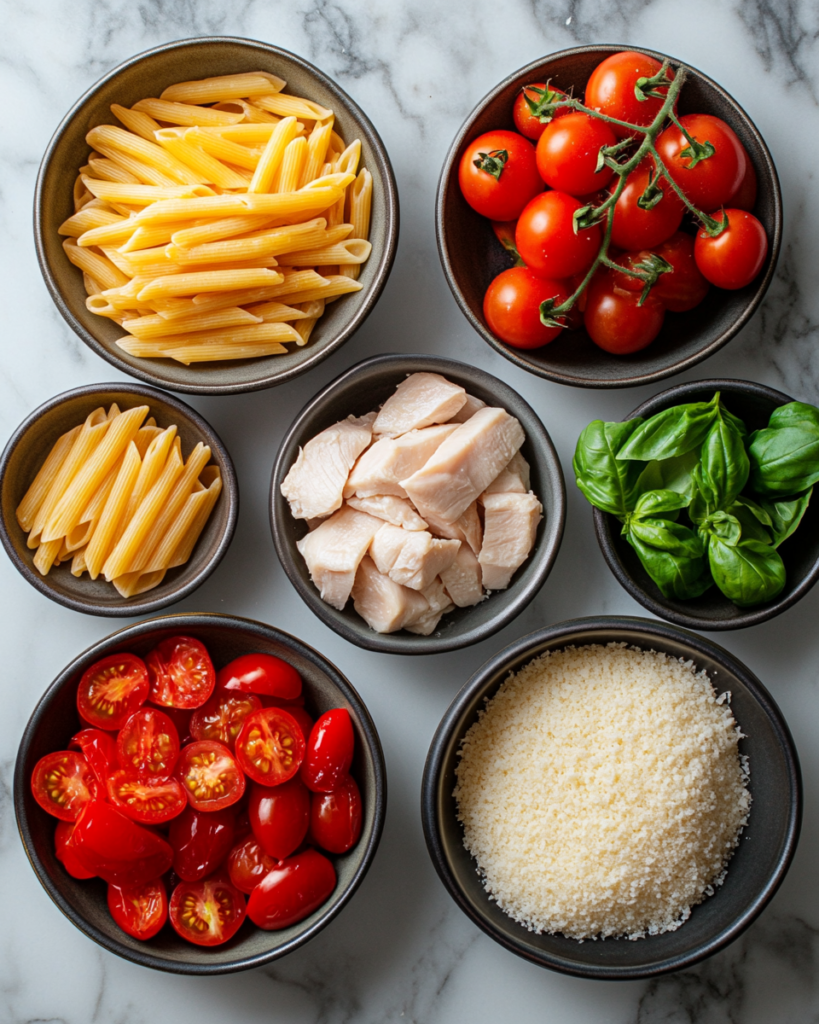
This dish relies on simple, recognizable ingredients that interact to create layered flavor. The base begins with pasta, which acts as a neutral carrier for the tomato and chicken mixture. Short pasta shapes such as penne or rigatoni are commonly selected because their ridges hold sauce effectively.

Chicken breast is used for lean protein content and mild flavor. When cooked properly, it remains tender and absorbs seasoning from garlic, herbs, and tomato juices during baking.

Tomatoes play a central role. Fresh diced tomatoes provide brightness, while crushed tomatoes contribute body and moisture. Garlic adds depth and aromatic intensity, especially when gently sautéed in olive oil before combining with other components.

Fresh basil introduces herbal fragrance that balances acidity from tomatoes. Parmesan contributes saltiness and sharpness, while mozzarella melts into a creamy top layer that binds the dish visually and texturally.

Olive oil supports sautéing and carries flavor from garlic and herbs throughout the mixture. Salt and black pepper provide foundational seasoning, while optional red pepper flakes introduce gentle heat.

Ingredient substitutions can be made depending on availability. Chicken thighs may replace chicken breast for richer texture. Canned diced tomatoes may be used instead of fresh. Gluten-free pasta varieties also perform well, although cooking texture may vary slightly.


Ingredients

12 ounces penne pasta
2 large chicken breasts, diced
2 tablespoons olive oil
3 cloves garlic, minced
1 teaspoon salt
1/2 teaspoon black pepper
1 teaspoon dried oregano
1/2 teaspoon red pepper flakes
1 1/2 cups diced tomatoes
1 cup crushed tomatoes
1/4 cup fresh basil, chopped
1 cup shredded mozzarella cheese
1/2 cup grated Parmesan cheese
1 tablespoon balsamic vinegar
1/2 teaspoon sugar
1/4 cup reserved pasta cooking water


Step-by-Step Instructions

Begin by preparing pasta in a large pot of salted boiling water. Cook until firm yet tender. Reserve a small portion of cooking liquid before draining, as this helps adjust sauce consistency later.

Chicken pieces should be seasoned with salt, black pepper, and oregano. Heat olive oil in a skillet over medium heat, then add chicken. Cook until exterior develops light browning and interior reaches full doneness. Remove from heat and set aside.

In the same skillet, add minced garlic and gently cook until fragrant. Avoid high heat to prevent bitterness. Add diced tomatoes and crushed tomatoes, stirring to combine with garlic and remaining oil.

Allow tomato mixture to simmer gently so moisture reduces slightly and flavors deepen. Add balsamic vinegar and sugar to balance acidity. Stir in red pepper flakes if mild heat is desired.

Return cooked chicken to the skillet, mixing so pieces are coated in tomato mixture. Add fresh basil near the end of simmering to preserve herbal aroma.

Combine cooked pasta with sauce and chicken mixture in a large baking dish. If mixture appears thick, add reserved pasta liquid gradually until desired consistency forms.

Spread mozzarella evenly across the surface, followed by Parmesan. Place dish in oven and bake until cheese melts completely and surface develops light golden color.

After baking, allow brief resting period so layers settle. This improves structure when serving portions.


Tips, Variations & Substitutions

Pasta shape influences final texture. Short ridged varieties hold sauce more effectively than smooth shapes. Cooking pasta slightly before full softness prevents overly soft results after baking.

Chicken thighs offer a richer profile compared to breast meat. For a lighter preparation, turkey breast can be used instead.

Tomato balance can be adjusted through vinegar or sugar. Small adjustments influence acidity and depth without changing core structure.

Herb variations may include oregano, thyme, or parsley depending on preference. Fresh herbs deliver stronger aroma compared to dried versions.

For a creamier result, a small amount of ricotta can be added between pasta layers before baking.

Red pepper flakes can be omitted for a milder profile or increased for stronger heat presence.


Serving Ideas & Occasions

This baked pasta works well as a centerpiece dish for shared dining settings. It pairs effectively with lightly dressed greens or roasted vegetables that contrast its richness.

Garlic-infused bread or toasted slices complement texture variety. A simple broth-based soup can also serve as a starter before serving this pasta dish.

The preparation is suitable for gatherings where food can be served directly from baking dish to table. It also performs well when prepared earlier and reheated, as flavors continue developing over short resting periods.


Nutritional & Health Notes

This dish contains a balance of carbohydrates from pasta, protein from chicken, and fats from cheese and olive oil. Tomato-based sauce contributes vitamins and natural plant compounds.

Portion size influences overall caloric intake, especially due to cheese content. Reducing cheese quantity can lower fat levels while maintaining core flavor structure.

Lean chicken provides a substantial protein source, supporting satiety. Tomato ingredients add hydration and light acidity that balance heavier components.


FAQs

Can pasta shape change final texture?

Yes, pasta shape significantly influences sauce retention. Short tubular or ridged varieties hold tomato mixture more effectively than long or smooth pasta types. Shapes with grooves allow sauce to cling, improving flavor distribution across each bite. When using thinner pasta, sauce may coat less evenly, producing a lighter consistency. Selection should align with preference for either structured or softer final texture.

Can preparation occur ahead of baking?

Preparation can be completed earlier in the day. Cooked pasta and sauce mixture can remain combined in refrigeration before final baking stage. Cheese topping should be added immediately before baking to preserve texture. Allow dish to reach near room temperature before placing into oven for more even heating throughout layers.

Can other proteins replace chicken?

Alternative proteins such as turkey or plant-based substitutes can be used. Texture and seasoning absorption vary depending on selected protein. Lean meats require careful cooking to avoid dryness, while plant-based options may require shorter cooking duration. Tomato and herb mixture remains compatible across protein types.

What prevents sauce from becoming too thick?

Reserved pasta cooking liquid plays an important role in adjusting consistency. Gradual addition during mixing helps maintain smooth coating across pasta. Excess reduction during simmering stage can also lead to thicker texture, so monitoring heat level is important.

Can cheese types be changed?

Mozzarella and Parmesan provide standard texture and flavor balance, but other cheeses may be introduced. Provolone or fontina can add creamier melt characteristics. Hard aged cheeses may increase salt intensity, requiring adjustment in seasoning elsewhere.

How should leftovers be stored?

Leftover portions should be placed in sealed containers and refrigerated. Reheating can be done in oven or stovetop with small amount of added liquid to restore moisture. Texture may become denser after refrigeration, but flavor remains stable.

Can fresh tomatoes replace canned versions?

Fresh tomatoes can be used when in season. They should be chopped finely and cooked slightly longer to release juices. Canned tomatoes provide consistent texture and moisture, while fresh varieties offer brighter flavor notes depending on ripeness.

[rank_math_breadcrumb]

Bruschetta Chicken Parmesan Pasta 7 Ultimate Hidden Bake

Photo of author
Author: Olivia
Published:

A rustic Italian-inspired pasta dish brings together tender chicken, ripe tomato notes, garlic aroma, and melted cheese layered into a single baked creation. Bruschetta Chicken Parmesan Pasta blends familiar comfort elements with bright herb accents and a savory tomato base that coats every strand of pasta.

The dish draws influence from classic chicken parmesan while borrowing fresh topping ideas from bruschetta. Juicy chicken pieces are combined with pasta, then coated in a tomato-garlic mixture and finished under a layer of melted cheese until bubbling at the edges.

Each bite carries contrast: soft pasta, lightly crisped cheese, and a tomato mixture infused with basil and olive oil. The result is a hearty oven-baked pasta that feels satisfying without being overly heavy, while still delivering depth from layered seasoning and slow baking.

This preparation works well for family-style serving, casual gatherings, or batch-style meal preparation for multiple portions across several days.


Ingredients Overview

This dish relies on simple, recognizable ingredients that interact to create layered flavor. The base begins with pasta, which acts as a neutral carrier for the tomato and chicken mixture. Short pasta shapes such as penne or rigatoni are commonly selected because their ridges hold sauce effectively.

Chicken breast is used for lean protein content and mild flavor. When cooked properly, it remains tender and absorbs seasoning from garlic, herbs, and tomato juices during baking.

Tomatoes play a central role. Fresh diced tomatoes provide brightness, while crushed tomatoes contribute body and moisture. Garlic adds depth and aromatic intensity, especially when gently sautéed in olive oil before combining with other components.

Fresh basil introduces herbal fragrance that balances acidity from tomatoes. Parmesan contributes saltiness and sharpness, while mozzarella melts into a creamy top layer that binds the dish visually and texturally.

Olive oil supports sautéing and carries flavor from garlic and herbs throughout the mixture. Salt and black pepper provide foundational seasoning, while optional red pepper flakes introduce gentle heat.

Ingredient substitutions can be made depending on availability. Chicken thighs may replace chicken breast for richer texture. Canned diced tomatoes may be used instead of fresh. Gluten-free pasta varieties also perform well, although cooking texture may vary slightly.


Ingredients

12 ounces penne pasta
2 large chicken breasts, diced
2 tablespoons olive oil
3 cloves garlic, minced
1 teaspoon salt
1/2 teaspoon black pepper
1 teaspoon dried oregano
1/2 teaspoon red pepper flakes
1 1/2 cups diced tomatoes
1 cup crushed tomatoes
1/4 cup fresh basil, chopped
1 cup shredded mozzarella cheese
1/2 cup grated Parmesan cheese
1 tablespoon balsamic vinegar
1/2 teaspoon sugar
1/4 cup reserved pasta cooking water


Step-by-Step Instructions

Begin by preparing pasta in a large pot of salted boiling water. Cook until firm yet tender. Reserve a small portion of cooking liquid before draining, as this helps adjust sauce consistency later.

Chicken pieces should be seasoned with salt, black pepper, and oregano. Heat olive oil in a skillet over medium heat, then add chicken. Cook until exterior develops light browning and interior reaches full doneness. Remove from heat and set aside.

In the same skillet, add minced garlic and gently cook until fragrant. Avoid high heat to prevent bitterness. Add diced tomatoes and crushed tomatoes, stirring to combine with garlic and remaining oil.

Allow tomato mixture to simmer gently so moisture reduces slightly and flavors deepen. Add balsamic vinegar and sugar to balance acidity. Stir in red pepper flakes if mild heat is desired.

Return cooked chicken to the skillet, mixing so pieces are coated in tomato mixture. Add fresh basil near the end of simmering to preserve herbal aroma.

Combine cooked pasta with sauce and chicken mixture in a large baking dish. If mixture appears thick, add reserved pasta liquid gradually until desired consistency forms.

Spread mozzarella evenly across the surface, followed by Parmesan. Place dish in oven and bake until cheese melts completely and surface develops light golden color.

After baking, allow brief resting period so layers settle. This improves structure when serving portions.


Tips, Variations & Substitutions

Pasta shape influences final texture. Short ridged varieties hold sauce more effectively than smooth shapes. Cooking pasta slightly before full softness prevents overly soft results after baking.

Chicken thighs offer a richer profile compared to breast meat. For a lighter preparation, turkey breast can be used instead.

Tomato balance can be adjusted through vinegar or sugar. Small adjustments influence acidity and depth without changing core structure.

Herb variations may include oregano, thyme, or parsley depending on preference. Fresh herbs deliver stronger aroma compared to dried versions.

For a creamier result, a small amount of ricotta can be added between pasta layers before baking.

Red pepper flakes can be omitted for a milder profile or increased for stronger heat presence.


Serving Ideas & Occasions

This baked pasta works well as a centerpiece dish for shared dining settings. It pairs effectively with lightly dressed greens or roasted vegetables that contrast its richness.

Garlic-infused bread or toasted slices complement texture variety. A simple broth-based soup can also serve as a starter before serving this pasta dish.

The preparation is suitable for gatherings where food can be served directly from baking dish to table. It also performs well when prepared earlier and reheated, as flavors continue developing over short resting periods.


Nutritional & Health Notes

This dish contains a balance of carbohydrates from pasta, protein from chicken, and fats from cheese and olive oil. Tomato-based sauce contributes vitamins and natural plant compounds.

Portion size influences overall caloric intake, especially due to cheese content. Reducing cheese quantity can lower fat levels while maintaining core flavor structure.

Lean chicken provides a substantial protein source, supporting satiety. Tomato ingredients add hydration and light acidity that balance heavier components.


FAQs

Can pasta shape change final texture?

Yes, pasta shape significantly influences sauce retention. Short tubular or ridged varieties hold tomato mixture more effectively than long or smooth pasta types. Shapes with grooves allow sauce to cling, improving flavor distribution across each bite. When using thinner pasta, sauce may coat less evenly, producing a lighter consistency. Selection should align with preference for either structured or softer final texture.

Can preparation occur ahead of baking?

Preparation can be completed earlier in the day. Cooked pasta and sauce mixture can remain combined in refrigeration before final baking stage. Cheese topping should be added immediately before baking to preserve texture. Allow dish to reach near room temperature before placing into oven for more even heating throughout layers.

Can other proteins replace chicken?

Alternative proteins such as turkey or plant-based substitutes can be used. Texture and seasoning absorption vary depending on selected protein. Lean meats require careful cooking to avoid dryness, while plant-based options may require shorter cooking duration. Tomato and herb mixture remains compatible across protein types.

What prevents sauce from becoming too thick?

Reserved pasta cooking liquid plays an important role in adjusting consistency. Gradual addition during mixing helps maintain smooth coating across pasta. Excess reduction during simmering stage can also lead to thicker texture, so monitoring heat level is important.

Can cheese types be changed?

Mozzarella and Parmesan provide standard texture and flavor balance, but other cheeses may be introduced. Provolone or fontina can add creamier melt characteristics. Hard aged cheeses may increase salt intensity, requiring adjustment in seasoning elsewhere.

How should leftovers be stored?

Leftover portions should be placed in sealed containers and refrigerated. Reheating can be done in oven or stovetop with small amount of added liquid to restore moisture. Texture may become denser after refrigeration, but flavor remains stable.

Can fresh tomatoes replace canned versions?

Fresh tomatoes can be used when in season. They should be chopped finely and cooked slightly longer to release juices. Canned tomatoes provide consistent texture and moisture, while fresh varieties offer brighter flavor notes depending on ripeness.
Name

Lorem ipsum dolor sit amet, consectetur adipiscing elit. Suspendisse varius enim in eros elementum tristique. Duis cursus, mi quis viverra ornare, eros dolor interdum nulla, ut commodo diam libero vitae erat.

You Might Also Like...

Garlic Butter Steak & Veggies: 30-Minute Amazing Supper

Garlic Butter Steak & Veggies: 30-Minute Amazing Supper

Buffalo Chicken Meal Prep Bowls: 5 Practical Savory Plates

Buffalo Chicken Meal Prep Bowls: 5 Practical Savory Plates

Mediterranean Chicken & Rice: 5 Amazing Comforting Bowls

Mediterranean Chicken & Rice: 5 Amazing Comforting Bowls

Teriyaki Chicken Meal Boxes: 5 Simple Comforting Ideas

Teriyaki Chicken Meal Boxes: 5 Simple Comforting Ideas

Tags:

You might also like these recipes

Leave a Comment