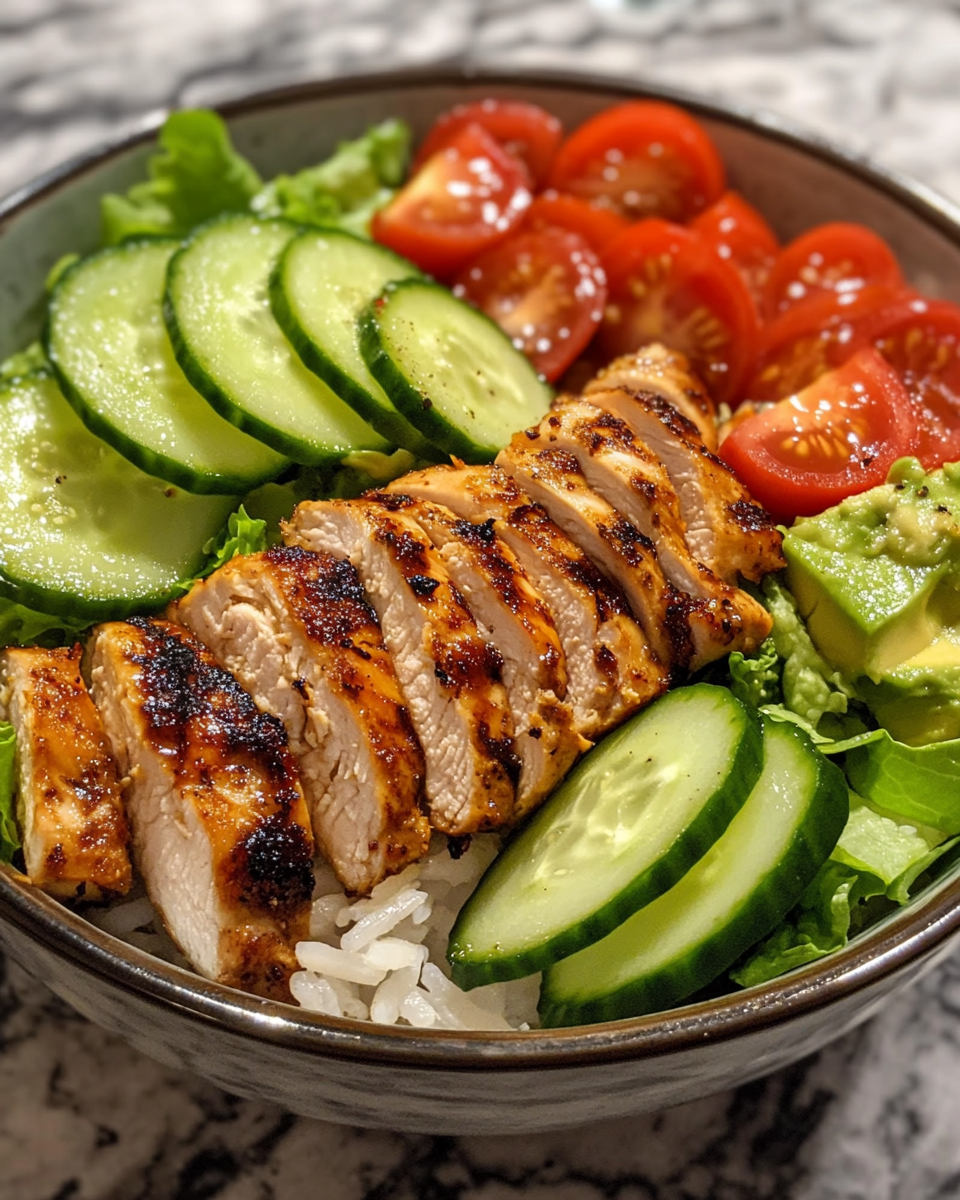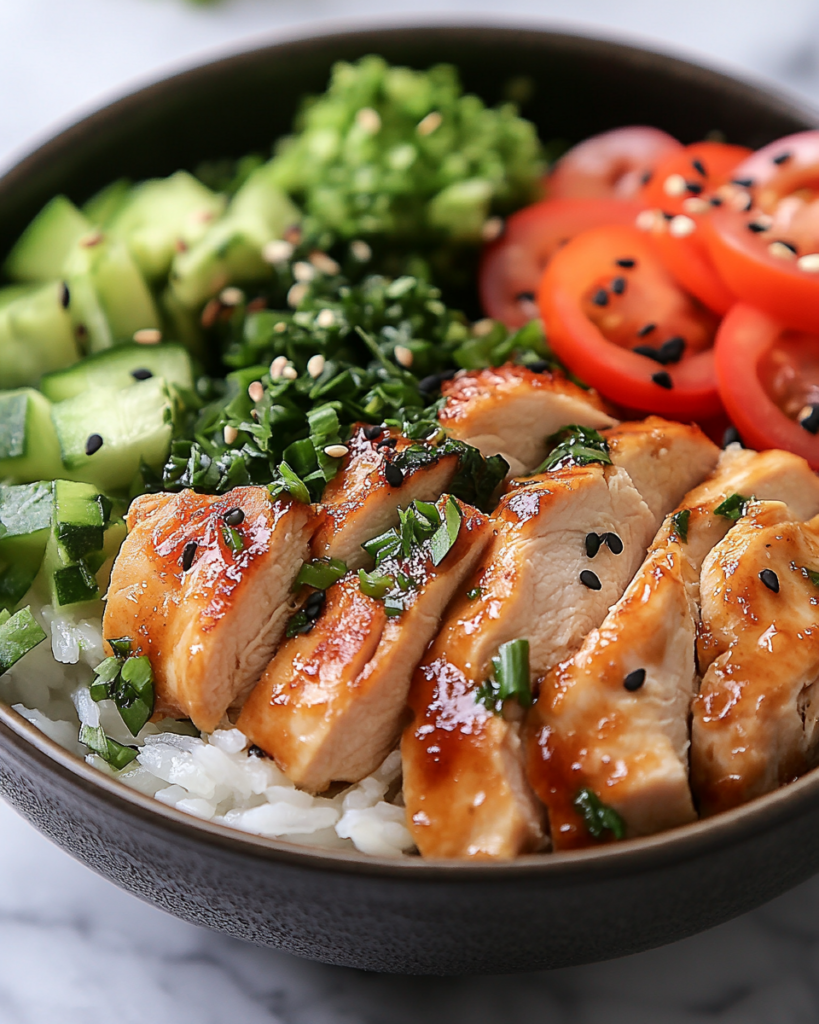
High Protein Chicken Rice Bowl is a satisfying, balanced dish that brings together tender chicken, fluffy rice, and fresh toppings in one hearty bowl. It is a reliable option for busy weekdays, post-workout meals, or simple family dinners. The combination of lean protein and wholesome carbohydrates creates a meal that feels filling without being overly heavy.
What makes this dish stand out is its flexibility. You can adjust the seasoning, swap ingredients, or add extra toppings depending on what you have on hand. From savory marinades to crisp vegetables, every element plays a role in building layers of flavor and texture.
Ingredients Overview

The foundation of a High Protein Chicken Rice Bowl starts with chicken, typically boneless and skinless breasts or thighs. Chicken breast offers a leaner profile with high protein content, while thighs provide a slightly richer flavor and juicier texture. Both work well depending on your preference.
Rice acts as the base and provides a neutral backdrop that absorbs the flavors of the chicken and sauces. White rice cooks quickly and has a soft texture, while brown rice adds a nutty flavor and extra fiber. Jasmine or basmati rice can also be used for a more fragrant result.
Vegetables bring freshness and contrast. Common additions include broccoli, carrots, cucumbers, and bell peppers. These not only add color but also introduce crunch and natural sweetness that balance the savory chicken.
A simple sauce ties everything together. Soy sauce, garlic, ginger, and a touch of honey or sesame oil create a well-rounded flavor. For a lighter option, low-sodium soy sauce or coconut aminos can be used.
If needed, substitutions are easy. Quinoa or cauliflower rice can replace traditional rice. Tofu or turkey can stand in for chicken. The dish adapts easily without losing its core appeal.
Ingredients
1 pound boneless skinless chicken breast
1 cup uncooked jasmine or white rice
2 cups water or chicken broth
1 tablespoon olive oil
2 cloves garlic, minced
1 teaspoon fresh ginger, grated
3 tablespoons soy sauce
1 tablespoon honey
1 teaspoon sesame oil
1/2 teaspoon salt
1/4 teaspoon black pepper
1 cup broccoli florets
1/2 cup shredded carrots
1/2 cup sliced cucumber
1/2 red bell pepper, sliced
1 tablespoon sesame seeds
2 green onions, sliced
Step-by-Step Instructions

Start by rinsing the rice under cold water until the water runs clear. This removes excess starch and helps the grains cook evenly. In a medium saucepan, combine the rice and water or chicken broth. Bring to a boil, then reduce the heat to low, cover, and let it simmer for about 15 minutes. Once cooked, remove from heat and let it sit covered for another 5 minutes before fluffing with a fork.
While the rice cooks, prepare the chicken. Slice the chicken breasts into bite-sized pieces for faster cooking and even seasoning. Pat them dry with a paper towel to help them brown properly.
Heat olive oil in a large skillet over medium heat. Add the chicken pieces in a single layer and cook for about 4–5 minutes without moving them too much. This allows a light golden crust to form. Flip and cook for another 3–4 minutes until the chicken is fully cooked and no longer pink in the center.
Add the minced garlic and grated ginger to the pan. Stir for about 30 seconds until fragrant, being careful not to burn them. Pour in the soy sauce, honey, and sesame oil. Stir well to coat the chicken evenly. Let the sauce simmer for 2–3 minutes until it slightly thickens and clings to the chicken.
In a separate pan or steamer, cook the broccoli for about 3–4 minutes until tender but still bright green. Avoid overcooking, as this can make it mushy and dull in color.
To assemble the bowl, start with a generous scoop of rice as the base. Add the cooked chicken on top, followed by the vegetables. Arrange the carrots, cucumber, and bell peppers for a fresh contrast.
Finish with a sprinkle of sesame seeds and sliced green onions. Serve immediately while warm.
Common mistakes include overcooking the chicken, which can make it dry, or using too much sauce, which can overpower the dish. Keeping a balance between all components is key.
Tips, Variations & Substitutions
For extra flavor, marinate the chicken for 30 minutes before cooking using soy sauce, garlic, and a splash of lemon juice. This helps the seasoning penetrate deeper into the meat.
If you prefer a spicier version, add red pepper flakes or a drizzle of sriracha to the sauce. For a creamier texture, a spoonful of peanut sauce or yogurt-based dressing works well.
Switching the grain is another easy way to change the dish. Brown rice, quinoa, or even farro can be used for a slightly different texture and nutritional profile.
For a low-carb option, cauliflower rice is a practical substitute. It cooks quickly and pairs well with the savory chicken.
Vegetarian alternatives include tofu or tempeh. Simply cook them in the same sauce until lightly crisp and coated.
Adding a fried or soft-boiled egg on top can increase the protein content even more while adding richness to the bowl.
Serving Ideas & Occasions
High Protein Chicken Rice Bowl fits into many occasions. It works well as a quick dinner after a long day or as a meal prep option for the week ahead. The components can be stored separately and assembled when needed.
For a complete meal, serve the bowl with a light soup or a side salad. A simple cucumber salad with rice vinegar complements the flavors nicely.
Beverage pairings can include iced green tea, sparkling water with lemon, or a light fruit smoothie. These keep the meal refreshing without overpowering the main dish.
This dish is also suitable for casual gatherings where guests can build their own bowls with different toppings and sauces.
Nutritional & Health Notes
This dish offers a balanced mix of protein, carbohydrates, and vegetables. Chicken provides a strong source of lean protein, which supports muscle maintenance and helps keep you full.
Rice supplies energy through carbohydrates, making the meal suitable for active lifestyles. Choosing brown rice increases fiber content, which supports digestion.
The vegetables add vitamins, minerals, and antioxidants. Including a variety of colors helps create a more nutrient-rich meal.
Using moderate amounts of sauce keeps sodium levels in check. Opting for low-sodium soy sauce is a practical adjustment for those watching salt intake.
Overall, this meal can fit into many eating patterns when portion sizes and ingredients are adjusted thoughtfully.
FAQs
Can I make this dish ahead of time?
Yes, High Protein Chicken Rice Bowl works very well for meal prep. Cook the rice, chicken, and vegetables separately and store them in airtight containers in the refrigerator for up to four days. When reheating, add a splash of water or broth to the rice to prevent it from drying out. Keep fresh toppings like cucumber separate until serving to maintain their texture.
What type of rice works best?
White rice such as jasmine or basmati is commonly used because it cooks quickly and has a light texture. Brown rice is a good alternative if you prefer more fiber and a slightly nutty flavor. Both options work well, so the choice depends on your preference and dietary goals.
How do I keep the chicken from drying out?
Avoid overcooking the chicken by monitoring its internal temperature and removing it from heat once it reaches 165°F (74°C). Cutting the chicken into even pieces helps it cook evenly. Adding sauce toward the end also helps retain moisture and adds flavor.
Can I freeze this recipe?
Yes, you can freeze the cooked chicken and rice for up to two months. Store them in separate freezer-safe containers. Vegetables like cucumber and fresh greens are best added after reheating, as freezing can affect their texture. Thaw overnight in the refrigerator before reheating.
Is this recipe suitable for weight management?
This dish can support weight management when portion sizes are controlled. The high protein content helps promote fullness, while the vegetables add volume without many calories. Adjusting the amount of rice or using cauliflower rice can further tailor the dish to your needs.
What sauces can I use instead?
In addition to the basic soy-based sauce, you can try teriyaki, garlic butter, or a light chili sauce. A yogurt-based dressing or tahini sauce also works well for a different flavor profile. Keep the sauce balanced so it complements rather than overwhelms the ingredients.
Can I add more protein to this bowl?
Yes, you can increase the protein by adding a boiled egg, extra chicken, or even beans like edamame. Greek yogurt-based sauces or a sprinkle of nuts and seeds can also contribute additional protein while adding texture.