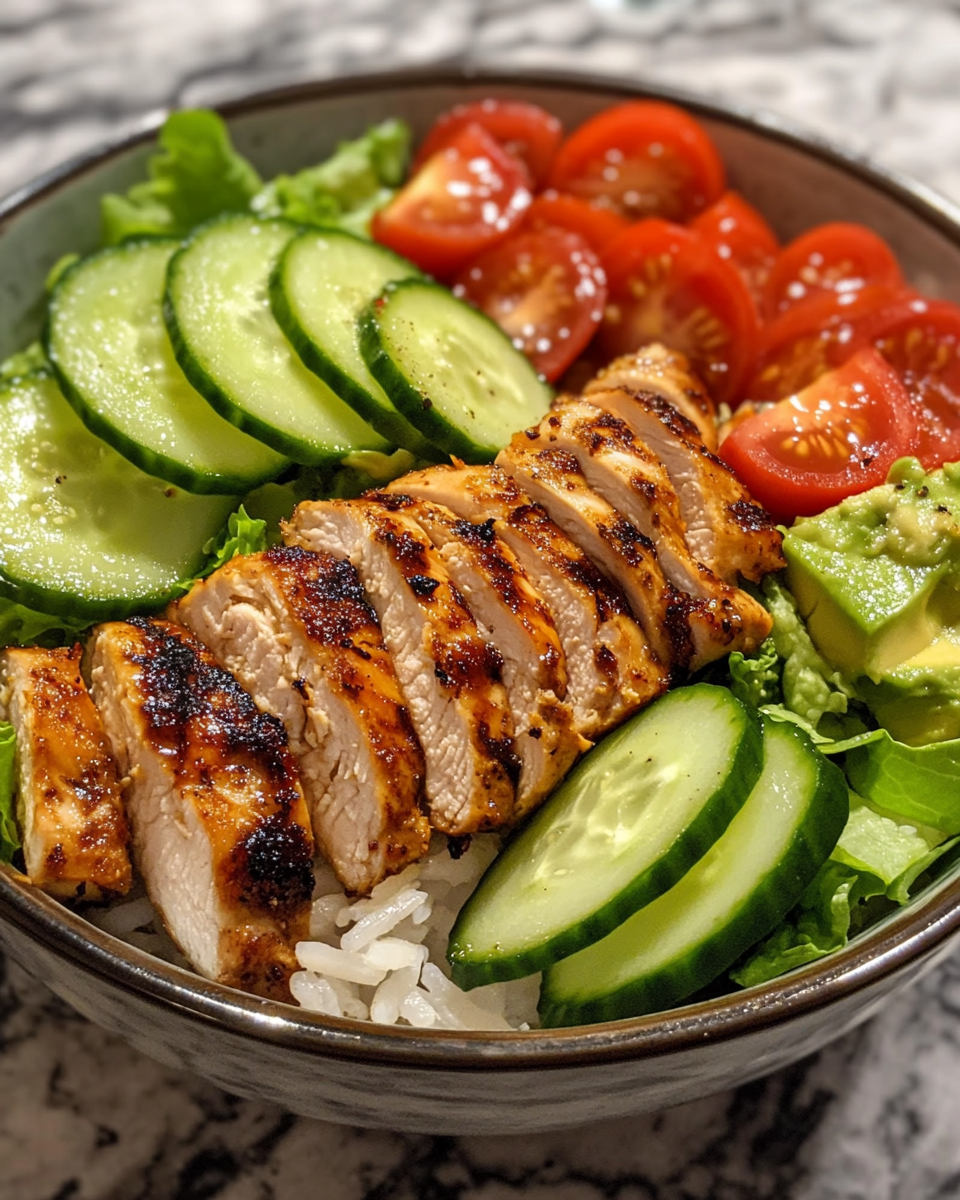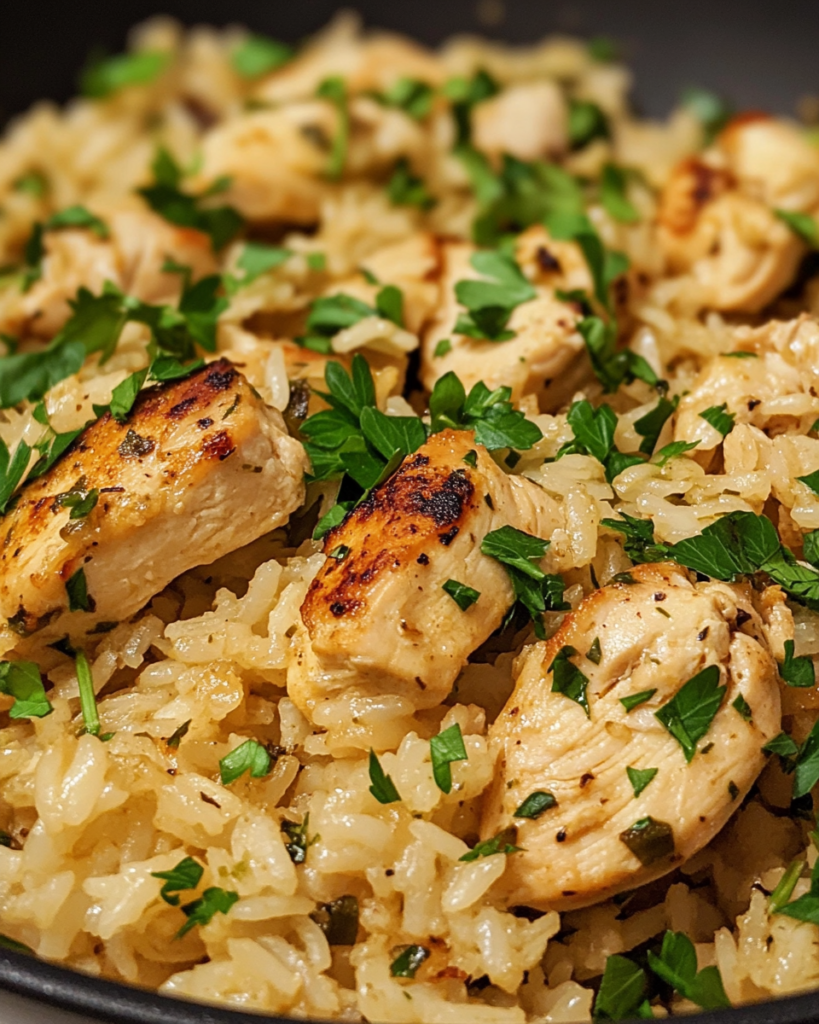
Garlic Herb Chicken Rice Pilaf is a deeply satisfying one-pan meal built on tender chicken, fragrant rice, fresh herbs, and layers of savory flavor. This dish brings together simple pantry staples and turns them into a balanced dinner with rich aroma and gentle texture in every forkful.
Rice pilaf stands apart from plain cooked rice because the grains are lightly toasted before simmering, creating a fuller taste and a fluffy finish. Combined with juicy chicken and aromatic garlic, the result is hearty without feeling heavy.
This recipe works equally well for family dinners, meal preparation, or relaxed weekend cooking. Fresh herbs brighten the richness of the chicken while warm broth gives the rice depth and character.
Ingredients Overview
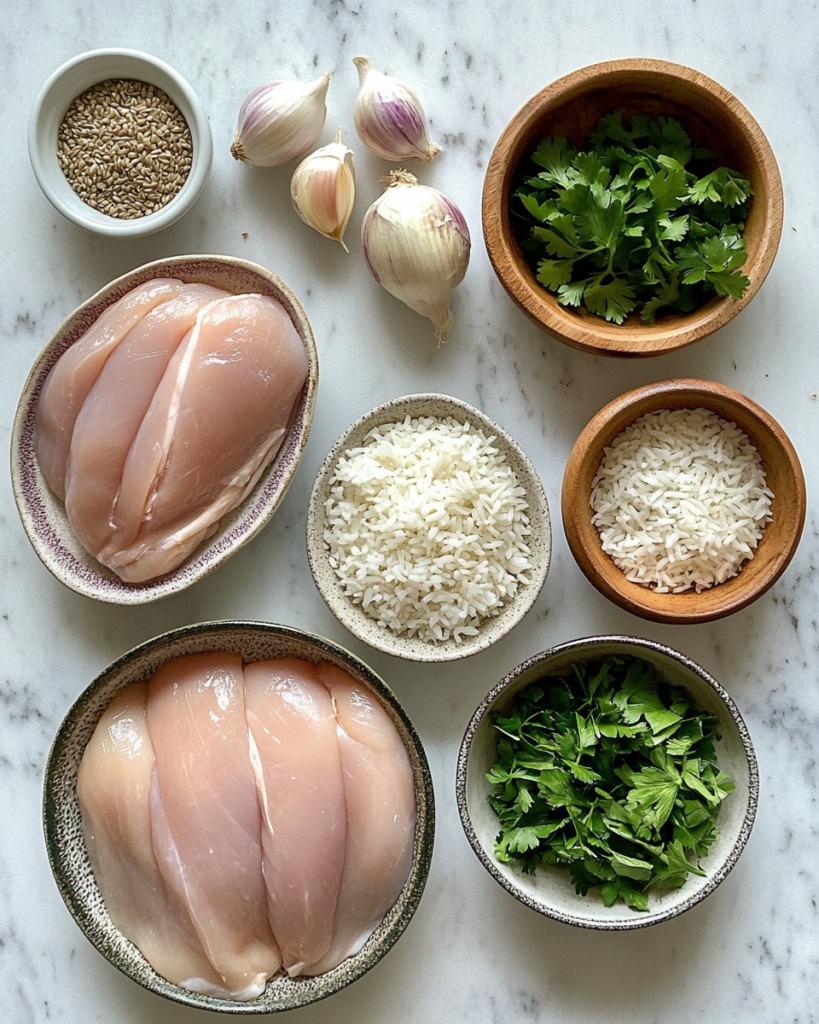
The success of Garlic Herb Chicken Rice Pilaf comes from choosing ingredients that complement one another rather than compete.
Chicken forms the heart of the dish. Boneless skinless chicken thighs provide a richer finish and stay tender during cooking, although chicken breast also works if preferred. Cutting the chicken into even pieces allows it to cook evenly and blend throughout the rice.
Rice is equally important. Long-grain white rice is ideal because it cooks into separate, fluffy grains. Avoid short-grain rice, which releases more starch and can create a softer texture than traditional pilaf.
Garlic contributes the signature aroma. Fresh garlic is strongly recommended because it creates a mellow sweetness once cooked. Jarred garlic can be used in a pinch but may lack the same rounded flavor.
Onion builds the savory base and softens into the rice as it cooks. Chicken broth adds richness and carries flavor into every grain.
Fresh herbs finish the dish. Parsley gives freshness while thyme brings gentle earthiness. Small amounts of dried herbs can replace fresh when necessary, though fresh herbs provide brighter results.
Butter and olive oil work together to create balanced richness and assist with browning. Lemon juice at the end brings light contrast and keeps the dish tasting lively.
The combination of toasted rice, seasoned chicken, herbs, and broth creates a complete meal with satisfying texture and balanced flavor.
Ingredients
1½ pounds boneless skinless chicken thighs, cut into bite-size pieces
1½ teaspoons salt
1 teaspoon black pepper
1 teaspoon paprika
2 tablespoons olive oil
2 tablespoons butter
1 medium yellow onion, finely diced
6 cloves garlic, minced
1½ cups long-grain white rice
3 cups chicken broth
1 teaspoon dried thyme
2 tablespoons chopped fresh parsley
1 tablespoon chopped fresh dill
1 tablespoon lemon juice
1 cup diced carrots
½ cup diced celery
Optional chopped parsley for serving
Step-by-Step Instructions
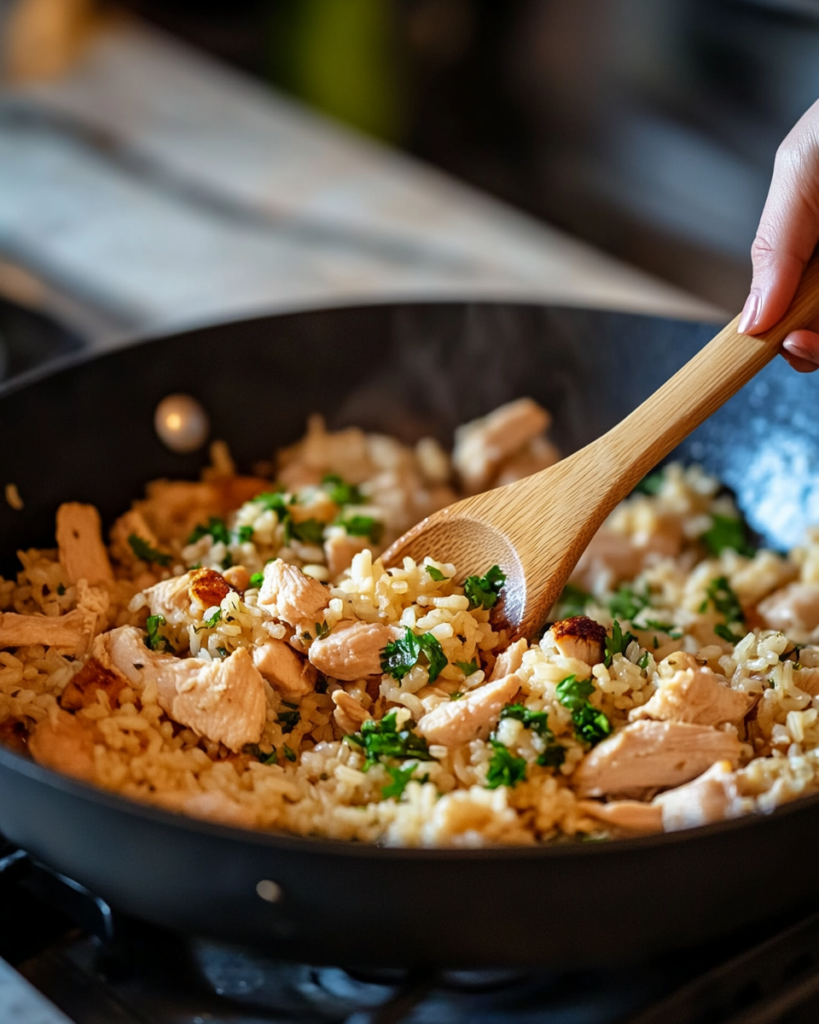
Start by preparing all ingredients before heating the pan. Dice the vegetables evenly and pat the chicken dry with paper towels. Dry chicken browns more effectively and develops richer flavor.
Season the chicken with salt, pepper, and paprika. Toss until coated.
Heat a large deep skillet or Dutch oven over medium heat. Add olive oil and one tablespoon butter. Once hot, place the chicken in a single layer. Avoid overcrowding because crowded chicken releases moisture and prevents browning.
Cook for about 5–7 minutes, turning occasionally, until the exterior develops golden edges and the chicken is nearly cooked through. Transfer the chicken to a plate.
Lower the heat slightly and add the remaining butter. Stir in onion, carrots, and celery. Cook for about 5 minutes until softened and aromatic.
Add minced garlic and cook for about 30 seconds. Garlic cooks quickly, so avoid leaving it unattended because burnt garlic creates bitterness.
Add the uncooked rice directly into the pan. Stir continuously for 2–3 minutes. The rice should become lightly glossy and slightly toasted. This stage gives pilaf its signature character.
Pour in chicken broth and stir to loosen any flavorful bits from the bottom of the pan. Add dried thyme.
Return the chicken and accumulated juices to the pan. Stir gently.
Bring the mixture to a gentle simmer. Once simmering, reduce heat to low and cover tightly.
Cook for 18–20 minutes without lifting the lid. Opening the pan too often releases steam and interrupts even cooking.
After the cooking time ends, remove from heat and let the pilaf rest covered for 10 minutes. Resting allows moisture to settle and keeps the grains intact.
Remove the lid and fluff carefully with a fork instead of stirring aggressively. Fold in fresh parsley, dill, and lemon juice.
Check texture. The rice should be tender yet distinct, and the chicken should reach an internal temperature of 165°F.
Taste and adjust seasoning if needed.
Serve warm with extra herbs scattered across the top.
Common issues are easy to avoid. Mushy rice often comes from excess liquid or stirring during cooking. Dry chicken usually results from overcooking during the browning stage. Keeping heat moderate and resting before serving helps maintain texture.
Tips, Variations & Substitutions
For deeper flavor, brown the chicken slightly longer before removing it from the pan. The browned bits left behind add richness to the finished rice.
If using chicken breast, reduce the initial browning time because lean meat cooks faster than thighs.
Brown rice can replace white rice, though cooking time and liquid need adjustment. Add additional broth and expect a longer simmer.
Fresh rosemary pairs nicely with thyme for a stronger herbal profile. Chives also work well for a milder finish.
For additional vegetables, stir in peas during the final resting stage or add diced zucchini during the vegetable sauté.
To create a dairy-free version, replace butter with additional olive oil.
For a lighter profile, reduce butter slightly and increase herbs and lemon.
This dish also reheats well. Store in an airtight container and warm gently with a splash of broth to restore moisture.
For meal preparation, portion into containers with roasted vegetables or a fresh salad for complete lunches during the week.
Serving Ideas & Occasions
Garlic Herb Chicken Rice Pilaf fits naturally into many occasions because it feels comforting while remaining easy to prepare.
Serve it alongside roasted green beans, sautéed spinach, cucumber salad, or steamed broccoli for a balanced dinner. Warm flatbread or soft dinner rolls also pair nicely with the savory rice.
For drinks, sparkling water with lemon, iced tea, or light citrus beverages complement the herb flavors.
This recipe suits family dinners, casual gatherings, meal preparation sessions, and relaxed Sunday evenings. Because everything cooks in one pan, it also works well for busy weeknights.
During cooler seasons, pair it with roasted vegetables and warm bread. During warmer months, accompany it with crisp salads and fresh seasonal produce.
Nutritional & Health Notes
Garlic Herb Chicken Rice Pilaf offers a balanced combination of protein, carbohydrates, and moderate fat.
Chicken supplies substantial protein that supports fullness and contributes satisfying texture. Rice provides energy and makes the meal filling without requiring heavy additions.
Fresh herbs contribute aroma and freshness with minimal calories. Garlic and vegetables add variety and extra flavor throughout the dish.
Using chicken thighs creates a richer finish, while chicken breast can lower overall fat content.
Portion balance can be adjusted easily by increasing vegetables or serving smaller amounts of rice.
Because the dish cooks in a single pan, flavors build naturally without requiring excessive added ingredients. Choosing lower-sodium broth offers greater control over seasoning.
FAQs
Can I prepare Garlic Herb Chicken Rice Pilaf ahead of time?
Yes. Garlic Herb Chicken Rice Pilaf is well suited for advance preparation. Cook the recipe fully, allow it to cool slightly, and store it in sealed containers. Refrigerate for up to four days. When reheating, add a small splash of broth or water and warm gently to restore moisture. Avoid overheating because the chicken may become firmer and the rice may dry out. Fresh herbs can be added after reheating for brighter flavor. Preparing it ahead often allows the flavors to settle together even more pleasantly.
Which rice works most successfully for this recipe?
Long-grain white rice is the traditional choice because it cooks into separate grains with light texture. Jasmine rice can also produce excellent results while adding a subtle fragrance. Basmati gives a slightly drier texture and works nicely with herbs. Short-grain varieties release more starch and may produce softer results. Brown rice is possible but requires additional broth and a longer cooking period. Rinsing rice before cooking can reduce excess surface starch and support cleaner grain separation.
Can frozen chicken be used?
Frozen chicken should be fully thawed before cooking. Starting with frozen pieces often releases too much moisture into the pan, limiting browning and affecting the final texture of the rice. Thaw chicken in the refrigerator before preparation and pat dry thoroughly. Once thawed, season and cook as directed. Proper browning creates much of the savory depth in this dish, so beginning with dry chicken gives noticeably stronger results.
How do I prevent soggy rice?
Measure broth carefully and avoid adding extra liquid unless changing rice varieties. Toasting the rice briefly before adding broth helps maintain structure during cooking. Keep the lid closed while simmering and avoid stirring once the liquid is added. Resting the pilaf after cooking is another important step because it allows moisture to settle evenly. Fluff gently with a fork rather than mixing vigorously to preserve grain texture.
Can I add additional vegetables?
Absolutely. Garlic Herb Chicken Rice Pilaf adapts well to extra vegetables. Peas, mushrooms, spinach, bell peppers, zucchini, and corn all fit naturally. Firmer vegetables should cook with the onions, while delicate vegetables can be folded in near the end. Keep additions moderate so the rice-to-liquid ratio remains balanced. Vegetables bring extra color, texture, and variety while keeping the dish hearty.
Is this recipe suitable for meal preparation?
This recipe performs very well for meal preparation because the ingredients hold texture after refrigeration. Divide portions into individual containers and cool before sealing. Store herbs separately if preparing several days ahead for brighter flavor during serving. Reheat slowly and add a spoonful of broth if needed. Pairing with vegetables or simple salads creates convenient ready-to-eat meals throughout the week.
What herbs pair well with garlic and chicken?
Parsley and thyme create a classic combination because they complement both garlic and chicken without overpowering the dish. Dill gives freshness and a softer herbal note. Chives provide mild onion flavor, while rosemary adds stronger earthy character when used lightly. Oregano can also work in small amounts. Mixing fresh and dried herbs creates layered flavor and allows flexibility depending on availability.