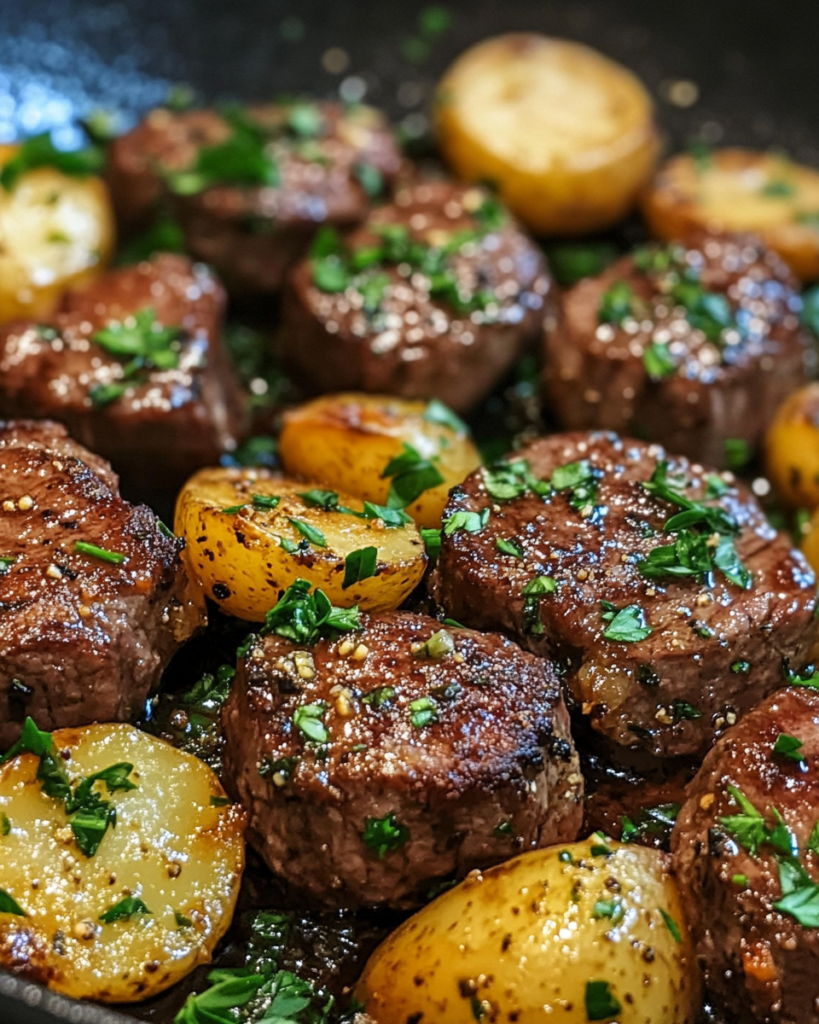
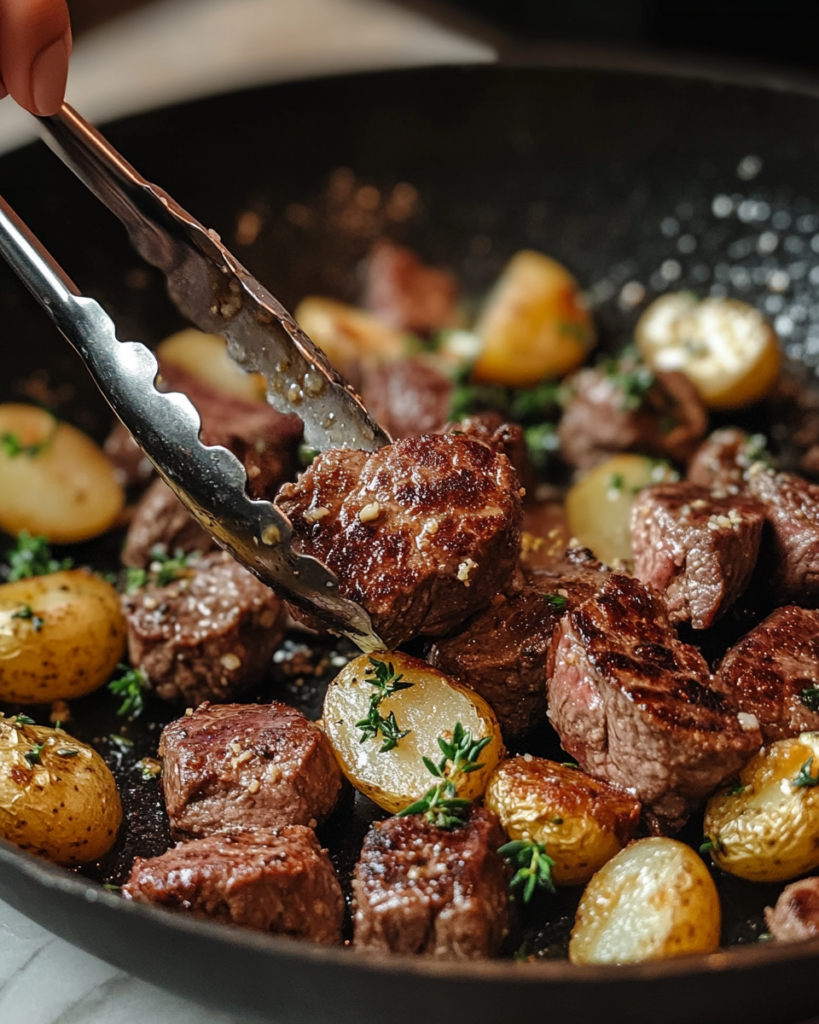
Steak Bites with Garlic Potatoes combine tender seared beef, crispy golden potatoes, buttery garlic flavor, and savory herbs inside one hearty skillet dinner. The contrast between juicy steak and crisp-edged potatoes creates comforting texture across every bite, while garlic and herbs tie the entire meal together beautifully.
This recipe suits busy evenings because everything cooks quickly with simple ingredients and straightforward preparation. Steak Bites with Garlic Potatoes also work nicely for relaxed weekend suppers, casual gatherings, or satisfying family dinners when hearty comfort food sounds especially inviting.
Ingredients Overview
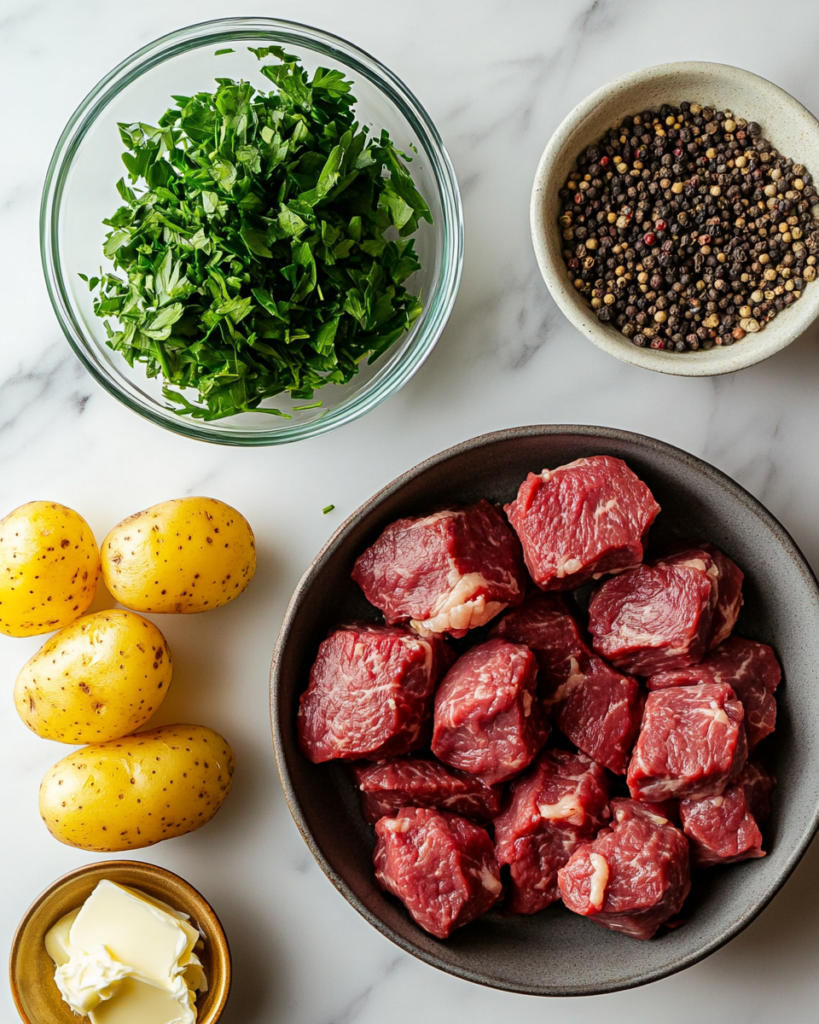
Sirloin steak works particularly well for Steak Bites with Garlic Potatoes because it cooks quickly while staying tender and flavorful. Ribeye also delivers rich marbling and juicy texture, though slightly leaner cuts such as strip steak or tenderloin may also work beautifully with attentive cooking.
Baby potatoes create crisp golden surfaces and creamy interiors after skillet cooking. Yukon Gold potatoes remain especially popular because their buttery texture pairs naturally with garlic and steak. Red potatoes also hold shape nicely during pan cooking.
Garlic forms the savory backbone across the dish. Fresh cloves provide deeper aroma and fuller flavor compared with pre-minced varieties. Butter and olive oil work together to brown the potatoes while carrying the garlic throughout the skillet.
Paprika, thyme, parsley, salt, and black pepper season the steak and potatoes without overpowering the natural beef flavor. Fresh parsley added near serving time brightens the heavier ingredients with subtle herbal freshness.
High heat remains important during steak cooking because it forms caramelized edges while keeping the interior tender. Overcrowding the skillet traps steam and prevents proper browning, so cooking in batches may help when using smaller pans.
This recipe also welcomes flexibility. Mushrooms, onions, asparagus, or green beans pair comfortably alongside the steak and potatoes for additional texture and color.
Ingredients
1 1/2 pounds sirloin steak, cut into bite-sized pieces
1 1/2 pounds baby Yukon Gold potatoes, halved
4 cloves garlic, minced
2 tablespoons olive oil
3 tablespoons butter, divided
1 teaspoon paprika
1 teaspoon dried thyme
1 teaspoon salt
1/2 teaspoon black pepper
2 tablespoons chopped fresh parsley
1/2 teaspoon onion powder
Optional red pepper flakes for serving
Step-by-Step Instructions
Wash and dry the potatoes thoroughly before cooking. Excess moisture prevents crisp browning, so dry surfaces remain important. Cut larger potatoes into evenly sized halves or quarters to help everything cook at the same pace.
Heat a large skillet across medium heat and add one tablespoon olive oil with one tablespoon butter. Once the butter melts, add the potatoes in a single layer. Sprinkle half the salt, half the pepper, onion powder, and thyme across the potatoes.
Cook the potatoes for roughly fifteen to eighteen minutes, stirring occasionally until the surfaces turn golden and crisp while the interiors become fork tender. Avoid stirring constantly because the potatoes need direct contact with the hot skillet surface for proper browning.
Transfer cooked potatoes onto a plate and keep warm. Wipe excess browned bits from the skillet if necessary.
Pat the steak pieces dry using paper towels. Dry steak develops deeper caramelized edges during searing. Season the beef with paprika, remaining salt, and black pepper.
Raise the skillet heat to medium-high and add the remaining olive oil. Once the skillet becomes very hot, place the steak bites into the pan in a single layer. Avoid overcrowding because crowded steak releases moisture rather than searing properly.
Cook the steak roughly two minutes per side for medium doneness. Smaller pieces may cook even faster. The outside should carry rich browned edges while the center remains tender and juicy. Transfer cooked steak temporarily onto a plate.
Lower the heat slightly and add remaining butter with minced garlic. Stir constantly for roughly thirty seconds until fragrant. Garlic cooks quickly and may darken too fast if the skillet remains excessively hot.
Return the potatoes and steak to the skillet. Toss everything gently so the garlic butter coats every surface evenly. Sprinkle chopped parsley across the skillet just before serving.
Serve immediately while the steak remains juicy and the potatoes stay crisp around the edges. Optional red pepper flakes add gentle heat for diners preferring stronger flavor.
Tips, Variations & Substitutions
Sirloin offers balanced tenderness and affordability, though ribeye creates richer flavor because of higher marbling. Tenderloin stays especially soft but cooks quickly, so attentive timing matters.
Baby Yukon Gold potatoes remain particularly creamy inside while developing crisp exteriors. Red potatoes or fingerling potatoes also work beautifully. Parboiling potatoes briefly before skillet cooking may shorten cooking time slightly.
Fresh garlic creates fuller flavor compared with jarred minced garlic. Garlic powder may help in a pinch, though the savory aroma becomes milder.
For stronger herb flavor, fresh thyme or rosemary pair wonderfully with steak and potatoes. Mushrooms, asparagus, spinach, or green beans may cook alongside the potatoes for additional vegetables within the skillet.
Cast-iron skillets work especially nicely because they retain heat consistently and create strong searing surfaces. Smaller skillets may require cooking the steak in batches to avoid overcrowding.
Leftovers reheat nicely within a skillet over medium heat. Microwaving works too, though potatoes may soften slightly compared with skillet reheating.
Serving Ideas & Occasions
Steak Bites with Garlic Potatoes suit comforting family dinners, casual weekend meals, and cozy cold-weather suppers. Their skillet presentation also works beautifully for informal gatherings because the meal feels hearty without complicated preparation.
Roasted vegetables, Caesar salad, steamed broccoli, or sautéed green beans complement the rich beef and potatoes nicely. Warm dinner rolls also pair beautifully with the buttery garlic sauce.
Sparkling water with lemon slices or iced tea create refreshing contrast beside the savory richness. Diners preferring additional flavor may serve the skillet with creamy horseradish sauce or garlic aioli.
This dish also fits nicely into date-night dinners at home because it feels comforting and satisfying while still appearing polished and inviting on the plate.
Nutritional & Health Notes
Steak provides protein, iron, and satisfying richness that help create a filling balanced dinner. Potatoes contribute hearty carbohydrates and potassium while delivering creamy interior texture and crisp golden edges.
Cooking through skillet searing rather than deep frying keeps the meal lighter while still carrying rich flavor. Olive oil contributes unsaturated fats while butter adds savory depth across the garlic sauce.
Adding vegetables such as green beans, mushrooms, or spinach increases fiber and nutrient variety without changing the comforting flavor profile substantially. Portion flexibility also allows diners to balance steak, potatoes, and vegetables according to personal preference.
Using leaner steak cuts slightly lowers saturated fat content while still maintaining tender texture when cooked properly over high heat.
FAQs
Which steak cut works particularly well for steak bites?
Sirloin remains one of the most popular choices because it balances tenderness, flavor, and affordability very nicely. Ribeye creates richer flavor because of marbling, while tenderloin delivers especially soft texture. Strip steak also sears beautifully with caramelized edges. Regardless of the cut, evenly sized pieces help maintain consistent cooking throughout the skillet. Drying the steak before cooking also improves browning significantly.
How do potatoes become crispy within the skillet?
Dry potato surfaces remain extremely important for crisp browning. Excess moisture creates steam instead of caramelized edges. Cooking the potatoes in a single layer also helps maintain direct contact with the skillet surface. Stirring occasionally rather than constantly allows deeper golden crust development. Medium heat gives the potatoes enough time to soften internally while crisping gradually outside.
Can this recipe work with sweet potatoes?
Sweet potatoes substitute nicely for traditional potatoes while bringing slightly sweeter flavor and softer texture. Their natural sugars may brown somewhat faster, so moderate heat helps prevent overly dark surfaces. Sweet potatoes pair especially nicely with paprika, garlic, and butter. Steak still balances their sweetness comfortably while maintaining the hearty skillet character of the recipe.
How long may leftovers stay refrigerated?
Stored within airtight containers, leftovers generally remain pleasant for roughly three to four days inside refrigeration. Reheating within a skillet helps restore crisp texture across the potatoes more effectively than microwaving. Medium heat works best so the steak stays tender rather than becoming tough through excessive reheating. Fresh parsley added afterward brightens leftover portions nicely.
Can vegetables cook alongside the steak and potatoes?
Vegetables pair beautifully within this skillet dinner. Mushrooms, asparagus, zucchini, green beans, onions, and spinach all work comfortably alongside the beef and potatoes. Firmer vegetables should cook earlier with the potatoes, while softer vegetables may enter closer to the final cooking stage. Balanced layering keeps the skillet hearty without overwhelming the steak flavor.
Why should steak cook in batches sometimes?
Overcrowding traps moisture around the steak pieces, preventing caramelized searing and creating gray steamed surfaces instead. Cooking in batches keeps the skillet temperature high enough for rich browned edges and juicy interiors. Proper spacing also allows each steak piece direct contact with the hot pan surface, creating stronger flavor and more attractive texture.
What sauces pair nicely with steak bites?
Garlic butter already coats the steak beautifully, though additional sauces pair nicely for varied flavor. Creamy horseradish sauce brings sharp contrast while garlic aioli creates extra richness. Chimichurri contributes herbal brightness that balances the buttery potatoes particularly well. Peppercorn sauce or blue cheese dressing also complement the savory beef nicely without overpowering the skillet flavors.