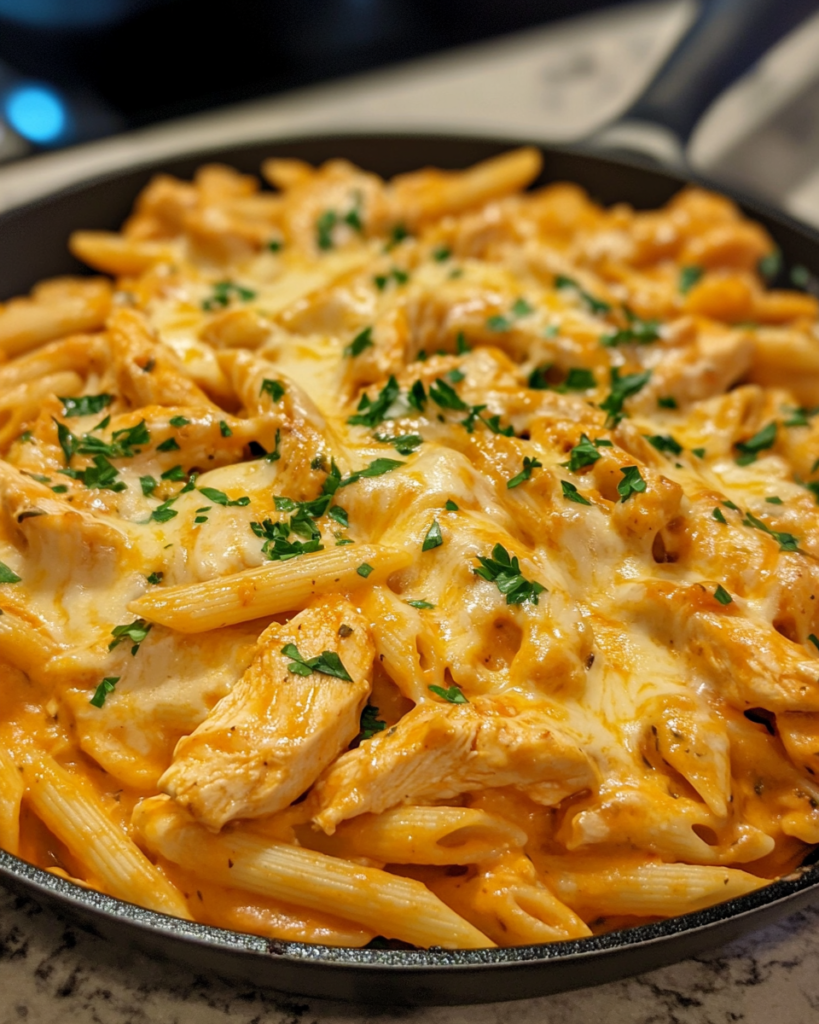
Buffalo Chicken Pasta Skillet brings spicy buffalo sauce, tender chicken, creamy cheese, and pasta together inside one pan for a hearty family supper. This comforting skillet dinner carries bold flavor with very little cleanup, which suits busy evenings when a warm plate matters most.
The creamy sauce balances the spicy buffalo flavor without feeling too heavy. Chicken stays juicy while pasta absorbs the rich sauce during simmering, creating a satisfying texture throughout every forkful. A sprinkle of green onion across the finished skillet adds freshness and slight crunch.
This dish fits casual gatherings, football nights, relaxed weekend suppers, or chilly evenings during colder months. Since everything cooks inside one skillet, kitchen cleanup stays manageable while flavor stays rich and balanced.
Ingredients Overview

Chicken breast forms the hearty base for Buffalo Chicken Pasta Skillet. Boneless skinless chicken breast cooks quickly and absorbs buffalo sauce beautifully. Chicken thighs also work nicely for a richer texture with slightly deeper flavor.
Short pasta shapes such as penne or rotini hold creamy sauce inside their ridges and curves. Pasta cooks directly inside the skillet, helping starch thicken the sauce naturally while carrying flavor into every bite.
Buffalo sauce brings tangy heat and signature flavor. Mild buffalo sauce creates gentle warmth, while hot buffalo sauce carries stronger spice. A touch of ranch seasoning softens the sharpness and adds savory depth throughout the dish.
Cream cheese creates silky texture and smooth consistency. Shredded cheddar melts into the sauce for richness and creamy body. Monterey Jack also works nicely since it melts evenly without becoming oily.
Chicken broth keeps the skillet moist during simmering while helping pasta soften gradually. Heavy cream rounds out the sauce and balances spicy notes from the buffalo sauce.
Garlic and onion build savory flavor from the beginning. Green onion scattered across the skillet near serving time adds brightness and fresh contrast against the creamy sauce.
A small amount of olive oil helps brown the chicken while carrying flavor across the skillet surface. Salt and black pepper round out the seasoning without overpowering the buffalo flavor.
Ingredients
1 pound boneless skinless chicken breast, diced
2 tablespoons olive oil
1 teaspoon kosher salt
1/2 teaspoon black pepper
1 small yellow onion, finely chopped
3 garlic cloves, minced
8 ounces penne pasta
2 cups chicken broth
1 cup heavy cream
3/4 cup buffalo sauce
4 ounces cream cheese, softened
1 1/2 cups shredded cheddar cheese
1 teaspoon ranch seasoning
2 green onions, sliced
1 tablespoon chopped parsley
Step-by-Step Instructions
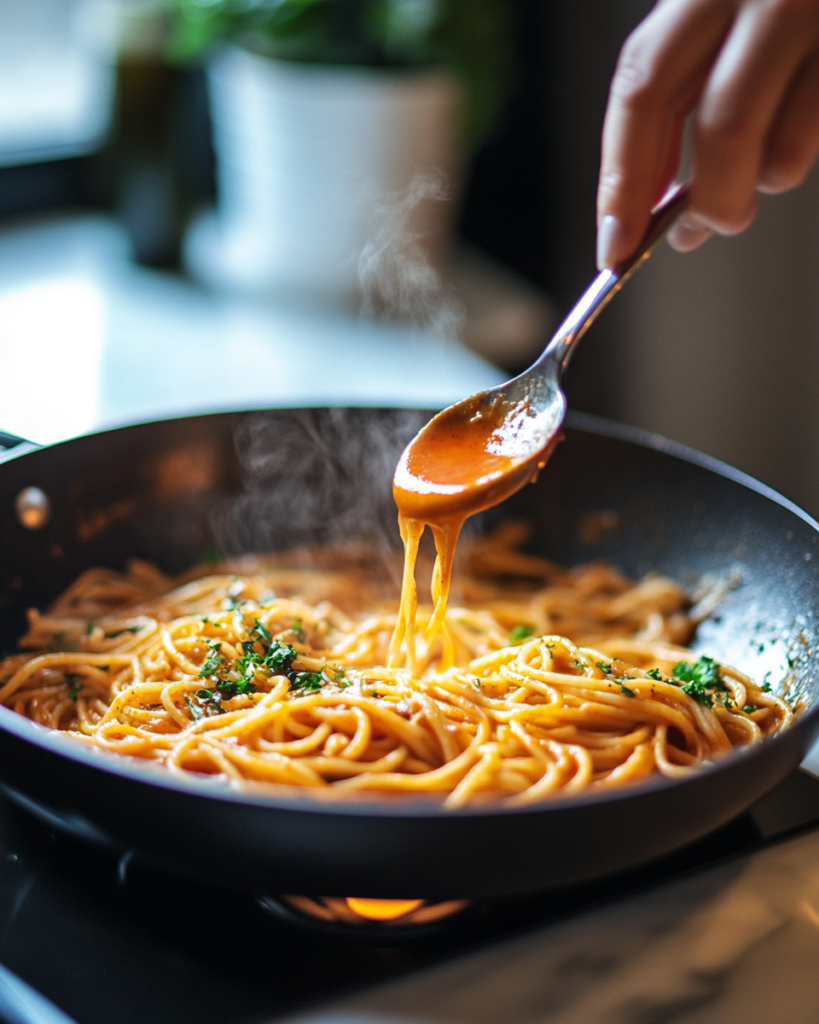
Pat diced chicken dry using paper towels before seasoning with salt and black pepper. Dry chicken browns far better than damp chicken, helping richer flavor develop across the skillet.
Warm a large deep skillet across medium heat. Add olive oil, followed by seasoned chicken. Cook for around 5 to 6 minutes, stirring occasionally until golden edges appear and chicken reaches full doneness. Transfer chicken onto a plate temporarily.
Add chopped onion into the skillet. Cook for around 3 minutes until softened and lightly translucent. Stir frequently so onion cooks evenly without dark scorching along the pan surface. Add garlic during the final 30 seconds, stirring continuously until fragrant.
Pour chicken broth, heavy cream, and buffalo sauce into the skillet. Stir thoroughly while scraping browned bits from the pan bottom since those bits carry rich savory flavor. Add uncooked pasta and ranch seasoning.
Bring the mixture toward a gentle simmer across medium heat. Avoid aggressive boiling because rapid heat may reduce liquid too quickly before pasta softens properly. Cover loosely and cook around 12 to 14 minutes, stirring every few minutes so pasta cooks evenly and avoids sticking.
Check pasta texture during the final few minutes. Pasta should feel tender with slight firmness remaining at the center. If liquid reduces too quickly before pasta softens fully, stir in a splash of additional broth.
Lower heat before adding cream cheese. Stir patiently until cream cheese melts smoothly into the sauce without lumps. Return cooked chicken into the skillet and fold everything together thoroughly.
Scatter shredded cheddar gradually across the skillet while stirring continuously. Cheese should melt fully into the sauce, creating creamy consistency throughout the pasta. Thick sauce should coat pasta evenly without appearing dry or watery.
Allow the skillet to rest for around 2 minutes before serving. Resting helps sauce settle and thicken slightly. Finish with sliced green onion and parsley across the surface for freshness and color contrast.
Avoid overheating after cheese enters the skillet since excessive heat may create grainy sauce texture. Gentle heat keeps the sauce smooth and creamy from start through serving time.
Tips, Variations & Substitutions
Rotisserie chicken works nicely during hectic evenings. Simply shred cooked chicken and stir it into the skillet near the final few minutes of cooking. Since rotisserie chicken already carries seasoning, slightly reduce added salt inside the recipe.
For lighter texture, substitute half-and-half for heavy cream. Greek yogurt also creates creamy consistency, though stirring it into slightly cooled sauce helps avoid curdling.
Blue cheese crumbles add classic buffalo flavor alongside cheddar. Stir small portions into the finished skillet or scatter across individual bowls before serving.
Vegetable additions such as spinach, diced bell pepper, or celery blend nicely with buffalo sauce. Stir spinach into the skillet during the final minute until wilted.
Gluten-free pasta functions well inside this recipe, though cooking time may vary slightly depending upon pasta variety. Additional broth occasionally helps gluten-free pasta soften evenly.
Smoked paprika introduces gentle smoky flavor that pairs beautifully with buffalo sauce. A pinch of cayenne creates stronger heat for households preferring spicier suppers.
Leftovers reheat beautifully the following day. Add a splash of broth or cream before reheating so the pasta stays creamy rather than overly thick.
Serving Ideas & Occasions
Buffalo Chicken Pasta Skillet suits relaxed family suppers, game-day gatherings, casual potlucks, and chilly weather evenings. Since the recipe cooks inside one pan, serving stays simple even during busy schedules.
Fresh celery sticks and carrot sticks pair beautifully beside the creamy spicy pasta. Crisp vegetables balance the rich sauce while adding refreshing crunch. Garlic bread also pairs nicely for soaking extra sauce from the skillet.
For lighter contrast, serve the pasta beside crisp romaine salad with ranch dressing or vinaigrette. The cool salad balances the warm creamy skillet beautifully.
Sparkling water with lime or chilled iced tea pairs nicely alongside the spicy buffalo flavor. Since the dish carries hearty richness, refreshing beverages complement it particularly well.
Small bowls of ranch dressing or blue cheese dressing allow guests additional creamy topping during gatherings or football nights.
Nutritional & Health Notes
Buffalo Chicken Pasta Skillet carries balanced portions of protein, carbohydrates, and fat, creating satisfying texture and hearty flavor within one dish. Chicken breast contributes lean protein that supports fullness during meals.
Cheese and cream contribute richness along with calcium and protein. Since buffalo sauce already carries bold flavor, moderate cheese portions still create creamy satisfying texture without excessive heaviness.
Pasta supplies carbohydrates that pair naturally with the spicy sauce and protein-rich chicken. Whole wheat pasta may add additional fiber while creating slightly nuttier flavor.
Green onion and parsley contribute freshness and visual brightness while balancing the creamy sauce. Additional vegetables such as spinach or bell pepper can increase fiber and texture variety.
Since buffalo sauce occasionally carries substantial sodium, lower-sodium broth helps balance seasoning levels throughout the skillet.
FAQs
Can chicken thighs replace chicken breast?
Chicken thighs work beautifully inside Buffalo Chicken Pasta Skillet. Boneless skinless thighs carry slightly richer flavor and stay juicy even during longer cooking periods. Since thighs contain additional fat compared with chicken breast, the finished sauce occasionally tastes deeper and more savory.
Dice thighs into evenly sized pieces before cooking so they brown consistently across the skillet surface. Cooking time stays fairly similar, though thighs occasionally need an extra minute or two for complete doneness. Internal temperature should reach safe serving temperature before adding pasta ingredients.
Some households prefer thighs because they remain tender during reheating the following day. Either chicken cut functions nicely, depending upon personal preference and desired richness.
Which pasta shape works best?
Short pasta varieties function particularly well because they hold creamy buffalo sauce inside ridges and curves. Penne, rotini, shells, or cavatappi all create hearty texture and balanced sauce distribution throughout the skillet.
Long pasta varieties such as spaghetti occasionally clump together during skillet cooking, creating uneven texture. Short sturdy pasta shapes remain easier to stir and serve from one pan.
Cooking pasta directly inside the sauce allows starch from the pasta surface to thicken the skillet naturally. Stirring occasionally throughout simmering helps pasta soften evenly while preventing sticking near the pan bottom.
Different pasta brands occasionally require slightly different cooking times, so checking texture near the final few minutes remains helpful for ideal tenderness.
Can this skillet become less spicy?
Buffalo Chicken Pasta Skillet adjusts easily for households preferring gentler heat. Mild buffalo sauce creates softer flavor while still carrying signature tangy character. Reducing buffalo sauce slightly and adding additional cream also softens spice levels.
Extra cream cheese or shredded cheddar helps mellow heat beautifully. Ranch dressing stirred into individual bowls further cools the spicy sauce during serving time.
Avoid removing buffalo sauce entirely since it forms the central flavor foundation for the recipe. Instead, gradual adjustments help maintain balanced flavor while lowering heat intensity.
Serving the skillet beside cool vegetables such as celery or cucumber also balances spicy notes naturally. Children occasionally prefer additional cheese across their serving for milder flavor.
How should leftovers stay creamy?
Leftovers remain delicious for several days when stored inside sealed containers within the refrigerator. Since pasta absorbs sauce overnight, reheating with additional broth, milk, or cream helps restore creamy consistency.
Warm leftovers gently across low heat rather than high heat. Slow reheating keeps cheese sauce smooth while helping chicken remain tender. Microwave reheating also functions nicely when stirring halfway through warming.
Avoid overheating leftovers because cheese-based sauces occasionally separate during aggressive reheating. Small amounts of liquid stirred gradually into the pasta usually restore smooth texture quickly.
Fresh parsley or green onion scattered across reheated portions brightens flavor and texture before serving again.
Can this recipe enter the freezer?
Cream-based pasta dishes occasionally change texture slightly after freezing, though Buffalo Chicken Pasta Skillet still freezes fairly well for future meals. Allow the skillet to cool fully before transferring portions into freezer-safe containers.
For strongest texture, slightly undercook the pasta before freezing since pasta softens further during reheating. Frozen portions typically keep nicely for around two months.
Thaw overnight inside the refrigerator before reheating slowly across low heat. Additional broth or cream usually helps refresh sauce consistency after thawing.
Fresh green onion should enter the dish after reheating rather than before freezing. This keeps garnish bright and crisp rather than wilted.
Which cheese melts most smoothly?
Sharp cheddar creates rich flavor and creamy texture throughout the skillet. Freshly shredded cheese melts more evenly than pre-shredded packaged cheese because packaged cheese often carries anti-caking powders that affect smoothness.
Monterey Jack also melts beautifully and creates silky consistency without overpowering buffalo flavor. Small amounts of mozzarella contribute stretchy texture, though excessive mozzarella occasionally thickens the sauce too heavily.
Adding cheese gradually across low heat prevents clumping or grainy texture. Stirring continuously during cheese melting creates smooth sauce coating throughout the pasta.
Cream cheese remains particularly important because it stabilizes the sauce while adding rich creamy body.
Can vegetables enter the skillet?
Several vegetables pair naturally with buffalo chicken flavor. Bell peppers contribute sweetness and crunch, while spinach wilts smoothly into the creamy sauce during the final cooking minutes.
Celery creates classic buffalo-style flavor and pleasant texture contrast. Diced carrots also contribute subtle sweetness that balances spicy sauce beautifully.
Vegetables with high water content should cook briefly before liquid ingredients enter the skillet. This prevents watery sauce texture later during simmering.
Broccoli florets, peas, or mushrooms also function nicely depending upon household preference. Vegetable additions create extra texture and color while keeping the hearty skillet balanced and satisfying.