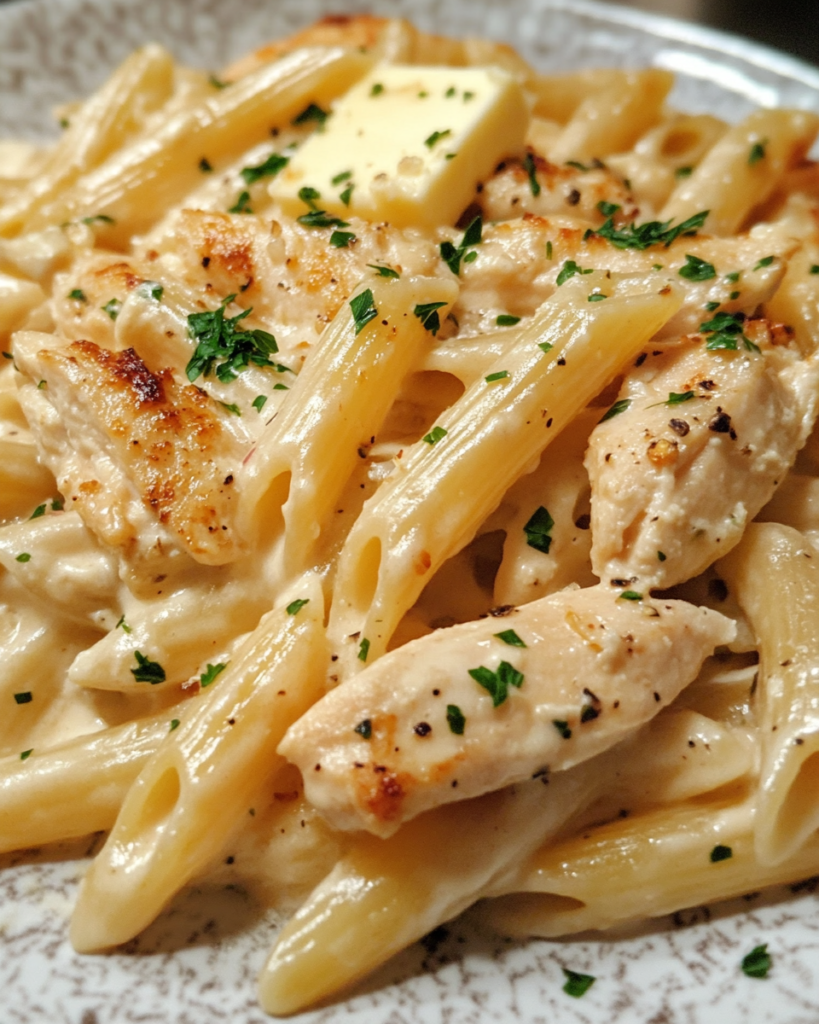
Creamy Garlic Chicken Penne brings together tender chicken pieces, al dente penne pasta, and a rich garlic cream sauce that clings to every bite. This dish is known for its comforting texture and balanced savory flavor, making it a dependable choice for a satisfying dinner.
Built on a foundation of pantry-friendly ingredients, this pasta dish comes together in a single pan for the sauce while the pasta cooks separately. The garlic infusion blends into cream and cheese, forming a silky coating that ties everything together without heaviness.
The chicken is seared until golden, locking in savory depth before being folded into the sauce. Penne pasta holds onto the creamy mixture thanks to its tubular shape, allowing every forkful to carry flavor evenly. The final result is a warm, hearty plate with restaurant-style appeal that fits easily into home cooking routines.
Ingredients Overview
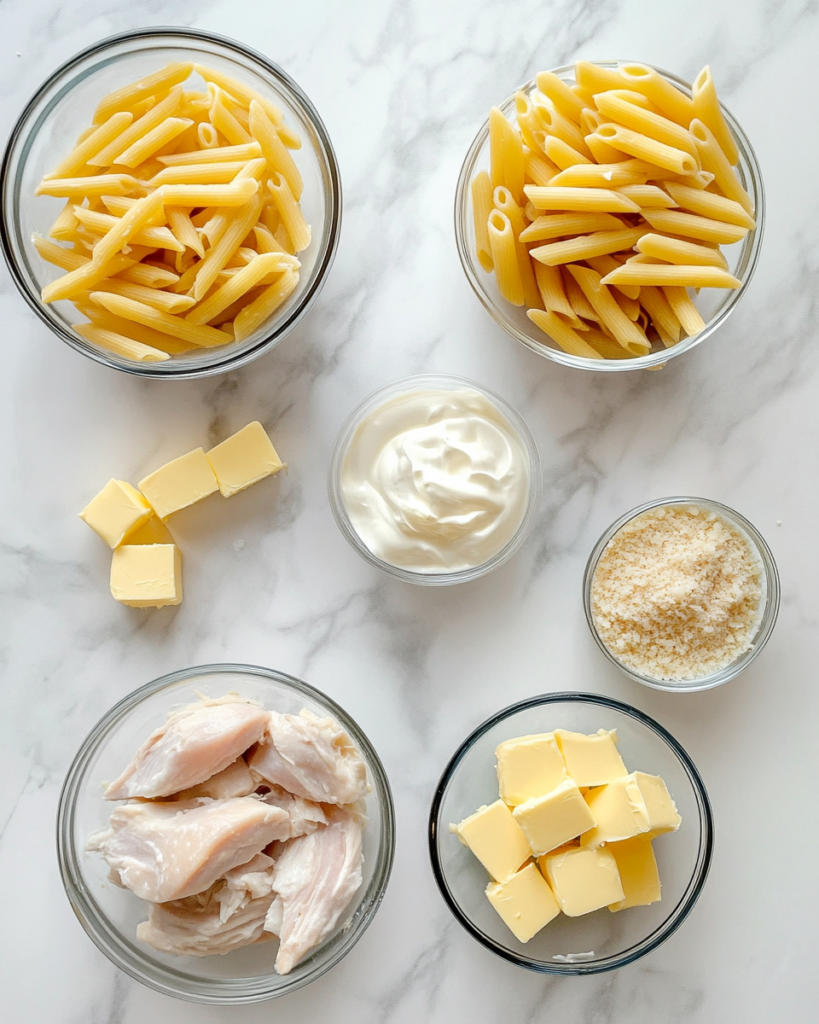
Creamy Garlic Chicken Penne relies on simple, familiar ingredients that work together to create a rich and balanced dish. Chicken breast serves as the main protein, offering a lean and tender bite when cooked properly. Its mild flavor allows the garlic and cream sauce to stand out without competition.
Penne pasta is ideal for this recipe because its ridged surface and hollow center capture the sauce, ensuring every bite carries a creamy coating. Choosing a quality durum wheat pasta helps maintain structure after boiling, preventing a soft or mushy texture.
Garlic plays a central role in flavor development. Fresh minced garlic delivers aromatic depth that infuses the cream base. Cooking it gently in butter prevents bitterness while releasing its natural sweetness.
Heavy cream forms the base of the sauce, creating a smooth and velvety consistency. It blends with grated Parmesan cheese, which adds a salty, nutty undertone and helps thicken the sauce naturally.
Butter and olive oil are used for sautéing, adding richness and helping brown the chicken evenly. A small amount of chicken broth can be added to loosen the sauce while maintaining savory depth.
Seasonings such as salt, black pepper, and Italian herbs round out the flavor profile. These elements support the creamy garlic base without overpowering it. Fresh parsley can be added at the end for a light herbal finish and subtle color contrast.
Ingredients
1 pound chicken breast, cut into bite-sized pieces
12 ounces penne pasta
2 tablespoons olive oil
2 tablespoons butter
5 cloves garlic, minced
1 1/2 cups heavy cream
1/2 cup chicken broth
3/4 cup grated Parmesan cheese
1 teaspoon salt
1/2 teaspoon black pepper
1 teaspoon Italian seasoning
1/4 teaspoon red pepper flakes (optional)
2 tablespoons chopped parsley
Step-by-Step Instructions
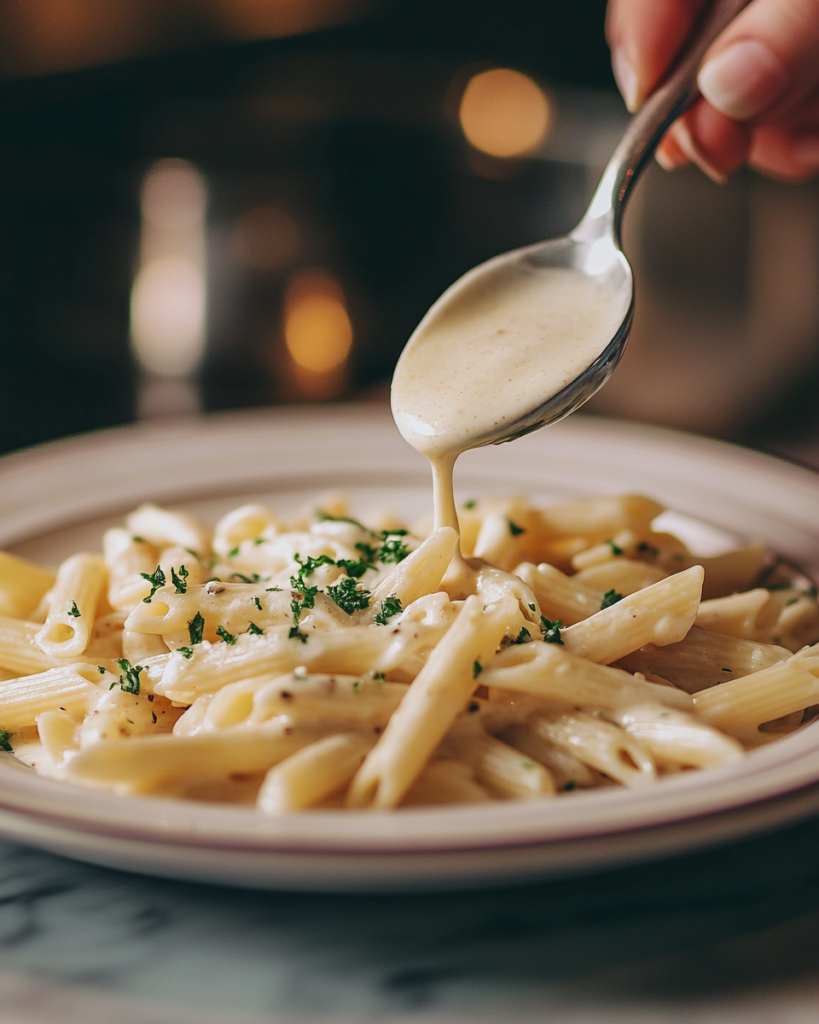
Begin by cooking the penne pasta in a large pot of salted water until firm to the bite. Once cooked, drain and set aside while retaining a small amount of pasta water for later adjustment of sauce consistency if needed.
A large skillet is heated over medium-high heat. Olive oil and butter are added, allowing the butter to melt completely. Chicken pieces are placed into the pan in a single layer. Each side is seared until golden brown and fully cooked through. The chicken is then removed and set aside.
In the same skillet, minced garlic is added. It is stirred gently for a short period until fragrant, taking care not to allow browning. Heavy cream and chicken broth are poured in, followed by stirring to combine with the garlic base.
The mixture is brought to a gentle simmer. Parmesan cheese is gradually added, melting into the sauce and creating a smooth texture. Seasonings including salt, black pepper, Italian seasoning, and optional red pepper flakes are incorporated evenly.
The cooked chicken is returned to the skillet, allowing it to absorb the sauce. The drained penne is then added and gently tossed until fully coated. If the sauce appears too thick, a small amount of reserved pasta water can be stirred in gradually until the desired consistency is reached.
The dish is allowed to simmer briefly so the flavors can blend fully. Once the sauce clings evenly to the pasta and chicken, the skillet is removed from heat. Chopped parsley is sprinkled over the top before serving.
Tips, Variations & Substitutions
Chicken thighs can be used in place of chicken breast for a richer flavor and slightly juicier texture. They hold up well during searing and remain tender in the sauce.
For a lighter sauce, half-and-half can replace heavy cream, though the final texture will be slightly less thick. Adding extra Parmesan can help maintain body in the sauce if needed.
Vegetable additions such as spinach, mushrooms, or steamed broccoli can be folded into the pasta for added texture and nutritional variety. These ingredients blend well with the garlic cream base without overpowering it.
Pasta shape can also be adjusted. While penne works well, rigatoni or fusilli can be used for similar sauce-holding ability.
A touch of lemon zest can be added at the end for brightness, balancing the richness of the cream sauce.
Serving Ideas & Occasions
Creamy Garlic Chicken Penne pairs well with simple side dishes such as roasted vegetables, garlic bread, or a fresh green salad. These sides provide contrast to the rich, creamy pasta.
It fits well into casual family dinners, relaxed gatherings, or weeknight meals where a comforting dish is preferred without extensive preparation.
A light sparkling water or herbal iced tea complements the creamy texture of the dish without overwhelming its garlic-forward profile.
Nutritional & Health Notes
This dish provides a balance of protein from chicken and carbohydrates from pasta, along with fats from cream and cheese. The combination supports satiety and makes the dish filling.
Portion balance can be adjusted by increasing vegetable content within the recipe. Adding greens or roasted vegetables helps introduce fiber and micronutrients.
Using lean chicken breast keeps saturated fat levels moderate, while Parmesan contributes calcium and protein in smaller amounts.
FAQs
Can different pasta types be used instead of penne?
Penne works especially well due to its tube shape, which holds creamy sauces effectively. However, other short pasta types such as rigatoni, fusilli, or farfalle can also be used. Each alternative offers a slightly different texture experience but still carries the garlic cream sauce well. Long pasta such as spaghetti is less ideal since the sauce does not cling in the same way, though it can still be used if preferred.
What causes the sauce to become too thick?
A sauce that becomes overly thick is usually the result of reduced liquid during simmering or excess cheese. To adjust the consistency, a small amount of reserved pasta water or chicken broth can be stirred in gradually. These liquids help loosen the sauce without diluting flavor. Stirring gently while reheating also helps restore a smooth texture.
Can the dish be prepared in advance?
Preparation can be done ahead by cooking the chicken and pasta separately and storing them in airtight containers. The sauce can also be prepared in advance and gently reheated before combining. When assembling later, a splash of broth or cream helps restore the original texture. This method keeps the final dish fresh and creamy when served later.
What type of cream works best for the sauce?
Heavy cream is preferred because it provides a stable, thick consistency that holds up during simmering. Lighter creams can be used, but the sauce may be thinner and require additional cheese for body. Avoid low-fat milk as it may separate when heated. Full-fat dairy products give the most consistent and smooth result.
How can garlic flavor be adjusted?
Garlic intensity can be modified by changing the amount used or the cooking duration. For a stronger flavor, additional fresh garlic cloves can be added. For a milder taste, garlic can be sautéed more gently over lower heat to soften its sharpness. Roasted garlic can also be used for a sweeter, deeper profile.
Can vegetables be added to the recipe?
Vegetables blend well with this pasta dish. Spinach, mushrooms, zucchini, or broccoli can be added during cooking. Mushrooms can be sautéed with chicken, while spinach can be stirred in at the end until wilted. These additions introduce texture variation and balance the richness of the cream sauce.
How should leftovers be stored and reheated?
Leftovers should be stored in a sealed container and kept in refrigeration. When reheating, a small amount of milk, cream, or broth can be added to restore creaminess. Gentle heating on the stove or in a microwave works well. Stirring during reheating helps maintain a smooth sauce consistency.