Healthy Tuna Wrap (Light Lunch) 5 Simple Fresh Wraps

Posted on

Uncategorized

Difficulty

Prep time

Cooking time

Total time

Servings

A healthy tuna wrap brings together clean flavors, soft textures, and balanced nutrition in a convenient handheld meal. It works well for busy midday meals, casual lunches at home, or prepared meals for later in the day.

The combination of tender tuna, crisp vegetables, and a light creamy base creates a wrap that feels satisfying without being heavy. Each bite carries a mix of freshness and gentle seasoning that keeps the dish enjoyable from start to finish.

This style of wrap also allows flexibility, making it easy to adjust ingredients based on what is available in the kitchen. It remains a reliable choice for anyone who prefers quick assembly without complicated cooking steps.

Ingredients Overview

The main component of a healthy tuna wrap is canned tuna, which provides a soft texture and mild savory flavor. Tuna packed in water is often preferred for a lighter profile, while tuna in olive oil adds a richer taste and slightly smoother mouthfeel.

Greek yogurt or light mayonnaise acts as the creamy base that binds the filling together. Greek yogurt adds a tangy note and contributes protein, while mayonnaise gives a more traditional and smooth consistency. Both options work well depending on personal preference.

Fresh vegetables such as lettuce, cucumber, and tomatoes bring crunch and moisture. These ingredients balance the soft tuna mixture and keep the wrap from feeling dense. Red onion can be added for a slight sharp bite, while shredded carrots contribute natural sweetness.

Whole wheat or spinach tortillas are commonly used for the wrap itself. They provide structure and add a subtle earthy flavor. These wraps also hold the filling well without tearing easily.

Seasonings such as salt, black pepper, lemon juice, and a touch of mustard help build flavor depth. Lemon juice brightens the tuna mixture, while mustard adds mild tang and complexity. Simple herbs like parsley or dill can be included for added freshness.

Together, these ingredients create a balanced wrap that is light yet filling, with a combination of protein, fiber, and refreshing vegetables.

Ingredients

1 can tuna in water, drained (5 oz)
2 tablespoons Greek yogurt
1 tablespoon light mayonnaise
1 teaspoon lemon juice
1 teaspoon Dijon mustard
1/4 teaspoon salt
1/4 teaspoon black pepper
1/2 cup chopped lettuce
1/3 cup sliced cucumber
1/3 cup diced tomatoes
2 tablespoons finely chopped red onion
1 tablespoon chopped parsley
2 large whole wheat tortillas
Optional: 1/4 cup shredded carrots

Step-by-Step Instructions

Start by preparing the tuna mixture. Open the canned tuna and drain it thoroughly to remove excess liquid. Place the tuna in a medium mixing bowl and break it apart using a fork until it becomes flaky and even in texture.

Add Greek yogurt and light mayonnaise to the bowl. Mix gently until the tuna is evenly coated. The mixture should appear creamy but not overly wet. If a lighter texture is preferred, increase the yogurt slightly and reduce the mayonnaise.

Stir in lemon juice and Dijon mustard. These ingredients add brightness and a mild tang that balances the richness of the tuna. Sprinkle in salt and black pepper, then mix again to distribute the seasoning evenly.

Prepare the vegetables while the tuna mixture rests. Chop lettuce into bite-sized pieces, slice cucumber thinly, dice tomatoes, and finely chop red onion. If using carrots, shred them into fine strands for easier wrapping.

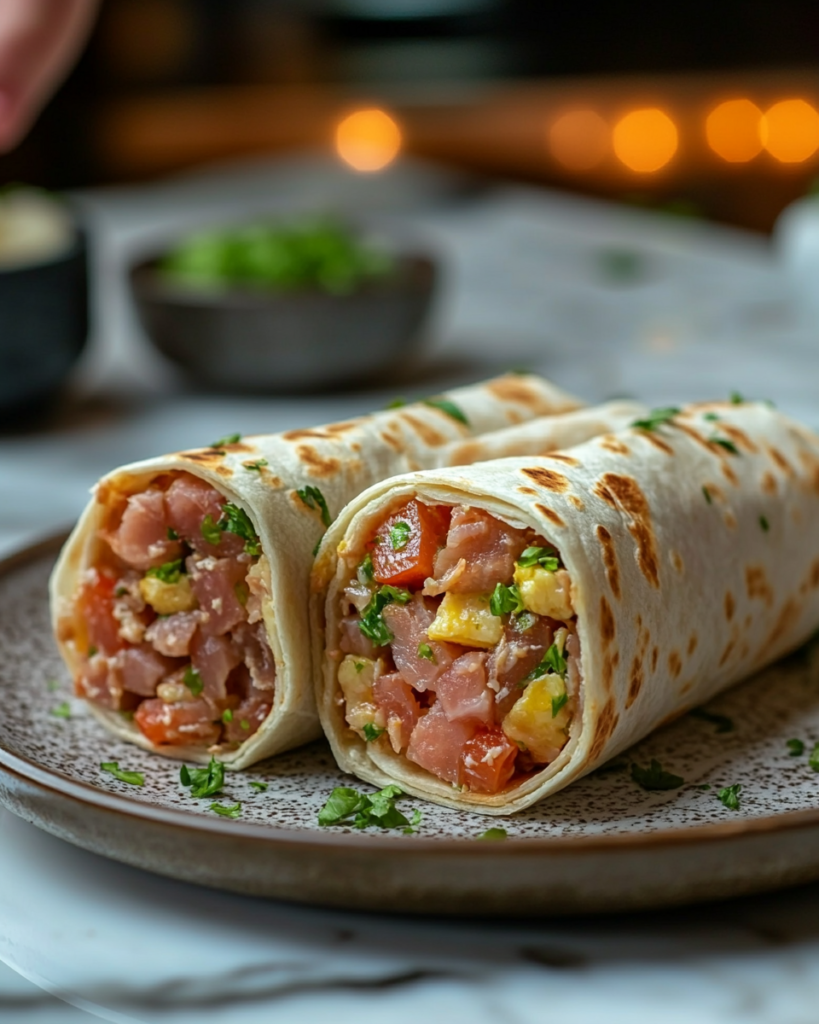
Lay the tortillas flat on a clean surface. Divide the tuna mixture evenly between the two tortillas, spreading it across the center in a horizontal line. Avoid spreading too close to the edges to make rolling easier.

Layer the chopped vegetables over the tuna mixture. Start with lettuce, followed by cucumber, tomatoes, red onion, and carrots if included. Distribute them evenly to maintain balance in every bite.

Fold the sides of each tortilla inward, then roll tightly from the bottom to form a wrap. Press gently as you roll to keep the filling secure. If needed, slice the wrap in half for easier serving.

Serve immediately or wrap in parchment paper for later use. If storing, keep chilled and consume within a short period for best texture and flavor.

Tips, Variations & Substitutions

Greek yogurt can be replaced entirely with mashed avocado for a creamier and dairy-free version. This substitution also adds a mild nutty flavor and smooth texture to the filling.

For a stronger flavor profile, add a pinch of paprika or finely chopped pickles to the tuna mixture. These additions introduce a slight tang and depth without overpowering the main ingredients.

Whole wheat tortillas can be swapped with spinach, tomato, or gluten-free wraps depending on dietary preferences. Each type brings a slightly different taste and texture while maintaining structure.

To increase protein content, add a boiled egg sliced into thin rounds inside the wrap. This addition works well for those seeking a more filling meal option.

The vegetables can also be adjusted based on seasonality. Bell peppers, baby spinach, or shredded cabbage can replace or complement the original ingredients.

Serving Ideas & Occasions

A healthy tuna wrap pairs well with light side dishes such as a small green salad, fresh fruit, or a cup of vegetable soup. These combinations keep the meal balanced and satisfying without feeling heavy.

It also works well for packed lunches, picnics, or casual meals at home. Because it is easy to prepare and transport, it fits into meal prep routines for busy days.

For drinks, water infused with lemon, iced herbal tea, or a simple smoothie complements the flavors of the wrap. These beverages keep the overall meal refreshing and light.

This wrap is often chosen for midday meals, especially when a quick but nourishing option is preferred. It fits comfortably into both relaxed and structured eating schedules.

Nutritional & Health Notes

A healthy tuna wrap provides a strong source of lean protein from tuna, which supports muscle maintenance and helps maintain satiety throughout the day. The addition of Greek yogurt contributes extra protein and a creamy texture without excessive fat.

Fresh vegetables supply dietary fiber, vitamins, and minerals. These nutrients support digestion and add volume to the meal without increasing calorie density significantly.

Whole wheat tortillas contribute complex carbohydrates, which provide steady energy release. This makes the wrap suitable for sustaining energy levels during active parts of the day.

The use of light mayonnaise or yogurt helps keep saturated fat levels moderate. Adjusting the ratio between these two ingredients allows control over richness and calorie content.

Overall, this meal offers a balanced combination of protein, fiber, and carbohydrates in a simple format.

FAQs

Can canned tuna in oil be used instead of tuna in water?

Canned tuna in oil can be used in place of tuna in water for a richer flavor and softer texture. The oil adds natural moisture, which can make the filling slightly more indulgent. If using this option, draining excess oil is recommended to prevent the wrap from becoming too heavy. Tuna in oil pairs especially well with crisp vegetables and tangy seasonings like lemon juice or mustard, which help balance the richness of the filling.

What type of tortilla works best for tuna wraps?

Whole wheat tortillas are commonly used because they provide a sturdy base and a mild nutty taste. They also hold the filling well without tearing easily. Spinach or tomato tortillas are good alternatives for added color and subtle flavor differences. Gluten-free tortillas are also suitable for those with dietary restrictions. The key is choosing a tortilla that is flexible enough to roll without breaking while still holding the ingredients securely inside.

Can this tuna wrap be prepared in advance?

Yes, the wrap can be prepared in advance, making it suitable for meal planning. For best results, the tuna mixture can be prepared ahead of time and stored separately from the vegetables and tortillas. When ready to serve, assemble the wrap to maintain freshness and texture. If already assembled, wrapping it tightly in parchment paper and refrigerating helps preserve structure for a short period, though vegetables may soften slightly over time.

What vegetables work well in this wrap?

Crisp vegetables work especially well because they balance the soft texture of the tuna mixture. Common choices include lettuce, cucumber, tomatoes, red onion, and shredded carrots. These ingredients add freshness, crunch, and natural moisture. Bell peppers or spinach can also be included for additional variety. The selection of vegetables can be adjusted based on preference or availability, while still maintaining a balanced texture and flavor profile in the wrap.

Is Greek yogurt necessary in the recipe?

Greek yogurt is not strictly necessary but is commonly used because it adds creaminess and a slight tang while keeping the mixture lighter than full mayonnaise. It also contributes additional protein. If preferred, it can be replaced entirely with mayonnaise, mashed avocado, or a combination of both. Each alternative changes the flavor and texture slightly, allowing flexibility based on dietary needs or taste preferences.

How can the wrap be made more filling?

To make the wrap more filling, additional protein or fiber-rich ingredients can be included. Options include sliced boiled eggs, chickpeas, or extra tuna. Adding more vegetables such as shredded cabbage or spinach also increases volume without making the wrap heavy. Another option is using a larger tortilla or adding a second wrap alongside a side dish like soup or salad for a more substantial meal.

How long does a tuna wrap stay fresh?

A prepared tuna wrap is best eaten within a few hours for optimal texture. If stored in the refrigerator, it can remain suitable for up to one day, although the vegetables may release moisture and soften the tortilla. To maintain freshness, it is recommended to store the filling separately and assemble the wrap just before eating. Keeping it tightly wrapped in parchment paper helps preserve structure during short-term storage.

………………..

[rank_math_breadcrumb]

Healthy Tuna Wrap (Light Lunch) 5 Simple Fresh Wraps

Photo of author
Author: Olivia
Published:

A healthy tuna wrap brings together clean flavors, soft textures, and balanced nutrition in a convenient handheld meal. It works well for busy midday meals, casual lunches at home, or prepared meals for later in the day.

The combination of tender tuna, crisp vegetables, and a light creamy base creates a wrap that feels satisfying without being heavy. Each bite carries a mix of freshness and gentle seasoning that keeps the dish enjoyable from start to finish.

This style of wrap also allows flexibility, making it easy to adjust ingredients based on what is available in the kitchen. It remains a reliable choice for anyone who prefers quick assembly without complicated cooking steps.

Ingredients Overview

The main component of a healthy tuna wrap is canned tuna, which provides a soft texture and mild savory flavor. Tuna packed in water is often preferred for a lighter profile, while tuna in olive oil adds a richer taste and slightly smoother mouthfeel.

Greek yogurt or light mayonnaise acts as the creamy base that binds the filling together. Greek yogurt adds a tangy note and contributes protein, while mayonnaise gives a more traditional and smooth consistency. Both options work well depending on personal preference.

Fresh vegetables such as lettuce, cucumber, and tomatoes bring crunch and moisture. These ingredients balance the soft tuna mixture and keep the wrap from feeling dense. Red onion can be added for a slight sharp bite, while shredded carrots contribute natural sweetness.

Whole wheat or spinach tortillas are commonly used for the wrap itself. They provide structure and add a subtle earthy flavor. These wraps also hold the filling well without tearing easily.

Seasonings such as salt, black pepper, lemon juice, and a touch of mustard help build flavor depth. Lemon juice brightens the tuna mixture, while mustard adds mild tang and complexity. Simple herbs like parsley or dill can be included for added freshness.

Together, these ingredients create a balanced wrap that is light yet filling, with a combination of protein, fiber, and refreshing vegetables.

Ingredients

1 can tuna in water, drained (5 oz)
2 tablespoons Greek yogurt
1 tablespoon light mayonnaise
1 teaspoon lemon juice
1 teaspoon Dijon mustard
1/4 teaspoon salt
1/4 teaspoon black pepper
1/2 cup chopped lettuce
1/3 cup sliced cucumber
1/3 cup diced tomatoes
2 tablespoons finely chopped red onion
1 tablespoon chopped parsley
2 large whole wheat tortillas
Optional: 1/4 cup shredded carrots

Step-by-Step Instructions

Start by preparing the tuna mixture. Open the canned tuna and drain it thoroughly to remove excess liquid. Place the tuna in a medium mixing bowl and break it apart using a fork until it becomes flaky and even in texture.

Add Greek yogurt and light mayonnaise to the bowl. Mix gently until the tuna is evenly coated. The mixture should appear creamy but not overly wet. If a lighter texture is preferred, increase the yogurt slightly and reduce the mayonnaise.

Stir in lemon juice and Dijon mustard. These ingredients add brightness and a mild tang that balances the richness of the tuna. Sprinkle in salt and black pepper, then mix again to distribute the seasoning evenly.

Prepare the vegetables while the tuna mixture rests. Chop lettuce into bite-sized pieces, slice cucumber thinly, dice tomatoes, and finely chop red onion. If using carrots, shred them into fine strands for easier wrapping.

Lay the tortillas flat on a clean surface. Divide the tuna mixture evenly between the two tortillas, spreading it across the center in a horizontal line. Avoid spreading too close to the edges to make rolling easier.

Layer the chopped vegetables over the tuna mixture. Start with lettuce, followed by cucumber, tomatoes, red onion, and carrots if included. Distribute them evenly to maintain balance in every bite.

Fold the sides of each tortilla inward, then roll tightly from the bottom to form a wrap. Press gently as you roll to keep the filling secure. If needed, slice the wrap in half for easier serving.

Serve immediately or wrap in parchment paper for later use. If storing, keep chilled and consume within a short period for best texture and flavor.

Tips, Variations & Substitutions

Greek yogurt can be replaced entirely with mashed avocado for a creamier and dairy-free version. This substitution also adds a mild nutty flavor and smooth texture to the filling.

For a stronger flavor profile, add a pinch of paprika or finely chopped pickles to the tuna mixture. These additions introduce a slight tang and depth without overpowering the main ingredients.

Whole wheat tortillas can be swapped with spinach, tomato, or gluten-free wraps depending on dietary preferences. Each type brings a slightly different taste and texture while maintaining structure.

To increase protein content, add a boiled egg sliced into thin rounds inside the wrap. This addition works well for those seeking a more filling meal option.

The vegetables can also be adjusted based on seasonality. Bell peppers, baby spinach, or shredded cabbage can replace or complement the original ingredients.

Serving Ideas & Occasions

A healthy tuna wrap pairs well with light side dishes such as a small green salad, fresh fruit, or a cup of vegetable soup. These combinations keep the meal balanced and satisfying without feeling heavy.

It also works well for packed lunches, picnics, or casual meals at home. Because it is easy to prepare and transport, it fits into meal prep routines for busy days.

For drinks, water infused with lemon, iced herbal tea, or a simple smoothie complements the flavors of the wrap. These beverages keep the overall meal refreshing and light.

This wrap is often chosen for midday meals, especially when a quick but nourishing option is preferred. It fits comfortably into both relaxed and structured eating schedules.

Nutritional & Health Notes

A healthy tuna wrap provides a strong source of lean protein from tuna, which supports muscle maintenance and helps maintain satiety throughout the day. The addition of Greek yogurt contributes extra protein and a creamy texture without excessive fat.

Fresh vegetables supply dietary fiber, vitamins, and minerals. These nutrients support digestion and add volume to the meal without increasing calorie density significantly.

Whole wheat tortillas contribute complex carbohydrates, which provide steady energy release. This makes the wrap suitable for sustaining energy levels during active parts of the day.

The use of light mayonnaise or yogurt helps keep saturated fat levels moderate. Adjusting the ratio between these two ingredients allows control over richness and calorie content.

Overall, this meal offers a balanced combination of protein, fiber, and carbohydrates in a simple format.

FAQs

Can canned tuna in oil be used instead of tuna in water?

Canned tuna in oil can be used in place of tuna in water for a richer flavor and softer texture. The oil adds natural moisture, which can make the filling slightly more indulgent. If using this option, draining excess oil is recommended to prevent the wrap from becoming too heavy. Tuna in oil pairs especially well with crisp vegetables and tangy seasonings like lemon juice or mustard, which help balance the richness of the filling.

What type of tortilla works best for tuna wraps?

Whole wheat tortillas are commonly used because they provide a sturdy base and a mild nutty taste. They also hold the filling well without tearing easily. Spinach or tomato tortillas are good alternatives for added color and subtle flavor differences. Gluten-free tortillas are also suitable for those with dietary restrictions. The key is choosing a tortilla that is flexible enough to roll without breaking while still holding the ingredients securely inside.

Can this tuna wrap be prepared in advance?

Yes, the wrap can be prepared in advance, making it suitable for meal planning. For best results, the tuna mixture can be prepared ahead of time and stored separately from the vegetables and tortillas. When ready to serve, assemble the wrap to maintain freshness and texture. If already assembled, wrapping it tightly in parchment paper and refrigerating helps preserve structure for a short period, though vegetables may soften slightly over time.

What vegetables work well in this wrap?

Crisp vegetables work especially well because they balance the soft texture of the tuna mixture. Common choices include lettuce, cucumber, tomatoes, red onion, and shredded carrots. These ingredients add freshness, crunch, and natural moisture. Bell peppers or spinach can also be included for additional variety. The selection of vegetables can be adjusted based on preference or availability, while still maintaining a balanced texture and flavor profile in the wrap.

Is Greek yogurt necessary in the recipe?

Greek yogurt is not strictly necessary but is commonly used because it adds creaminess and a slight tang while keeping the mixture lighter than full mayonnaise. It also contributes additional protein. If preferred, it can be replaced entirely with mayonnaise, mashed avocado, or a combination of both. Each alternative changes the flavor and texture slightly, allowing flexibility based on dietary needs or taste preferences.

How can the wrap be made more filling?

To make the wrap more filling, additional protein or fiber-rich ingredients can be included. Options include sliced boiled eggs, chickpeas, or extra tuna. Adding more vegetables such as shredded cabbage or spinach also increases volume without making the wrap heavy. Another option is using a larger tortilla or adding a second wrap alongside a side dish like soup or salad for a more substantial meal.

How long does a tuna wrap stay fresh?

A prepared tuna wrap is best eaten within a few hours for optimal texture. If stored in the refrigerator, it can remain suitable for up to one day, although the vegetables may release moisture and soften the tortilla. To maintain freshness, it is recommended to store the filling separately and assemble the wrap just before eating. Keeping it tightly wrapped in parchment paper helps preserve structure during short-term storage.

………………..

Name

Lorem ipsum dolor sit amet, consectetur adipiscing elit. Suspendisse varius enim in eros elementum tristique. Duis cursus, mi quis viverra ornare, eros dolor interdum nulla, ut commodo diam libero vitae erat.

You Might Also Like...

Garlic Butter Steak & Veggies: 30-Minute Amazing Supper

Garlic Butter Steak & Veggies: 30-Minute Amazing Supper

Buffalo Chicken Meal Prep Bowls: 5 Practical Savory Plates

Buffalo Chicken Meal Prep Bowls: 5 Practical Savory Plates

Mediterranean Chicken & Rice: 5 Amazing Comforting Bowls

Mediterranean Chicken & Rice: 5 Amazing Comforting Bowls

Teriyaki Chicken Meal Boxes: 5 Simple Comforting Ideas

Teriyaki Chicken Meal Boxes: 5 Simple Comforting Ideas

Tags:

You might also like these recipes

Leave a Comment